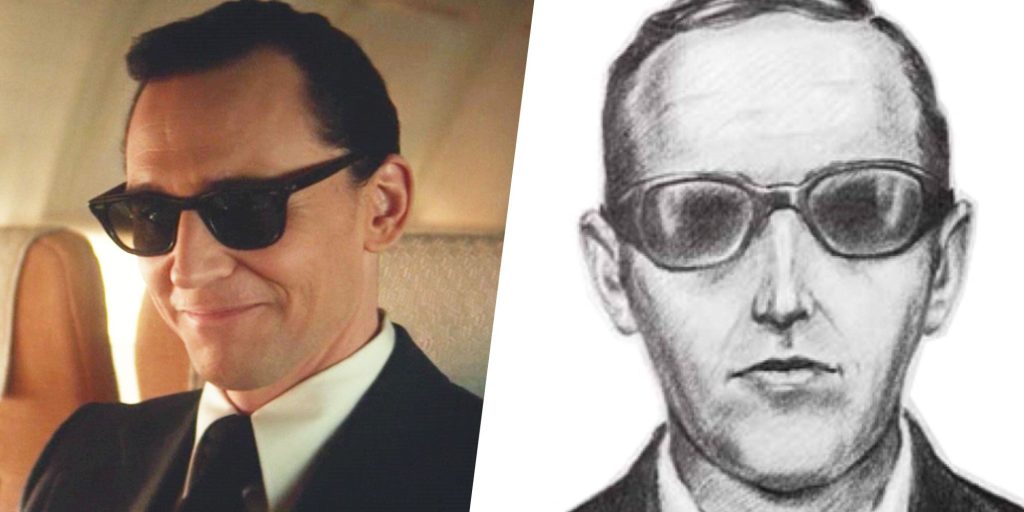
Has D.B. Cooper's Identity Finally Been Confirmed? The FBI's Shocking New Evidence Timeline
As of late 2025, the D.B. Cooper hijacking case, which began on November 24, 1971, has been intensely re-investigated by the FBI following the submission of a parachute and logbook. This new evidence points to Richard Floyd McCoy II, a prime suspect and convicted skyjacker who died in 1974. Forensic scientists are currently attempting to match DNA from Cooper's clip-on tie to McCoy's family, potentially confirming the identity of the mysterious criminal after more than five decades.
The mystery of D.B. Cooper, America's most famous unsolved plane hijacker, may be closed after 54 years. New forensic evidence and a stunning family confession have compelled the FBI to actively re-investigate the infamous 1971 case. This new effort focuses intensely on Vietnam veteran and convicted skyjacker Richard Floyd McCoy II, with investigators now holding the potential key: a parachute and logbook linking McCoy directly to the iconic mid-air escape.
The question is no longer "Did Cooper survive?" but "Was D.B. Cooper actually Richard McCoy?"
The DNA Test and the 'One-in-a-Billion' Parachute 🧬
The breakthrough began with a confession from McCoy's children, who came forward after their mother's death. They revealed their father was the hijacker, claiming they had a crucial piece of evidence kept secret for decades.
- The Parachute: In 2023, a parachute rig and harness were recovered from a North Carolina outbuilding belonging to the McCoy family. Aviation investigators determined the rig had unique modifications matching those on the chutes provided to Cooper in 1971. One investigator called the find "literally one in a billion."
- The Logbook: McCoy’s skydiving logbook was also turned over, reportedly showing jumps in the exact rugged areas of Oregon and Utah where both the Cooper and McCoy hijackings occurred.
- The Titanium Clue: The most significant piece of evidence remains the black, JCPenney clip-on tie Cooper left on the plane. Forensic analysis in the 2000s found the tie was covered in over 100,000 microscopic particles, including unalloyed titanium, bismuth, and strontium sulfide. These rare metals pointed to a highly specialized job in aerospace, chemistry, or electronics—a crucial lead now being cross-referenced with McCoy’s military background and employment.
- DNA Match: The FBI has taken possession of the new physical evidence and, most critically, has collected DNA samples from McCoy's son and daughter. They are working to match this family DNA profile against the partial sample retrieved from the notorious clip-on tie in the hope of making a definitive, legal identification.
"We just want the truth to be known, even if it's complicated," said McCoy's son, Richard McCoy III, reflecting the family's fraught decision to come forward.
The Essential D.B. Cooper Timeline (1971-2025)
The case has now circled back to McCoy, a suspect long dismissed by initial investigators but who has always remained a "favorite" in the true-crime community.
| Date | Event Description | The McCoy Connection |
| Nov. 24, 1971 | A man using the alias "Dan Cooper" hijacks Northwest Orient Flight 305, demanding $200,000, and parachutes over Washington. He is never found. | McCoy was a decorated Vietnam veteran, helicopter pilot, and skilled skydiver. |
| April 7, 1972 | Richard Floyd McCoy II stages a nearly identical hijacking of a United Airlines flight over Utah, parachuting out with $500,000. He is captured two days later. | The MO was strikingly similar: rear airstair exit, ransom, and parachutes. |
| 1974 | McCoy escapes from prison using a mock gun, leading to a massive manhunt. He is killed in a shootout with FBI agents in Virginia. | The FBI originally ruled him out as a suspect due to mismatched witness descriptions. |
| Feb. 1980 | Eight-year-old Brian Ingram discovers $5,800 in deteriorating $20 bills from the ransom on the Columbia River's banks, reigniting the search. | The discovery provides one of the few confirmed geographic clues to the drop zone. |
| 2007 | The FBI reveals a partial DNA profile was created from the tie Cooper left behind, but it remains unmatched. | This sample is the current gold standard the FBI is using to test the McCoy family's DNA. |
| 2023 | McCoy's children turn over a distinctive parachute and logbook to investigators, forcing the FBI to reopen the file on their prime suspect. | This key physical evidence may finally link McCoy to the Cooper rigging modifications. |
As for the enduring mystery of his escape, the case's complexity—and Cooper's sheer audacity—have been acknowledged by the very people who sought to prosecute him. "This is Robin Hood," said Jack G. Collins, the federal prosecutor who had the case until he retired. "He's foiled the best efforts of the Establishment. Also, this guy had some guts. The plane's going 170 miles an hour. It's the middle of the night. And he walks down the ramp of an airplane. I mean, Holy Smoke!
Legal and Legacy Impact
The FBI officially closed its active investigation in 2016, stating resources were better deployed elsewhere. The agency did, however, leave the door open, noting they would accept "specific physical evidence" relating to the money or parachutes. The 2023 discovery of the parachute and logbook by aviation investigator Dan Gryder provided exactly that, causing the agency to return to the decades-old evidence.
The original case became a cultural phenomenon, inspiring movies, books, and an annual D.B. Cooper conference. The event was covered in detail in the early 1970s by publications like TIME Magazine, which chronicled the massive manhunt. Cooper is now a folk legend, a criminal hero for his audacious escape.
As former FBI Special Agent Ralph Himmelsbach, who dedicated years to the case, once stated, "I believe he didn't survive, but he made a hell of a jump."
If DNA confirms Richard Floyd McCoy II's identity, this would transform Cooper from an unknown folk hero to a convicted criminal who pulled off two of the most daring hijackings in history, escaping prison before his death. The final verdict now rests on the conclusive results of forensic science.
The Unclaimed Loot: What Happens to the $200,000 Ransom Money?
The most compelling legal question for the average consumer isn't who Cooper was, but rather, What happens to the remaining $194,200 of the ransom money? Since a small amount was found in 1980, the bulk of the cash—worth over $1.4 million today adjusted for inflation—remains missing. This fact brings into sharp focus one of the most misunderstood legal principles in criminal cases: the Statute of Limitations.
The Legal Distinction: Crime vs. Money
In the D.B. Cooper case, the FBI officially stopped actively investigating the crime of air piracy in 2016. Federal law enforcement is generally constrained by a Statute of Limitations (SOL), which prevents the prosecution of crimes after a defined period. While some major felonies, like murder, have no SOL, federal air piracy had a time limit that ran out long ago, which is why the FBI closed the case.
However, the statute of limitations does not apply to the money. The unrecovered $200,000 remains the legal property of Northwest Orient Airlines (now Delta Air Lines), and legally, the money is still considered stolen. This is a crucial distinction: while the criminal can no longer be charged, the civil and ownership claims on the funds never expire. If the money were found today, it would be treated as lost or stolen corporate property, not as a prize for the finder.
The Staking Claim: Finders Keepers is Not the Law
This legal principle directly impacts anyone who might search for the loot. According to established common law principles—specifically the law of 'conversion' (the civil claim for the wrongful taking of property)—if you were to find a buried stash of D.B. Cooper's ransom money, you would have no legal claim to it.
The money, identifiable by its serial numbers that were logged by the FBI, still belongs to the corporation it was extorted from. The small portion found in 1980 was quickly returned to the airline's insurer. While many treasure hunters operate under the assumption of "finders keepers," any attempt to spend or keep the money would constitute possession of stolen property, which is a current, prosecutable crime.
Consumer Action: The Legal Pitfall
The core legal takeaway for consumers is simple: Do not attempt to keep the ransom money if you find it.
If you discover any cash that appears old or buried in the potential drop zones of Washington or Oregon:
- Document: Take photos of the discovery location before touching the money.
- Do Not Clean: Do not clean the bills, as dirt and degradation can be forensic evidence.
- Contact Local Law Enforcement: Immediately contact your local police department or FBI field office.
Reporting the money is not just the right thing to do; it is the only way to avoid prosecution yourself. While you won't get to keep the loot, honest finders sometimes receive a modest finder's fee or reward from the legal owner (the insurance company) as a gesture of goodwill, though there is no legal requirement for them to do so. In the 1980 discovery, the finder received a $2,880 reward, underscoring the legal stakes and the importance of full disclosure.
D.B. Cooper Frequently Asked Questions (FAQs)
1. Who was D.B. Cooper and what happened to him? D.B. Cooper (who bought his ticket under the name Dan Cooper) was the unidentified man who successfully hijacked Northwest Orient Airlines Flight 305 on November 24, 1971, demanding and receiving a $200,000 ransom and four parachutes. Somewhere between Seattle and Reno, he jumped out of the plane's aft (rear) airstair and was never seen again. The FBI believes he may not have survived the jump due to the weather, his unsuitable clothing, and the unsteerable parachute he used, but his ultimate fate remains unknown.
2. Was any of the ransom money ever found? Yes. In 1980, an 8-year-old boy named Brian Ingram found three rotting packets of the ransom money, totaling $5,800, along the Columbia River near Vancouver, Washington. The serial numbers matched the bills given to Cooper. Despite extensive searches in the area, the rest of the $194,200 remains missing, and no other genuine bills have ever surfaced in circulation.
3. What evidence points to Richard Floyd McCoy II as the prime suspect? Richard Floyd McCoy II, a decorated Army veteran and experienced skydiver, hijacked a plane in 1972 using a similar modus operandi (including demanding money and parachuting out the aft stairs). Although the FBI initially eliminated him, recent re-investigation has focused on McCoy, especially after his siblings allegedly found a parachute and logbook matching the Cooper case details. The ongoing effort to match DNA from Cooper's clip-on tie to McCoy's family aims to definitively link the two cases.
You can see a detailed discussion of the case and the latest evidence in this video: True Crime Rewind: Was Richard 'Floyd' McCoy the infamous D.B. Cooper?. This video discusses the theory that Richard Floyd McCoy was D.B. Cooper, which is the central focus of the article's new, dramatic angle.