Understand Your Rights. Solve Your Legal Problems


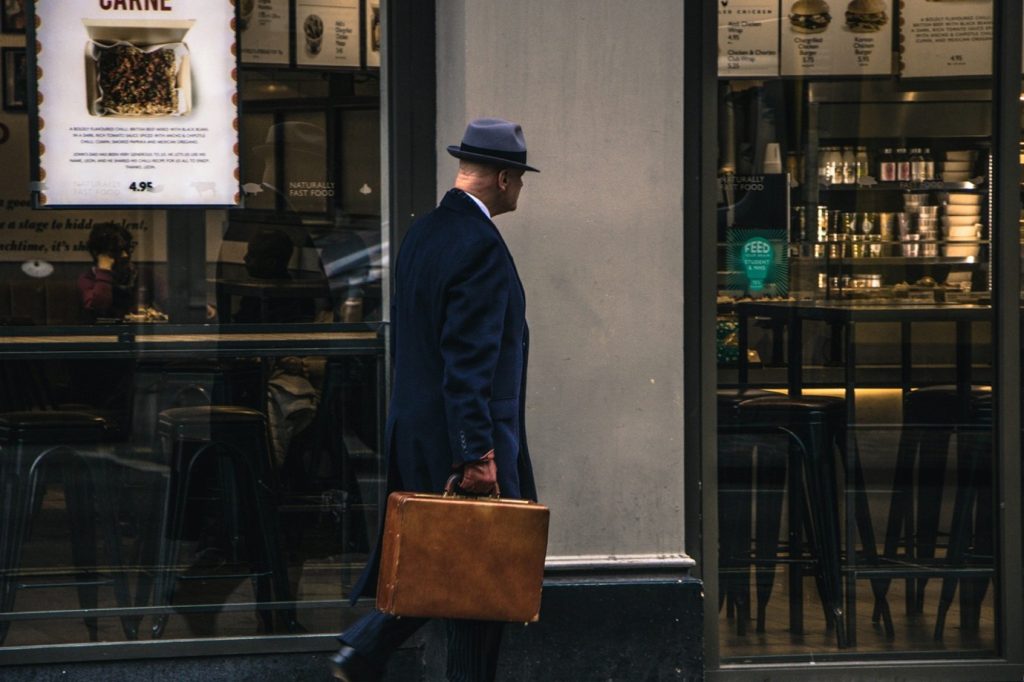
You ever notice how the right briefcase just... changes how people treat you?
Not in some mystical “energy” way - I mean literally. Clients clock it. Other lawyers clock it. Hell, even the receptionist clocks it. You walk in with something solid, full-grain leather, clean lines - they assume you’ve got your act together before you even say a word.
Now, I’m not saying a bag makes the lawyer - but, look, perception matters. Show up with a cheap faux-leather satchel, zipper sticking like a bad metaphor, and suddenly your argument feels... less airtight. Same you, worse optics.
Walk in with a structured, matte, geometrically perfect briefcase that opens smooth and stays upright while you scribble that last-minute note? Different story.
That’s credibility before you’ve even hit “Good morning, counsel.”
And yeah, I know - it’s “just a bag.” But it’s not, though. A good one’s basically part of your kit. That firm leather exterior, 3.0 mm thick, doesn’t just look sharp - it’s literally armor for your documents. You could probably survive light artillery with that thing. The stitching - each joint reinforced with 10 lb tensile nylon thread - gives it backbone. You know, like yours in chambers. And the width - between 8 and 10 cm - means your case files stay flatter than your opposing counsel’s arguments. (Sorry, couldn’t resist.)
And don’t overlook the culture bit. Different cities read these cues differently. In Zurich, minimalism’s basically code for “we manage money responsibly.” In Hong Kong’s IFC Tower, symmetry hints at discipline - like, you didn’t just buy this thing, you curated it. And London? That’s its own beast. Style and understatement have been fighting a quiet duel there since… well, forever. The winner’s always restraint. Always.
It’s kinda like drafting a contract - you know how everything depends on structure and tone? Same principle. Your briefcase should say: “I’m methodical. I’m steady. I don’t panic when things get loud.” (source)
So yeah - takeaway: a luxury briefcase doesn’t just hold your stuff, it holds you together. Your persona, your calm, your whole unflappable thing.
One last thing - skip the big logos. Seriously. Nothing screams insecurity like a giant brand name stamped across the side. Coco Chanel said it best: “Luxury must be comfortable, otherwise it is not luxury.” Quiet confidence beats billboard branding every time.
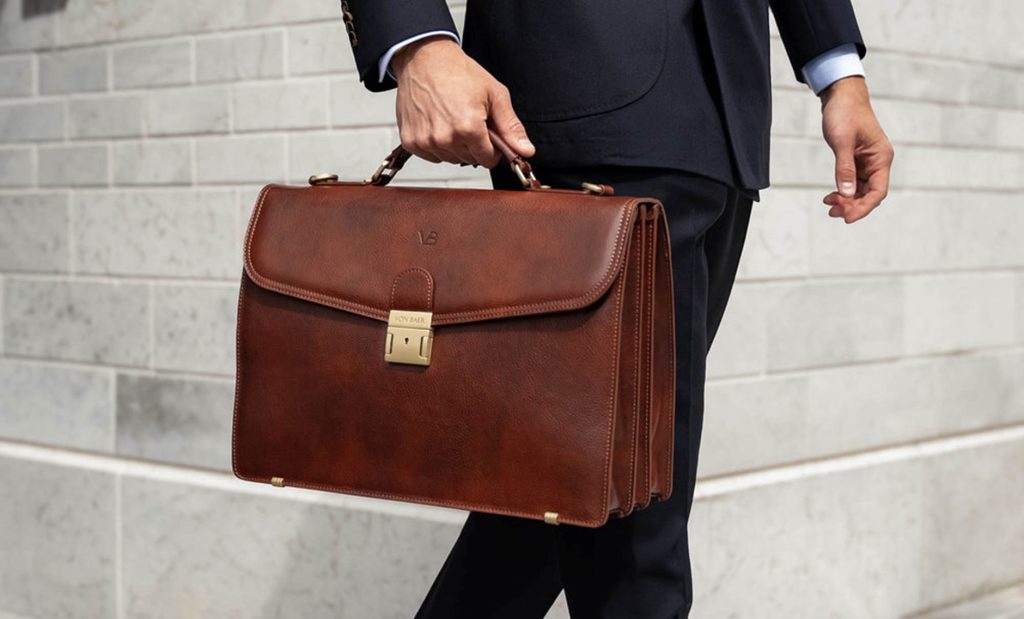
So - Von Baer's No.1 Briefcase. You’ve probably seen it floating around on LinkedIn ads or that one guy in chambers who clearly has opinions about leather. But here’s the thing: it actually lives up to the hype.
This thing blends Italian craftsmanship with real-world practicality. Some bags look expensive; this one just feels it. Like the difference between a first edition from Faber & Faber and some glossy reprint - there’s a weight, a texture, that little whisper when you run your hand across it. It’s handmade from Italian full-grain vegetable-tanned leather, and it ages like good Scotch: deeper, richer, a bit unpredictable, never boring. Even the smell - that soft, library-at-dusk kind of scent - it’s weirdly grounding.
Design-wise, it’s got that architectural precision. The 14–16 inch padded sleeve holds your laptop like a Savile Row suit, proper snug, while the A4 flap keeps your documents lying dead flat (no weird folds halfway through a contract). There’s even a suede-lined pocket for cards, which sounds minor until you’re in front of a client and realize you don’t have to hand over a bent business card.
Little stuff’s been thought through, too. The pen loops fit 8–12 mm pens - your Montblanc Meisterstück will sit tight instead of rattling around. The rotary brass tumblers, machined to 0.2 mm accuracy, click shut with that quiet metallic sound that somehow says, yeah, I’m in charge here. Dimensions are 42 × 31 × 10 cm, which means it’s small enough for flights but still balanced visually. At 1.8 kg, it’s got enough heft to feel substantial but not enough to ruin your shoulder on the walk from chambers to Canary Wharf.
The strap’s done properly - wide, padded, angled at 30°, so your posture doesn’t go to hell by lunchtime. Honestly, it’s the kind of detail you stop noticing until you use something else and realize how bad most straps are. It’s the small comforts that make the 6 a.m. airport run slightly less miserable.
Specs at a glance:
You walk into a client meeting, set this thing down - no showboating, no “statement piece” energy - but people notice. The tone shifts a little. It’s subtle, but it’s there.
And here’s the real takeaway: pick tools that match the gravity of what you do. When your work shapes decisions that move millions, your gear should at least keep up.
Maintenance tip: condition every 3–6 months, and don’t overdo it. Too much cream and you’ll dull the character - same as over-polishing an antique. You end up erasing the story instead of preserving it.
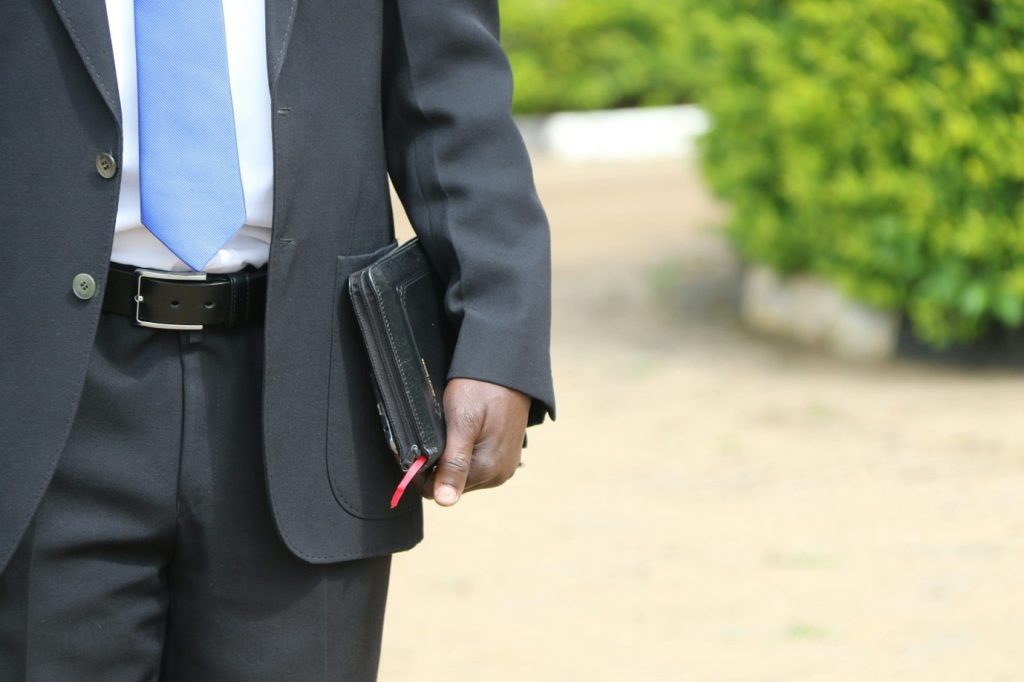
Full-grain leather resists wear and develops strength through long-term use.
You wouldn’t argue precedent using unreliable case law. So why trust your reputation to inferior materials? “Leather” is a word abused by marketing departments - much like “bespoke” or “strategic.” Real full-grain leather breathes, bends, and survives decades. Bonded leather - essentially sawdust and glue - dies before your next promotion.
Vegetable-tanned leather undergoes a slow, almost monastic process that builds a natural hydrophobic layer repelling 80-90% of surface moisture. Each hide, about 1.8 mm thick, survives 100,000 bend cycles before showing fatigue. Chrome-tanned variants hit their limit at 40,000. The numbers aren’t glamorous, but they’re real.
Think of the difference like comparing a Penguin Classics paperback to a Folio Society edition. One survives a backpack; the other endures generations. A quality briefcase earns character through use - every nick becomes provenance, not damage.
Cotton-canvas reinforcement (around 10 oz weight) prevents stretch, preserving the crisp geometry lawyers rely on when sliding documents across polished mahogany. Over time, that structure becomes muscle memory - you reach, it’s there. Always.
Buying premium leather once prevents the need to replace it many times, reducing both waste and distraction.
Expert tip: Rest it upright on felt pads to protect its corners - imagine how Oxford libraries cradle ancient folios upright, never stacked. Same principle, different century.
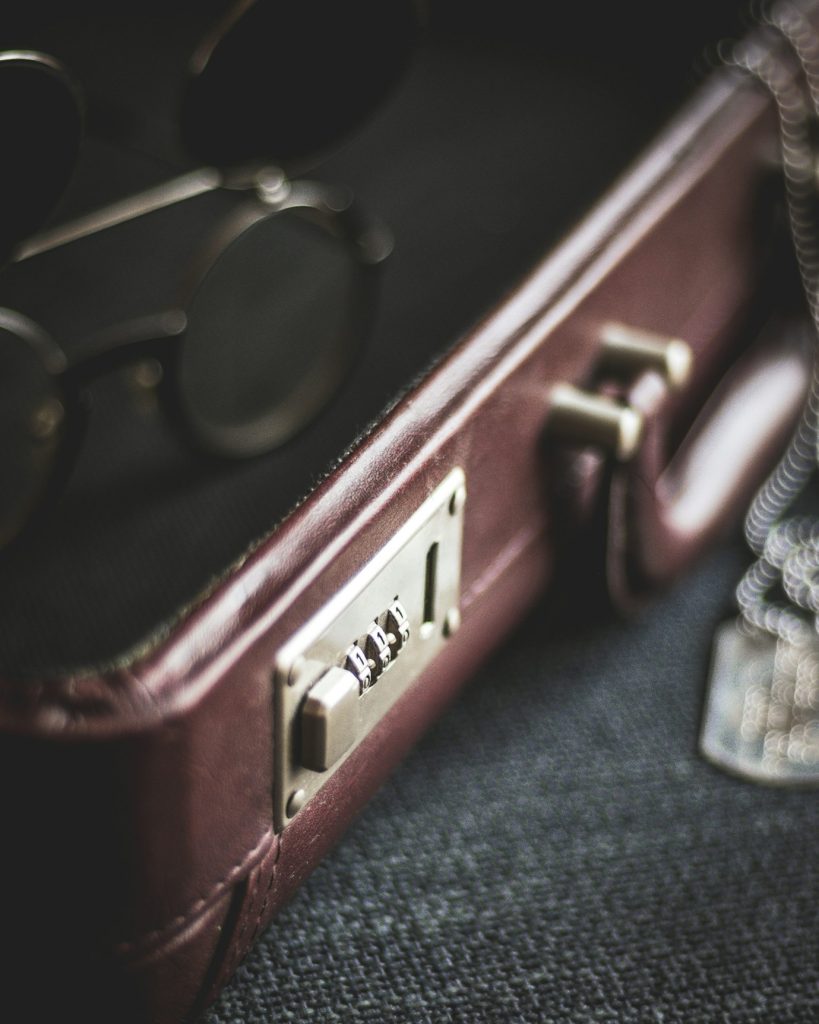
You ever had that moment - client watching, you’re digging around for the right file, trying to look calm while your brain’s doing cartwheels? That half-second panic costs more than you think. Authority leaks out fast. Organization isn’t some “productivity hack” - it’s survival. It’s mental armor.
Here’s the thing: the layout of your briefcase basically mirrors how your head works under pressure. A good one’s built like a solid argument - layers that make sense. A tri-fold setup where the top holds your active cases, the middle your laptop and charger, and the inner flap your NDAs and USBs - that’s not fancy, it’s functional. Every compartment becomes an anchor for focus. You reach, you grab, you move on.
And the materials matter too. Suede linings aren’t just for show - they stop abrasion on paper fibers, so your thick-stock stationery still feels crisp when you pull it out. Gusseted walls that expand up to 6 cm let you pack case bundles without stretching seams into sad little wrinkles. Even the zippers - anti-theft ones with 3.5 mm reverse coil teeth - close quietly, precisely. No jingle, no cheap sound echoing in a courtroom. Just... clean.
Then there’s the neoprene padding - absorbs 1.2 joules of impact. Sounds technical, but it means your laptop survives that mid-flight turbulence when the overhead bin decides to rattle your entire life. Efficiency’s not about moving faster; it’s about never having to think about this stuff when everything else is on fire.
Once your brain knows where every item lives, it stops wasting energy searching. That’s space you can use to argue better, improvise cleaner, actually win.
Bottom line? Good organization turns chaos into calm. It’s confidence you can feel, not just project.
Quick tip: treat your compartments like a courtroom clerk treats files - same place, every time. Do it often enough and it stops being “organization.” It’s just instinct.
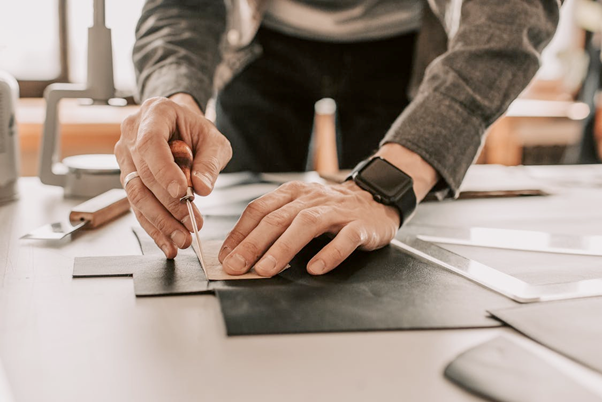
You can spot the difference, right? Not at first glance maybe, but once you know where to look - it’s obvious.
Mass-produced bags always have that... off rhythm. You can’t put your finger on it, but it’s there. The stitch pattern’s wrong - a little too uniform, a little too dead. Real craftsmen? They sew 8–10 stitches per inch, and every one of those stitches means something. They’re not guessing; they’re building tension, strength, permanence. Each waxed linen thread - 0.6 mm thick - locks into the next like legal precedent: connected, deliberate, no weak links.
And then there’s the edges - sealed with beeswax heated to exactly 65–70°C. Sounds excessive until you realize that’s why these bags don’t curl or fray in humidity. The finish looks smooth enough to catch your reflection - boardroom marble smooth - but still somehow natural.
Even the zippers tell the story. Riri, YKK Excella - they don’t screech when you open them, they hum. Subtle, quiet, expensive-sounding. Like the difference between a cheap pen and a Montblanc - small detail, big tell.
Inside, that 280–320 gsm cotton drill lining? That’s the part nobody sees but everyone feels. It’s like the texture of a well-bound case file - solid, dependable, zero nonsense. You reach in and there’s this subconscious click - it just feels right. Clients pick up on that, even if they don’t know why.
It’s kind of like an original ruling - the real work is invisible. You only notice when it’s missing. The best craftsmanship hides complexity behind simplicity, and that’s exactly what calm authority feels like.
Quick test: run your finger along the seam. If the spacing’s uneven, even slightly, you’re not looking at craftsmanship - you’re looking at factory output. The people who made your briefcase should understand precision the same way you understand case law: every detail matters or the whole argument falls apart.
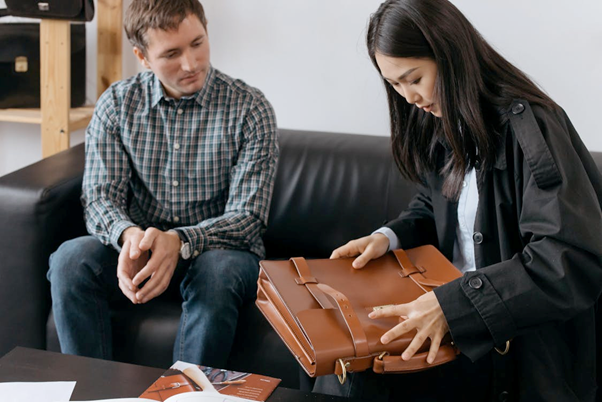
Practical design elements ensure comfort, protection, and day-long usability.
Ever tried carrying a £1,000 briefcase through Heathrow, only to discover it bruises your shoulder by Gate 23? True luxury should feel like less work. A balanced case, weighing 1.7-2.0 kg, hits that perfect ratio of substance and agility.
A briefcase lives in the real world - rain, coffee spills, court, and public transport happen. That’s why top-tier models use PU-treated microfiber linings rated IPX4 to repel moisture. Think of it as Gore-Tex for your documents. Handles reinforced with 2.5 mm rods stay upright instead of collapsing into a tangle, while riveted brass fixtures with 25 kg pull strength handle the dead weight of a Monday.
Even practical details have an art to them: a 20 × 14 cm trolley sleeve prevents toppling during airport transfers. It’s a design choice born from empathy - the kind only someone who’s sprinted for a flight while clutching client files could have made.
A bag like this should feel invisible once you start moving. Like great legal writing, it gets out of its own way.
Performance equals peace of mind - no luxury qualifies as true unless it survives the workday.
Expert tip: Simulate your commute. Fill it, walk with it, lift it. If it tips or tugs, imagine that discomfort after five years. The best case passes the lived-in test.
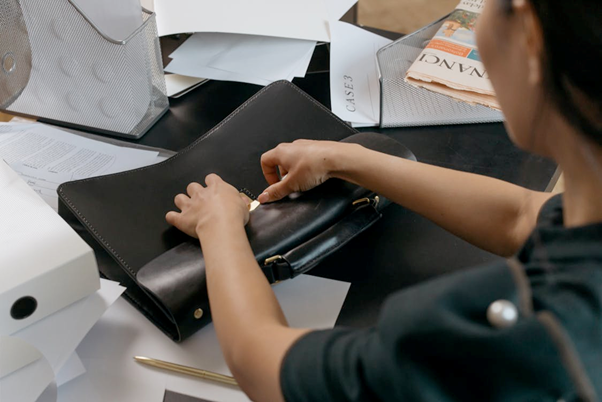
Custom engraving and color choices turn utility into legacy.
A good briefcase carries work. A great one carries legacy. When initials are pressed into leather at 110-130°C for 5-8 seconds, they become part of its memory - not decoration, but inscription. Each press whispers permanence.
Whether you go for blind embossing (quiet confidence) or gold foil (moment of triumph), that choice reflects the same question Cicero once posed: “Who speaks, so that men remember?” A monogram says you’ve arrived - not loudly, but unmistakably.
Colors speak languages too. Deep oxblood (RGB 73, 29, 33) feels like mahogany and law libraries. Cognac (RGB 155, 97, 51) evokes trust - the warmth of whisky in cut crystal. Black (RGB 15, 15, 15) remains the power play. Choose according to temperament, not fashion.
Each bespoke serial number under the flap serves as proof of identity - practical for insurance, poetic for posterity. Someday, someone might open it, see those initials, and think, “They fought good battles.”
Personalization merges utility with affection - a moment of empathy embedded into leather.
Expert tip: Request a certificate of authenticity. Like provenance in Sotheby’s catalogues, it preserves both material truth and emotional continuity.
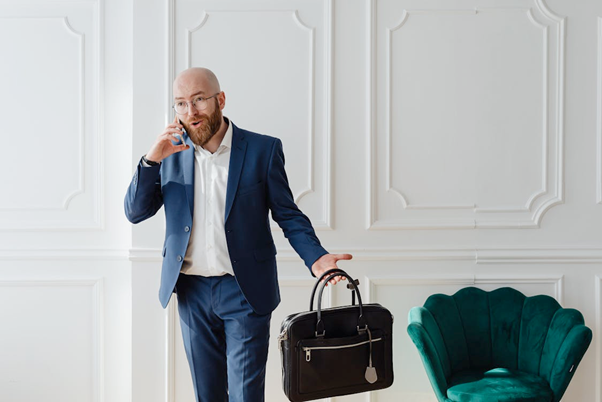
Matching lifestyle habits with features ensures lasting satisfaction and practicality.
Let’s be honest: decision fatigue hits hard. The market’s saturated with buzzwords and fake leather that smells like vinyl despair. Cut through it. Start with lifestyle math. Travel weekly? You’ll want 1.5-1.8 kg builds, EVA 5 mm padding, and trolley sleeves. Office-bound? Go heavier, more structured, matte-finished.
Combination locks with 0.1 mm brass tolerances work best in litigation-heavy environments where discretion matters. Magnetic clasps win for agility during daily city work. And yes - maintenance counts. Vegetable-tanned leather rewards caretakers (conditioning every 3-4 months). Chrome-tanned leather forgives neglect (every 6-9).
Each choice is emotional as much as practical. Picture the person you’re buying for. Do they live in motion or ritual? Do they value control or simplicity? That’s the filter through which you choose - not price, but peace.
When a gift carries both beauty and purpose, it communicates what words cannot - trust, admiration, and enduring respect.
Expert tip: Confirm the warranty. Lifetime repair or reconditioning is the fine print of true craftsmanship. Because a briefcase worth gifting should outlast the stories it carries.