Understand Your Rights. Solve Your Legal Problems


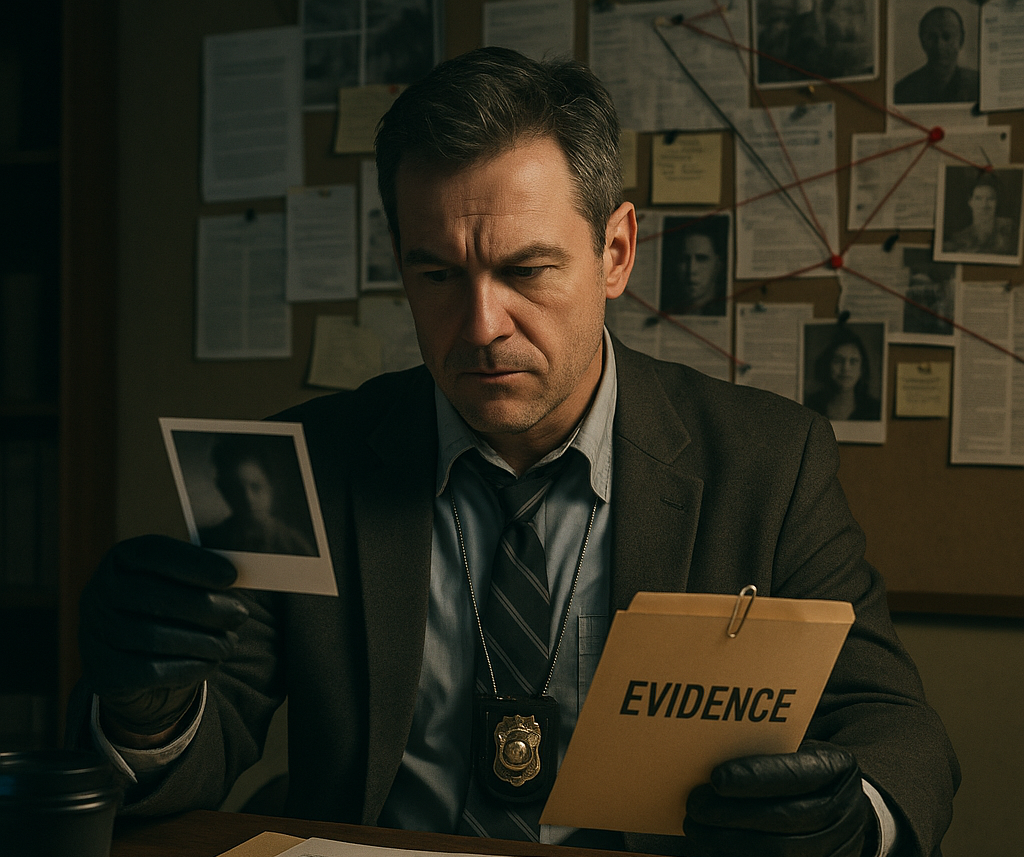
Some crimes lose momentum with time. Others do the opposite—growing more unnerving as the years pass, drawing in new generations of investigators, scientists, and ordinary people trying to understand what went wrong. Cold cases sit at the intersection of forensic science, human psychology, and the limits of what evidence can survive. They remind us how fragile truth becomes when decades pass without answers.
Understanding why some offenders avoid detection for decades intersects with a deeper question in behavioural science — explored in our article Are Serial Killers Born or Made? What Science Really Knows About Human Violence.
Today, breakthroughs in DNA technology, digital forensics, and investigative genealogy mean that even the most iconic cold cases are no longer trapped in the past. While not every case will find a resolution, the tools available today give investigators more leverage than ever before.
Below are 21 of the most famous cold cases in history—each one transformed, in some way, by modern forensic advances.
The killings of two of the most influential figures in hip-hop—Tupac Shakur in 1996 and Christopher Wallace (Biggie Smalls) six months later—became defining tragedies of the 1990s. Their cases were riddled with conflicting accounts, unreliable witnesses, and tangled personal rivalries. Advances in forensic genealogy and renewed investigative focus have recently reframed the Tupac case, illustrating how long-dormant files can evolve when technology catches up.
The discovery of multiple sets of remains along Gilgo Beach turned a quiet stretch of Long Island into one of America’s most scrutinised crime scenes. Forensic genealogy played a central role in identifying suspects decades after the earliest disappearances. Even as proceedings continue, the case highlights how re-examining old physical evidence with new tools can create investigative breakthroughs.
In 1971, a man calling himself Dan Cooper hijacked a flight, parachuted out with ransom cash, and disappeared into the night. Nothing about the case—his identity, fate, or motivations—has ever been confirmed. Periodic releases of FBI files, combined with new forensic reviews of archived evidence, keep the mystery alive. The case is a study in how the absence of a body, weapon, or clean crime scene complicates even a national-level search.
Old cases faltered for predictable reasons: degraded evidence, incomplete records, inconsistent early investigative protocols, or the limits of mid-century forensic science. Today, three developments are rewriting the playbook:
● Forensic Genetic Genealogy (FGG)
● Improved DNA extraction from degraded samples
● Digital reconstruction of crime scenes and timelines
These techniques allow investigators to build family trees from microscopic traces, revisit old witness accounts with new technology, and validate theories that were previously impossible to test.
The Whitechapel murders of 1888 remain one of the earliest and most examined serial homicide cases. Although historical DNA claims surface occasionally, none have been conclusive. The enduring mystery demonstrates a hard truth about cold cases: some pre-forensic crimes may never be conclusively solved due to limited physical evidence.
The 1947 killing of Elizabeth Short became one of Los Angeles’ most infamous unsolved murders. Despite extensive investigation and more than 150 suspects, the absence of definitive forensic evidence has prevented closure. New methodologies help reinterpret old findings, but the original crime scene’s contamination remains a major obstacle.
The Zodiac case continues to fascinate investigators because of its coded letters, inconsistent patterns, and sprawling suspect pool. Thousands of pieces of evidence exist, but no DNA match has ever been conclusively linked to a suspect. The case is a benchmark for understanding both the potential and limitations of early forensic work.
One of America’s most scrutinised crimes, the death of JonBenét Ramsey in 1996, has been hindered by early procedural errors, including scene contamination. Modern DNA re-testing remains ongoing. The case underscores how critical early evidence preservation is—a principle embedded in today’s investigative standards.
In 1922, six members of a Bavarian family were found murdered on their remote farm. Odd clues suggested the killer may have lived undetected in the home prior to the attack. Limited forensic resources in the early 20th century have made the case persistently incomplete, demonstrating how historical context shapes investigative outcomes.
Jimmy Hoffa vanished in 1975 after arriving at a restaurant outside Detroit. Despite extensive searches, no confirmed remains or forensic links have been recovered. Without a crime scene or physical evidence, investigators have been left with theories rather than testable findings.
Seven deaths in 1982 caused by tampered Tylenol capsules led to sweeping national reforms in packaging and product safety. The case remains unsolved, though improved forensic technology continues to be applied to the limited surviving evidence. It remains one of the most consequential unsolved crimes in consumer safety history.
The disappearance of three-year-old Madeleine McCann in Portugal in 2007 prompted one of the largest international missing-child investigations. Advances in forensic profiling and refined suspect examinations continue, though definitive answers remain elusive. The case illustrates how cross-border investigations complicate timelines and evidence handling.
The identity of the well-dressed man found dead on Somerton Beach in 1948 has captivated forensic genealogists for decades. Recent DNA-based claims are still under evaluation, reflecting how unresolved historical cases often evolve slowly as new scientific methods emerge.
Discovered in Norway’s Isdalen Valley in 1970, the unidentified woman’s multiple aliases, coded notes, and unusual injuries created one of Europe’s most puzzling mysteries. Isotope testing and modern DNA efforts have offered clues about her origins, though her identity and motives remain unknown.
The 1966 disappearance of three siblings from a beach in Australia remains a national wound. Multiple excavations have been conducted based on evolving leads, but no remains have been found. The case underscores how early child-abduction protocols were far less developed than today’s standards.
For more than sixty years, the young victim found in a cardboard box in Philadelphia was known only as “America’s Unknown Child.” In 2022, forensic genealogy finally identified him as Joseph Augustus Zarelli—an immense breakthrough that nevertheless leaves the central question unanswered: who was responsible?
The killings of Liberty German and Abigail Williams in 2017 show how modern cold cases differ from historical ones. Digital evidence—including a photo and audio snippet captured by one of the victims—provided investigators with rare real-time clues. The case remains in active legal proceedings, illustrating how new evidence can reshape an investigation years later.
The disappearance and deaths of sisters Patricia and Barbara Grimes in 1956 became one of Chicago’s most heartbreaking cases. A coerced confession prevented proper prosecution, and early forensic limitations left investigators without reliable leads. The case remains a reminder of how investigative practices have evolved.
In 1990, thirteen artworks—including works by Rembrandt and Vermeer—were stolen from the Isabella Stewart Gardner Museum. Despite international inquiries and a $10 million reward, none of the pieces have been recovered. Without physical evidence or surveillance clarity, the case remains one of the world’s most valuable unresolved thefts.
The 1954 murder of Marilyn Sheppard and the wrongful conviction of her husband, Dr Sam Sheppard, reshaped discussions about fair trials and media influence. Although later DNA testing excluded Sheppard, the true perpetrator remains unknown. It is a prime example of how evolving forensic tools can sharpen, but not always complete, a picture.
More than a century later, questions remain about whether Belle Gunness died in the 1908 house fire on her Indiana farm—or escaped. With dozens of suspected victims and contradictory physical evidence, the case remains uniquely difficult to resolve.
Amber Hagerman’s abduction and death in 1996 directly inspired the AMBER Alert system, which has since saved hundreds of children. Her case remains unsolved, demonstrating how even high-profile investigations with immediate public support can stall without actionable evidence.
Cold cases remain open not just because they lack answers, but because investigators continue to believe answers are possible. Modern forensic science has rewritten expectations for what “too late” means, enabling fresh reviews of evidence once considered unusable.
Where older techniques reached their limits, forensic genealogy, advanced DNA extraction, digital reconstruction, and machine-learning analysis provide new paths forward. Each case represents a combination of loss, perseverance, and the pursuit of justice—often long after the original investigators have retired.
The lesson embedded in decades of unresolved crime is simple:
evidence survives longer than certainty, and science evolves faster than we expect.
The term “cold case” is often misunderstood. Even when investigators make an arrest, announce a suspect, or file charges, a case is not considered solved until there is a final conviction in court. Law-enforcement agencies, cold-case units, and academic criminologists all use the same standard:
Arrested does not mean solved.
Charged does not mean solved.
Held in custody does not mean solved.
Confession does not mean solved.
DNA match does not mean solved.
A case only moves out of the “cold” category when guilt is proven at trial or the case is otherwise legally closed.
This is why investigations such as the Gilgo Beach murders or the killings of Tupac Shakur and Biggie Smalls are still treated as cold cases today. Suspects may be in custody, but until a verdict is reached, the crimes remain formally unsolved.
Cases often lack preserved evidence, reliable witnesses, or clear investigative direction. Early procedural errors can also make later testing difficult.
Investigators compare crime-scene DNA with samples in consumer or public genealogy databases to identify potential relatives of a suspect, then build a family tree.
Yes. Modern techniques can sometimes extract usable DNA from materials once considered untestable, including degraded, aged, or mixed samples.
No. Some lack the physical evidence needed for modern testing. Others depend on witness information that no longer exists. However, forensic genealogy has dramatically increased closure rates.