Understand Your Rights. Solve Your Legal Problems


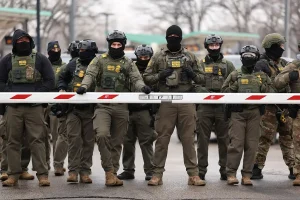
On September 8, 2025, federal officials launched Operation Midway Blitz in Chicago, a high-profile immigration enforcement initiative targeting undocumented individuals with serious criminal records.
While federal officials framed the move as a matter of public safety, its rollout has already sparked sharp disagreement in Chicago’s legal and political circles.
The operation, named in honor of Katie Abraham, a young woman tragically killed in a drunk-driving crash involving an undocumented immigrant, targeted 11 individuals allegedly tied to violent crimes, gang activity, or repeat offenses.
While federal officials framed the crackdown as a “public safety measure,” reports quickly surfaced that arrests had begun even before the official announcement, sparking fears of broader sweeps.
Read the official DHS press release for further details on the operation’s stated objectives and scope.
Illinois Governor J.B. Pritzker and Chicago Mayor Brandon Johnson criticized the move, saying it bypassed local cooperation and undermined the city’s sanctuary policies. Both leaders accused federal officials of politicizing immigration enforcement to score national points while destabilizing local trust in law enforcement.
Senator Dick Durbin echoed their concerns, warning that operations like Midway Blitz risk alienating immigrant communities and could make Chicago less safe by discouraging residents from reporting crimes.
At the heart of the legal debate is federal supremacy versus local autonomy:
Can local sanctuary policies legally resist cooperation in targeted federal operations?
To what extent does the Tenth Amendment protect municipalities from being compelled to enforce federal immigration law?
Does selective targeting of individuals with criminal histories shield the operation from claims of discrimination or due process violations?
Once again, this isn't about fighting crime. That requires support and coordination — yet we've experienced nothing like that over the past several weeks.
Instead of taking steps to work with us on public safety, the Trump Administration's focused on scaring Illinoisians. https://t.co/LoFPM0E4PF
— Governor JB Pritzker (@GovPritzker) September 8, 2025
Protests have broken out across Chicago and its suburbs since the first arrests, with immigrant-rights groups warning that Midway Blitz is less about violent crime and more about sending a political message.
Civil rights lawyers note the way some arrests were carried out, in workplaces, at neighborhood corners and argue that the staging itself was meant to be seen. To them, it’s proof the operation is as much performance as policy.
Clashes like this aren’t new. During the Trump years, cities from Chicago to New York pushed back against ICE raids and the threat of funding cuts tied to sanctuary status.
The legal ground hasn’t settled: federal courts consistently affirm Washington’s power to enforce immigration law, but they also stop short of allowing the government to force local cooperation. That unresolved tension seems destined to resurface here.
Looking ahead, lawsuits are expected. Illinois could even respond with fresh legislation to limit how much it has to cooperate with federal authorities.
In the meantime, immigrant communities are bracing for tighter enforcement despite DHS insisting the scope is narrow. For lawyers, Midway Blitz is a live case study in federalism colliding with community policing.
Why is it called Operation Midway Blitz?
The name honors Katie Abraham, a young woman killed in a crash involving an undocumented immigrant, while also invoking Chicago’s Midway Airport.
Does Chicago have to cooperate with federal immigration enforcement?
No. Under the Tenth Amendment, the federal government cannot compel local law enforcement to carry out immigration duties, though it can operate independently.
What legal challenges could arise from Operation Midway Blitz?
Likely claims include Fourth Amendment violations (unlawful seizures), Fifth Amendment due process concerns, and challenges to the selective targeting of immigrant groups.
Have similar operations faced lawsuits in the past?
Yes. During the Trump administration, sanctuary jurisdictions frequently sued over ICE raids and federal funding threats, producing mixed court rulings.
How to Apply for an Australian Protection Visa, Step-by-Step
How Much Money Can You Get from a Personal Injury Lawsuit in 2025?