Understand Your Rights. Solve Your Legal Problems


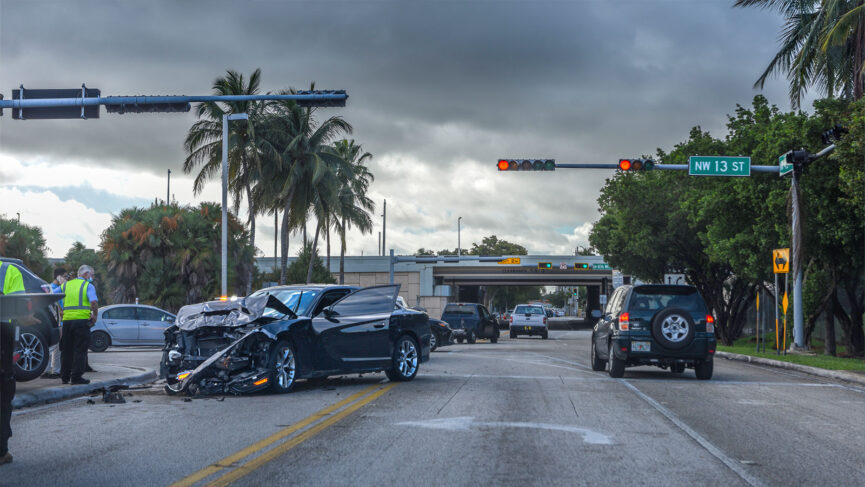
Navigating the aftermath of a vehicle accident in California can be a complex process due to the state's specific laws and liability rules.
California operates under a "pure comparative negligence" system, which means that even if a person is partially at fault for an accident, they can still recover damages, but the amount of compensation will be reduced by their percentage of fault.
For example, if you are found to be 20% responsible for a crash, your total compensation will be reduced by 20%.
This guide covers key aspects of vehicle and traffic accident claims in California, providing a detailed overview of the legal landscape.
This guide covers key aspects of vehicle and traffic accident claims in California, providing a detailed overview of the legal landscape.
For readers seeking a broader discussion of negligence, liability standards, and recent reforms, see California Personal Injury Law: A Complete Guide for 2025.
California operates under an at-fault system, which places the responsibility for damages and injuries on the negligent driver.
This means that after a collision, victims can file a claim directly with the at-fault driver's insurance company or pursue a personal injury lawsuit.
All California drivers are legally required to carry a minimum level of liability insurance. As of 2025, these minimums are $30,000 for bodily injury per person, $60,000 for bodily injury per accident, and $15,000 for property damage.
If a victim's damages exceed these limits, or if the insurance company refuses a fair settlement, a civil lawsuit becomes the primary means of recovering full compensation.
A crucial first step for any accident involving injury, death, or significant property damage (over $1,000) is filing an SR-1 Form with the California DMV within 10 days.
This is separate from the police report and is a mandatory legal requirement for all drivers involved.
The types of damages recoverable in a car accident claim fall into two main categories:
The statute of limitations for filing a personal injury lawsuit is generally two years from the date of the accident. Missing this deadline can result in the loss of all legal rights to compensation.
Motorcyclists, despite their vulnerability, have the same legal rights and responsibilities as other drivers.
If a driver's negligence causes a crash, the injured rider can file a motorcycle accident claim in California for damages, including extensive medical expenses, lost income, and pain and suffering.
A common issue in these claims is the bias against motorcyclists, with insurance companies often trying to assign a portion of the blame to the rider. The pure comparative negligence system is crucial here.
Even if a rider is partially at fault for instance, if they were speeding, they can still recover a portion of their damages.
California law does not legally require riders over the age of 18 to wear a helmet, though failure to do so may be used by the defense to argue that a rider's injuries were made worse by their own actions, potentially reducing their compensation.
California is the only state to have formally legalized lane splitting, the practice of riding a motorcycle between lanes of stopped or slow-moving traffic.
According to CHP’s Motorcyclist Safety Program, lane splitting is legal in California under Vehicle Code § 21658.1, and the CHP issues safety guidelines on how it should be done. Learn more from CHP’s guidance on safe lane splitting.
While legal, it must be done safely. The California Highway Patrol (CHP) recommends that riders do not lane split at speeds more than 10 mph over the surrounding traffic and should avoid it when traffic is moving faster than 30 mph.
If a lane-splitting rider is involved in a crash, a jury will evaluate whether the maneuver was performed safely to determine a percentage of fault.
Pedestrians are among the most vulnerable road users, and California pedestrian accident law mandates that drivers exercise extreme caution.
Drivers are required to yield the right-of-way to pedestrians in marked and unmarked crosswalks, at intersections, and when entering or exiting a driveway. Common causes of pedestrian accidents include drivers failing to yield, speeding, making illegal turns, or being distracted.
The pure comparative negligence rule is a key factor. While a driver is almost always held at least partially responsible, a pedestrian's actions can also be scrutinized.
For example, if a pedestrian was jaywalking, crossing against a “Don’t Walk” signal, or distracted by a cell phone, a percentage of fault may be assigned to them.
The last clear chance doctrine may still come into play, allowing an argument that the driver, despite the pedestrian’s actions, retained the final opportunity to avoid the collision.
Building a strong pedestrian injury claim depends heavily on evidence. Key materials include the police report, eyewitness testimony, surveillance footage from nearby businesses, and thorough documentation of all injuries and medical treatment.
Because these cases frequently involve catastrophic harm, it is critical for victims to seek prompt medical care and to preserve complete records of diagnosis, treatment, and related expenses.
California Vehicle Code § 21760, also known as the "Three Feet for Safety Act," requires motorists to give cyclists at least three feet of clearance when passing.
If a safe pass is not possible, the driver must slow down and wait until they can do so safely. This law provides a clear standard for determining a driver's negligence in a bicycle accident.
When a driver's negligence, such as failure to yield, distracted driving, or violating the three-foot rule causes a crash, the cyclist can sue for damages in a Bicycle Accident Lawsuit in California.
The pure comparative negligence rule applies here as well. Insurance companies may attempt to argue that the cyclist contributed to the accident by failing to use a bike lane, riding against traffic, or not wearing a helmet.
While a cyclist’s violation of a traffic law may reduce their compensation, it does not eliminate the driver’s liability.
In addition to traditional evidence, such as police reports and medical records, bicycle accident cases often benefit from unique forms of evidence.
This can include video footage from the cyclist's helmet or handlebar camera, as well as the testimony of other cyclists or witnesses who understand the dynamics of sharing the road.
Truck accidents are inherently more complex than standard car accidents due to the severity of the damage and the potential for multiple liable parties.
While the truck driver's negligence (e.g., distracted driving, speeding, fatigue) is often the direct cause, liability can extend far beyond them.
Potential liable parties in a truck accident claim in California can include:
Proving a truck accident claim requires an in-depth investigation and a strong legal strategy. Evidence crucial to these cases often includes the truck's "black box" data (event data recorder), the driver's logbooks, maintenance records, and any dispatch communications.
Liability in a rideshare accident is determined by the driver's status on the Uber or Lyft app at the time of the crash. California law recognizes three distinct insurance coverage phases, each with different liability limits:
Passengers injured in a rideshare vehicle are almost always covered by the company’s $1 million policy, regardless of who was at fault for the crash.
Other drivers, pedestrians, or cyclists injured by a rideshare driver who was actively on a trip can also make a claim against this policy.
Proving a rideshare driver's status can be a point of contention, and an attorney can use app records and digital metadata to establish the driver's log-in status at the time of the collision.
Driving under the influence (DUI) is not only a criminal offense but also a form of negligence that can lead to a civil personal injury lawsuit.
A victim of a drunk driving accident can seek compensation for their injuries and losses, a separate process from the criminal case.
In addition to recovering compensatory damages for medical bills, lost wages, and pain and suffering, victims may also be able to recover punitive damages.
California law allows for punitive damages when a defendant's conduct shows "despicable conduct" and a "willful and conscious disregard of the rights or safety of others."
A driver's decision to get behind the wheel while intoxicated is often considered strong evidence of this disregard.
The amount of punitive damages is determined by a jury and is meant to punish the at-fault driver and deter others from similar behavior, often making a civil lawsuit a more effective form of justice than a criminal case alone.
Proving negligence in a DUI-related civil case is often simplified by the legal doctrine of "negligence per se." The Judicial Council of California’s Civil Jury Instructions (CACI) include Instruction No. 418, Presumption of Negligence Per Se.
This doctrine holds that a defendant's actions are presumed negligent as a matter of law if they violate a statute (like a DUI law) that was designed to prevent the type of harm that occurred.
Evidence from the criminal case, such as the police report, blood alcohol content (BAC) test results, and a DUI conviction, can serve as powerful proof in the civil lawsuit.
A hit-and-run is a serious criminal offense in California, with penalties ranging from fines to felony charges and prison time depending on the severity of the accident.
For victims, a hit-and-run can be frustrating because the at-fault driver's identity and insurance information are unknown.
The primary civil remedy for a hit-and-run victim is through their own Uninsured Motorist (UM) coverage.
This coverage is a crucial component of most auto insurance policies and is specifically designed to cover injuries and, in some cases, property damage caused by an uninsured or unidentifiable driver.
To make a claim, the victim must provide evidence of the crash to their insurance company, such as a police report and proof of their injuries.
If the at-fault driver is later identified, the victim can still file a traditional negligence claim against them. In this scenario, the UM claim can be converted to a claim against the at-fault driver's insurance.
Victims of a hit-and-run who are without UM coverage may also be eligible for financial assistance from the California Victim Compensation Board (CalVCB).
The CalVCB is a state program that provides compensation to victims of violent crimes, including those injured in hit-and-run accidents, to cover medical expenses, lost wages, and other financial losses not covered by insurance. Victims must file an application and cooperate with law enforcement to be eligible.
Accidents involving public transportation (e.g., city buses, trains, or municipal vehicles) are governed by different legal rules than typical car accidents.
These cases fall under the California Tort Claims Act, which provides a limited waiver of sovereign immunity, the legal principle that protects government entities from being sued.
The most critical aspect of suing a government agency is the strict and unforgiving deadline for filing a claim. A victim must file a formal notice of claim with the responsible government agency within six months of the date of the accident.
This is a significantly shorter window than the standard two-year statute of limitations for private entities.
The claim form must include specific details, such as the victim's information, a description of the incident, and the amount of damages being sought.
If this six-month deadline is missed, the victim generally loses all rights to pursue a lawsuit.
Liability can be proven in a public transportation accident in several ways:
Once the claim is filed, the government agency has 45 days to respond. If the claim is denied, the victim then has an additional six months from the date of the denial to file a formal lawsuit in civil court.
California has some of the strictest distracted driving laws in the nation. As of July 1, 2025, the law has been clarified to a "no-touch" standard.
It is illegal for a driver to hold or touch a cell phone for any reason while operating a vehicle, even when stopped at a red light.
The only legal way to use a phone is if it is securely mounted and is operated with a single swipe or tap, or through voice commands.
Proving a distracted driving case can be challenging but is crucial for establishing negligence. An attorney can use a variety of evidence to build a case, including:
In a civil lawsuit, a driver who violates California's cell phone law is often considered negligent per se.
A distracted driving violation can also be a key factor in proving "reckless disregard" for safety, which may allow a court to award punitive damages in addition to compensatory damages.
For the legal community, the most critical development in this area is the California Court of Appeal's ruling in People v. Porter, a case that provided a definitive interpretation of the term "operating" in Vehicle Code § 23123.5.
In the case, the defendant was convicted of a traffic infraction for holding his phone to view a mapping application.
He argued that merely looking at the device did not constitute "operating" it.
The Court of Appeal, in a decision published in June 2025, reversed a lower court's finding and reinstated the conviction.
The court's holding effectively closed a significant loophole, ruling that the term "operating" includes all uses of a handheld phone's functions, not just active manipulation like texting or calling.
This ruling affirms that the Legislature's intent was to prevent all forms of distracted driving stemming from the use of modern, multifaceted mobile devices.
As a result, simply holding a phone in your hand while it is on, even for a passive function, is a violation of the Vehicle Code.
This precedent strengthens the foundation for a civil claim, as a plaintiff's attorney can now more easily prove that the defendant's conduct was illegal and, therefore, a breach of their duty of care.
Q: What is the statute of limitations for a car accident claim in California?
A: In most cases, you have two years from the date of the accident to file a personal injury lawsuit in California. However, if the claim is against a government agency, this deadline is shortened to just six months.
Q: Do I need a lawyer for a car accident claim in California?
A: While it is not legally required, a lawyer can be invaluable, especially in complex cases involving serious injuries, disputes over fault, or large trucks and government agencies. An experienced attorney can handle all communication with insurance companies, investigate the accident, and negotiate for the maximum compensation you deserve.
Q: How is fault determined in a California car accident?
A: California uses a pure comparative negligence system. This means that multiple parties can be assigned a percentage of fault for the accident. A person's total compensation will be reduced by their determined percentage of fault, but they can still recover damages even if they are found to be 99% at fault.
Q: What happens if the other driver doesn't have insurance in California?
A: If you are hit by an uninsured driver, your primary remedy is to file a claim with your own insurance company's Uninsured Motorist (UM) coverage. This coverage is specifically designed to protect you in such situations. You can also explore options for financial assistance through the California Victim Compensation Board (CalVCB).