Understand Your Rights. Solve Your Legal Problems


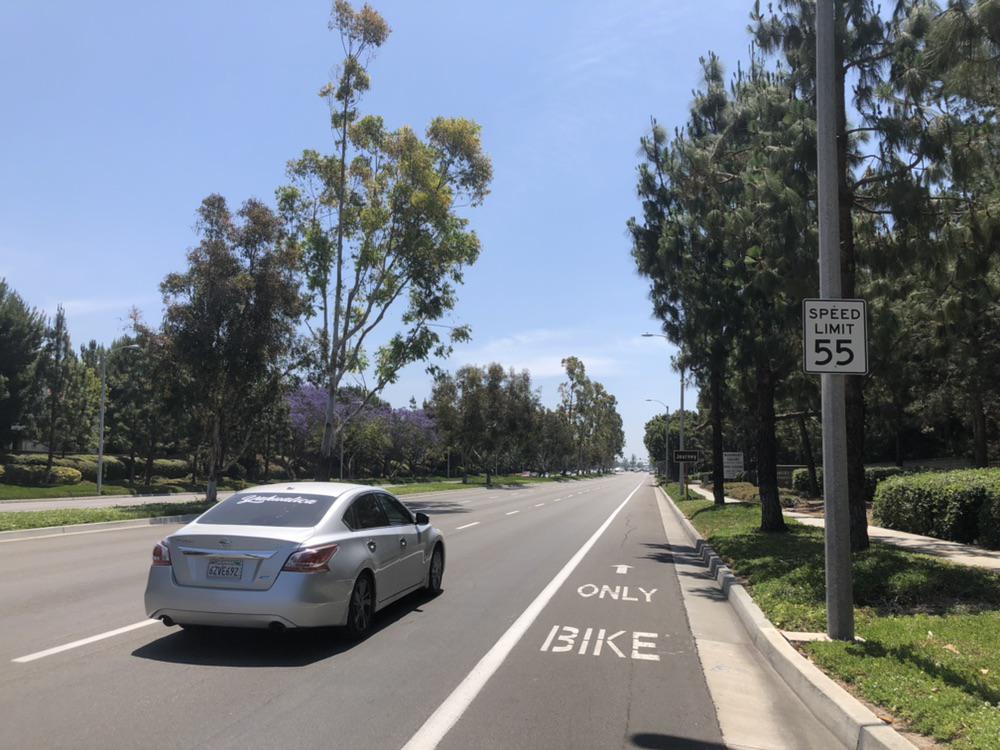
The legal landscape of California’s roadways has undergone a quiet yet profound evolution. With the rise of urban cycling and the state's promotion of active transportation, bicycles have become a central feature of the traffic ecosystem.
This shift has, in turn, elevated bicycle accidents from a secondary concern to a complex and challenging area of tort law.
For legal professionals, representing a party in a bicycle-vehicle collision requires a sophisticated understanding of not only California’s specific vehicle codes but also the nuanced application of negligence, tort claims, and the modern litigation process.
This article provides a comprehensive overview of the key legal doctrines, procedural intricacies, and emerging issues that define bicycle accident lawsuits in California, all centered on the fundamental principle of shared road responsibility.
At the heart of any bicycle accident lawsuit lies the tort of negligence. To succeed in a claim, a plaintiff's attorney must methodically establish four essential elements:
The complexity of these claims is magnified by California’s pure comparative negligence system, a doctrine that requires a nuanced analysis of shared responsibility.
Unlike a contributory negligence model that would bar recovery if the plaintiff bears any degree of fault, California permits recovery even if the plaintiff is found to be 99% at fault.
However, the total damages award is reduced in direct proportion to the plaintiff’s assigned percentage of fault. For example, if a jury determines that a cyclist’s total damages amount to $500,000 but finds the cyclist to be 40% responsible for the collision (perhaps for failing to use a bike lane when one was available), the final award would be reduced by 40% to $300,000.
This framework is a fundamental part of any California Vehicle & Traffic Accident Claims, where the principles of negligence and comparative fault are applied to all collisions, from a simple fender-bender to a catastrophic highway crash.
This system demands that both parties' actions be scrutinized, necessitating a detailed investigation into the conduct of the cyclist as well as the motorist.
In many bicycle accident cases, a plaintiff’s most powerful tool is the doctrine of negligence per se.
This legal principle provides that a defendant’s unexcused violation of a statute, ordinance, or regulation that was designed to protect against the type of injury suffered by the plaintiff creates a presumption of negligence.
This can be a game-changer, shifting the burden to the defendant to prove they were not negligent despite the violation.
A prime example is California’s "Three Feet for Safety Act," codified in Vehicle Code section 21760. This law mandates that a driver passing a bicycle must provide a minimum of three feet of clearance.
If a collision occurs and the motorist failed to adhere to this rule, it can be powerful evidence of negligence per se. The full text of this law, along with other critical traffic regulations, is available on the official California Legislative Information website.
Other statutes frequently invoked include:
Conversely, a driver’s counsel may invoke statutes to argue that the cyclist was negligent per se.
For instance, if the cyclist was riding at night without a required headlight or reflectors, or was riding on the wrong side of the road, these statutory violations could be used to establish the cyclist’s own comparative fault.
The journey from a traffic collision to a final legal resolution is a protracted and multi-faceted process.
It begins with a meticulous pre-litigation investigation by plaintiff's counsel.
This phase involves not only gathering police reports and medical records but also securing crucial evidence like dashcam or nearby surveillance footage, interviewing witnesses, and potentially hiring an accident reconstruction expert to analyze vehicle dynamics.
Following this, a formal complaint is filed with the court, initiating the discovery phase. This is a crucial period for both sides to gather information and assess the strengths and weaknesses of the case. Tools of discovery include:
Before trial, parties often engage in Alternative Dispute Resolution (ADR), most commonly mediation. A neutral third party helps facilitate a settlement, which is a desirable outcome for many cases, avoiding the cost and uncertainty of trial. However, if a settlement cannot be reached, the case proceeds to trial.
During the trial, the jury’s role is to apply the law to the facts presented. This is where the California Civil Jury Instructions (CACI) become an indispensable legal resource.
CACI instructions are standardized, "plain-English" jury instructions that cover a vast array of torts, including negligence, causation, and damages. They provide a clear framework for a jury to follow as they deliberate on liability and compensation.
A claim’s value is determined by a thorough and methodical assessment of the plaintiff’s damages. These damages fall into two primary categories.
These are objective, quantifiable losses that can be proven with a degree of certainty. They include:
This category is more subjective and aims to compensate the victim for the intangible consequences of their injuries. Jurors are instructed to use their judgment to assign a monetary value to:
Proving non-economic damages often relies on compelling testimony from the plaintiff, their family, and friends, as well as the use of medical records and psychological evaluations to paint a full picture of the victim’s physical and mental suffering.
The legal landscape is constantly evolving, and bicycle accident claims are no exception. Several scenarios present unique challenges for legal practitioners.
The complexity of these cases necessitates a comprehensive approach that extends beyond simple traffic law. It requires an ability to navigate layered insurance policies, governmental immunities, and the rapidly changing landscape of micromobility.
California’s shared road responsibilities create a fertile ground for legal disputes when accidents occur.
From the bedrock of negligence and comparative fault to the specialized application of statutory law and the intricacies of the litigation process, a bicycle accident lawsuit is a sophisticated legal undertaking.
For legal professionals, a successful outcome hinges on meticulous investigation, a commanding grasp of California tort law, and a strategic approach to negotiating with insurance companies and, if necessary, litigating in court.
As our roads continue to evolve, so too must the practice of law, ensuring that the rights of cyclists are protected and that all road users are held accountable for their actions.
Who is at fault in a bicycle accident in California?
Fault is determined by negligence and California’s comparative fault system. Both the driver and the cyclist may share responsibility.
What is California’s “Three Feet for Safety Act”?
It’s a law requiring motorists to give cyclists at least three feet of clearance when passing, or risk negligence per se if an accident occurs.
Can a cyclist be found negligent in an accident?
Yes. Cyclists must follow the same traffic laws as drivers. Riding without lights at night, ignoring signals, or riding against traffic can reduce compensation.
How long do I have to file a bicycle accident lawsuit in California?
The statute of limitations is generally two years from the accident date, but cases involving government vehicles require claims within six months.
What damages can I recover in a bicycle accident lawsuit?
Victims may recover medical expenses, lost wages, property damage, and non-economic damages like pain, suffering, and loss of enjoyment of life.