In an era of constant connectivity, video doorbells and social media feeds are becoming the star witnesses in burglary cases, but their testimony is not always reliable.
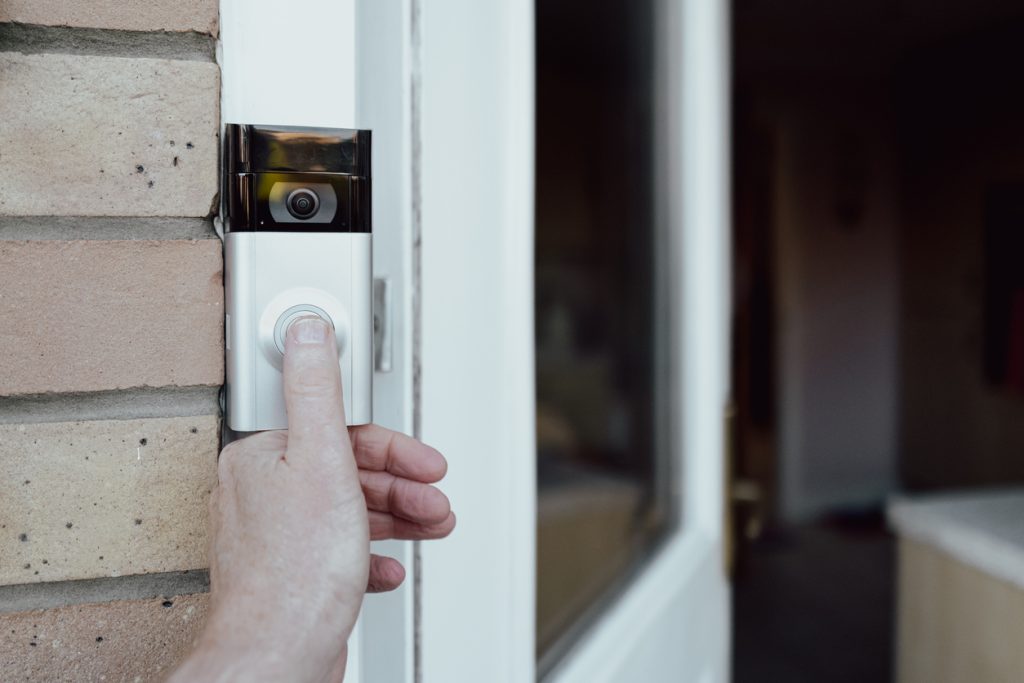
In a dramatic Charleston, South Carolina, case, a man was sentenced to 10 years in prison for a violent assault. The prosecution's case hinged almost entirely on a single piece of evidence: a clear video captured by a Ring doorbell. This digital witness that never sleeps provided an unflinching account of the crime, leading directly to a guilty verdict.
This scenario is no longer an outlier; it represents a fundamental shift occurring in courtrooms across the United States, where a torrent of digital data is reshaping criminal justice. Prosecutors are increasingly leveraging a vast amount of information from doorbell cameras, private CCTVs, social media, and personal devices to secure burglary and theft convictions.
The rise of this technology has been swift, with one-in-five U.S. households now equipped with a video doorbell. While this technological evolution provides law enforcement with powerful new tools, it also raises a crucial question for the American legal system: Does it create a more just society, or one plagued by digital errors, misidentification, and a new set of complex challenges for the accused?
The Prosecutor's New Best Friend: Building Ironclad Cases with Digital Proof
For modern prosecutors, the proliferation of digital evidence has transformed the landscape of property crime investigations, turning once-difficult cases into compelling narratives for a jury. This technology provides more than just a gotcha moment; it allows investigators to construct a comprehensive story of a crime from start to finish.
Law enforcement agencies now regularly corroborate timelines, identify getaway vehicles, and trace a suspect's movements before and after a burglary by piecing together footage from multiple neighborhood cameras. In several recent incidents, police departments have successfully used public appeals, releasing Ring footage to media outlets to crowdsource the identification of suspects who might have otherwise remained anonymous.
A recent report found that 94% of law enforcement professionals—including investigators, forensic video specialists, and command staff—consider video evidence to be very or extremely helpful in solving modern crimes. This powerful investigative advantage can mean the difference between a weak case built on circumstantial claims and a strong prosecution supported by seemingly irrefutable visual proof.
The scope of this evidence extends far beyond the front porch, creating a digital trail that can implicate suspects in numerous ways. For instance, data from a suspect's smartphone can place them at the scene, while social media posts may show them flaunting stolen goods, effectively creating a public confession. This digital footprint provides prosecutors with a rich source of corroborating evidence that strengthens their arguments in court.
The value is so recognized that some police departments have entered into formal partnerships to streamline the process of requesting and receiving footage from homeowners. These new evidentiary avenues have become a standard part of the prosecutorial toolkit.
Key Digital Evidence in Modern Theft Cases
- Video Doorbell Footage: Capturing suspects approaching or leaving a property.
- Private CCTV: From neighboring homes or businesses, creating a web of surveillance.
- Social Media Posts: Suspects bragging about stolen goods or posting their location.
- Geolocation Data: From smartphones, placing a suspect at the crime scene.
- Device Data: Information from smartwatches or fitness trackers that can indicate physical activity.
The Defense Strikes Back: Challenging the Digital Witness
While prosecutors celebrate their new digital toolkit, defense attorneys are adapting to challenge the technology's supposed infallibility. The central counterargument rests on a simple premise: a video clip is not the same as objective truth.
The very nature of doorbell and security footage—often grainy, taken in low-light conditions, or capturing only a partial view of a person's face obscured by a hat or mask—creates a significant risk of misidentification. This is compounded by the psychological effect of confirmation bias, where police, jurors, and even witnesses may see what they expect to see, fitting a defendant's face to a blurry image.
The technology itself is not perfect; "visual bugs" and security vulnerabilities in popular camera systems can erode trust in their reliability. As these cameras incorporate more sophisticated AI features for motion detection and person recognition, the potential for algorithmic error adds another layer of complexity for the defense to dissect.
Is Seeing Believing? The Problem of Misidentification
The reliability of a digital witness is only as strong as the technology that captures it and the legal scrutiny applied to it. Beyond image quality, the digital chain of custody presents a major hurdle for prosecutors and a key point of attack for the defense. Evidence must be authenticated, meaning it must be proven to be a true and accurate representation of the events, free from tampering or alteration. This process involves verifying timestamps, analyzing metadata for inconsistencies, and ensuring the video file has not been edited or manipulated. A conviction based on flawed or misinterpreted digital evidence can be catastrophic for a defendant. The introduction of AI-powered analysis, while designed to help, can sometimes introduce its own set of problems, as algorithms have been shown to have biases or make mistakes in identifying individuals, particularly those from minority communities.
Legal Insight: A Modern Defense for a Modern Crime
In this new technological era, the role of the defense attorney has expanded to include that of a tech-savvy investigator. Successfully challenging digital evidence requires a deep understanding of how these systems work, from camera lens distortion to data storage and transmission intricacies. This is where modern, forward-thinking legal practices are making a significant impact.
A grainy video can create a powerful narrative in the minds of a jury, but a narrative isn't objective fact, says Jason Barlow, a criminal defense attorney and partner at Parks Zeigler. "As a former prosecutor, I've seen how compelling this footage can be. But as a burglary defense lawyer, our job now involves deconstructing that technology. Was the timestamp accurate? Could the camera angle or lens distortion mislead? In a world of AI-generated content and deepfakes, treating every digital clip as gospel is a dangerous assumption for justice."
This sentiment reflects a growing specialization within criminal law, where defense teams increasingly rely on forensic experts to analyze digital files. These experts can identify metadata anomalies, challenge facial recognition software's accuracy, or demonstrate how poor lighting could lead to misidentification. As the attorneys at Parks Zeigler, PLLC emphasize, a client-centered approach that tailors defense strategies to the unique circumstances of each case is critical when a person's freedom hinges on the interpretation of a few seconds of video. A rigorous defense is not just about cross-examining human witnesses; it is about cross-examining the digital one.
The Bigger Picture: A Safer Society or a Surveillance State?
The debate over video doorbells and private surveillance extends beyond the courtroom, touching upon fundamental questions about society. On one hand, there is a strong perception that video doorbells contribute to a heightened sense of community safety. The deterrent effect is a key feature promoted by companies like Ring, which has established formal partnerships with over 2,000 police departments across the U.S. through its parent company Amazon's Neighbors app. This collaboration enables a streamlined process for law enforcement to request video footage, which officers often credit with helping them investigate and solve crimes more efficiently.
Although comprehensive independent studies on deterrence remain limited, law enforcement agencies have publicly supported these partnerships as valuable tools for public safety. This institutional adoption signals a strong belief that these cameras are effective.
On the other hand, privacy advocates raise serious concerns about the societal cost of this convenience, warning of a slide into a pervasive surveillance state. The sheer volume of data collected by private corporations raises questions about who has access to it, how it is protected from hackers, and how it might be used beyond law enforcement. This has created what some call a chilling effect, where individuals feel constantly watched not only by their neighbors, law enforcement, and the corporations that own the platforms. The potential for this network of cameras to be used for mass surveillance, tracking the movements of ordinary citizens, remains a significant point of contention. Below is a summary of these competing arguments.
| Aspect of Widespread Surveillance | The Argument For (Increased Safety) | The Argument Against (Reduced Privacy) |
|---|---|---|
| Crime Deterrence | Visible cameras are a powerful deterrent, measurably reducing property crimes like burglary. | Creates a culture of distrust where everyone is a potential suspect, eroding community support. |
| Evidence for Police | Provides invaluable, time-stamped visual evidence to help police identify suspects and secure convictions. | Data can be shared with third parties or hacked, risking personal and household data. |
| Community Feel | Fosters a sense of collective security, like a digital Neighborhood Watch program. | Can lead to over-reporting and racial profiling based on ambiguous footage or unconscious bias. |
| Legal Justice | Helps ensure the guilty are convicted with strong, corroborating evidence. | The defendant must provide proof of their innocence against a seemingly objective but fallible digital witness. |
The Unblinking Eye of Justice
The digital witness is now a permanent and powerful fixture in the American courtroom, fundamentally altering the dynamics of justice for property crimes. It embodies a central tension of our technological age: the same camera that can provide undeniable proof of guilt also holds the potential to wrongfully implicate an innocent person through error, bias, or misinterpretation.
As these systems become more integrated into daily life and the legal process, a challenge for the justice system is not whether to use this evidence, but how to do so with wisdom, caution, and a deep respect for individual rights. The future of justice may depend on ensuring legal safeguards—due process, the presumption of innocence, and the right to a rigorous defense—evolve just as quickly as the unblinking technology that puts them to the test.