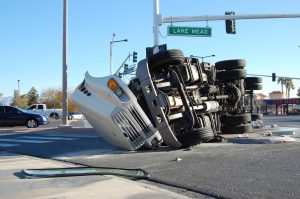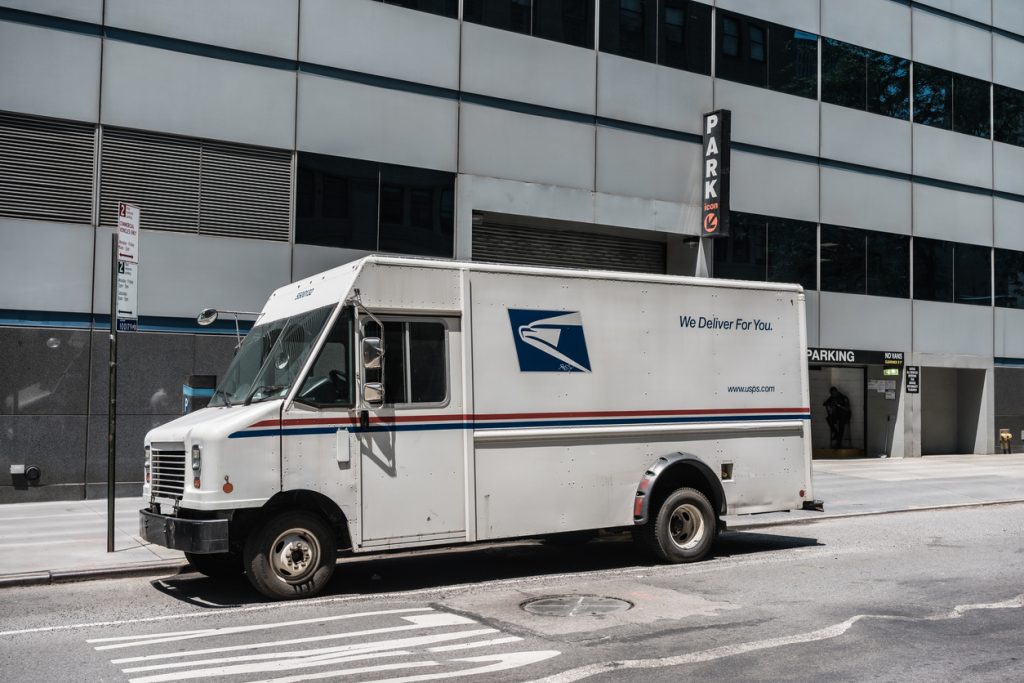
New York City's streets, a labyrinth of perpetual motion, are increasingly dominated by a new and dangerous rhythm—the relentless pulse of commercial delivery trucks. According to official city data, e-commerce giants and countless other services race against the clock, contributing to many crashes in an already chaotic urban environment. This high-speed logistics network, while convenient, has introduced a new element of danger, fueled by the immense pressure to meet delivery quotas, often tragically eclipsing public safety.
The human cost of this system was cast into stark light by the death of Leony Salcedo-Chevalier, a 34-year-old worker from New Jersey. He was fatally struck by a delivery box truck at Amazon's JFK8 facility in Staten Island, New York. According to a report from amNY, the car, operated by a third-party contractor, was backing up at a loading dock late at night.
This tragic incident did more than highlight the immediate dangers faced by workers; it underscored a critical legal question that extends far beyond the individual driver: When a commercial truck crash devastates lives, who is honestly held accountable for the immense financial and emotional damages?
The answer lies within a complex legal framework designed to follow the money and assign liability where it belongs. The central issue is whether responsibility is limited to the driver—often a low-wage independent contractor with minimal insurance—or if it climbs the corporate ladder to the powerful companies that have created the business model that leads to these devastating outcomes.
The Legal Battle: Following the Money Up the Corporate Ladder
For victims of a severe commercial truck accident, the immediate aftermath often reveals a daunting financial reality. The driver, whether an employee or an independent contractor, may only carry the minimum insurance coverage required by New York State. This initial layer of compensation is often woefully insufficient to cover the catastrophic costs associated with life-altering injuries, extensive medical treatments, lost lifetime earnings, and long-term rehabilitative care. This is a deliberate part of the gig economy business model, which seeks to insulate corporations from the financial risks of their operations by outsourcing liability to under-insured contractors.
This financial shortfall forces victims and their legal representatives to seek a party with deeper pockets to ensure a just recovery. The goal is not merely to obtain a settlement but to secure compensation that covers the full extent of the damages. The vicarious liability doctrine explicitly enables victims to seek compensation from employers with greater financial resources than their drivers. This legal strategy becomes essential for victims to have a realistic chance at rebuilding their lives after a tragedy.
The Doctrine of Corporate Responsibility: Respondeat Superior
The primary legal principle to hold companies accountable is respondeat superior, a Latin term that translates to let the master answer. This doctrine establishes that an employer can be held legally responsible for their employees' wrongful or negligent actions, provided those acts were committed within the scope of their employment.
To successfully apply this principle, attorneys must prove two critical elements.
First, an employer-employee relationship must be established. This is not always as simple as a job title; companies often classify drivers as independent contractors to shield themselves from liability. However, New York courts look beyond these labels to the reality of the relationship, examining the level of control the company exerts, such as setting delivery routes, mandating schedules, or enforcing strict performance quotas.
The second element is that the negligent act must have occurred within the scope of employment, which includes any action, like a driver rushing to meet a deadline, that ultimately benefits the employer. This principle is a cornerstone for holding companies financially responsible and falls under the broader framework of New York's vicarious liability laws.
Building the Case: The Evidence That Exposes Negligence
Proving a company's liability in a truck crash case involves more than just pointing to the driver's error; it requires building a case demonstrating a corporate negligence pattern. Attorneys investigate whether the company fostered an environment where safety was compromised for profit and speed.
App-based companies' push for aggressive delivery quotas has become a significant point of contention. NYC proposes new rules to hold these services accountable for promoting unsafe driving practices.
Proving a company's liability in a truck crash case involves more than just pointing to the driver's error; it requires building a case demonstrating a corporate negligence pattern. A thorough investigation that seeks to establish vicarious liability New York often uncovers crucial evidence that links a company's policies directly to a crash.
Key evidence in a commercial truck crash claim includes:
- Driver's History and Training Records: Did the company conduct a proper background check? Was the driver adequately trained and licensed, or did they have a history of accidents or violations that were ignored?
- Vehicle Maintenance and Inspection Logs: A poorly maintained vehicle clearly shows negligence. This was highlighted in an NTSB report on a fatal I-84 bus crash, which found that a steer-axle tire failure caused the driver to lose control, underscoring how mechanical failures can lead to tragedy and how maintenance is a key element of liability.
- Electronic Data Recorder (Black Box): This device is a vital source of objective information, recording the truck's speed, braking patterns, and hours of service, which can prove if a driver was speeding or suffering from fatigue. Failure to preserve this type of data can lead to a legal presumption of wrongdoing, known as spoliation of evidence.
- Company Delivery Quotas and Policies: Internal documents revealing unrealistic delivery demands can be used to argue that the company created systemic pressure that encouraged reckless driving.
- Driver's Communication Logs: Text messages, app notifications, or dispatch calls can prove that the company was directing the driver's actions at the time of the incident, solidifying the scope of employment argument.
New York's Powerful Tool: The Owner Liability Law
Beyond the doctrine of respondeat superior, New York State provides a potent legal tool for victims of vehicle accidents. This law simplifies holding companies accountable by focusing on one simple fact: ownership. New York Vehicle and Traffic Law Section 388 explicitly states that the owner of a vehicle is financially responsible for any resultant injuries or damages caused by any person operating that vehicle with the owner's permission.
This statute creates a form of automatic liability that is difficult for companies to evade. As legal case law affirms, this means that in New York, vehicle owners are automatically vicariously liable for the actions of their drivers. This rule significantly strengthens a victim's position, as seen in cases where an accident involves a third-party contractor.
Even if the driver is classified on paper as an independent contractor, Section 388 means the truck's owner—whether it's the corporate giant directly or a contracted third-party logistics company—is financially liable. The only narrow exception is when a vehicle is used without the owner's permission (e.g., a stolen vehicle). This law effectively pierces the corporate shield, a principle affirmed by key rulings such as Argentina v. Otsego Mut. Fire Ins. Co. (86 N.Y.2d 748, 1995), which set a high bar for owners seeking to evade liability.
The Path to Justice
While the chaotic influx of commercial delivery vehicles on New York City's streets has created a landscape fraught with risk, the legal system provides clear pathways to accountability. This is not merely a local issue; the accelerated rise of the gig economy has sparked a national debate over corporate responsibility, with New York City at the forefront of implementing regulations like a new minimum wage for app-based delivery workers that directly address the precariousness of their employment.
The chain of responsibility for a devastating truck crash does not end with the person behind the wheel. Powerful legal doctrines like respondeat superior and uniquely potent state laws like Vehicle and Traffic Law Section 388 ensure that victims can pursue justice by holding major corporations financially responsible for the dangerous conditions their business models create.
Ultimately, the legal battle following a commercial truck crash is about more than just securing financial compensation. It is a fight for accountability that aims to compel corporate giants to prioritize public safety over aggressive delivery schedules and profit margins.
For the individuals and families whose lives are shattered by these preventable incidents, navigating this complex legal system represents the only viable path toward justice and the monumental task of rebuilding their lives.