Understand Your Rights. Solve Your Legal Problems


Updated August 24, 2025.
Lyle and Erik Menendez admitted to killing their parents, Jose and Kitty Menendez, but claimed they acted out of fear after years of physical, emotional, and sexual abuse. Prosecutors, however, argued the murders were driven by greed — that the brothers wanted control of their parents’ multimillion-dollar estate.
Their story has since become one of the most infamous and debated true crime cases in American history. Below is the complete Menendez brothers’ timeline of events.
Erik and his best buddy from high school, Craig, came up with a movie idea about a rich kid who offed his parents for cash. Kitty is said to have typed up the screenplay. Although it didn’t make it into evidence during the trials that followed, it’s still an important piece of the puzzle.
Lyle got kicked out of Princeton for plagiarism and found himself back in California. While he was home, he and his brother pulled off two big burglaries. As Dominick Dunne mentioned in Vanity Fair, "These burglaries were significant; they involved cash, valuables, and some serious bling, totaling around $100,000, taken from neighbors' safes. One of Erik’s buddies, who figured out the combo to his friend's dad's safe, was in on the first job.
That same friend got left out of the second heist and ended up snitching on them." He went on to say, "Jose decided that Erik, who was still a minor, would take the blame for both of them. Thanks to a deal their lawyer worked out, Erik ended up with probation and mandatory counseling." Erik then started seeing Dr. Jerome Oziel, and he signed a confidentiality waiver so Oziel could share anything he learned with Jose and Kitty.
In 1987, Princeton accepted Lyle’s second application. He was accepted to the college more because of his background and tennis ability, over his actual academic successes. Lyle had pretty average high school grades. Lyle is accused of plagiarizing an assignment in his Psychology class, and then suspended for a year.
Billionaire Boys Club is a two-part television film that aired on NBC in 1987. It told the story of the Billionaire Boys Club, and its founder, Joe Hunt, who was convicted in 1987 of murdering con-man Ron Levin. This drama, inspired by real events, tells the story of Joe Hunt, a cutthroat investor who will stop at nothing to build his wealth through shady tactics.
When con artist Ron Levin (Ron Silver) gets tangled up with Hunt's dubious operations, their partnership takes a dark turn. Before long, Levin ends up dead, and Hunt believes he's escaped the consequences of his actions. However, Hunt's relentless ambition and greed may ultimately lead to his downfall.
Prosecutor Lester Kuriyama later claimed that the film's storyline mirrors what the brothers did to their parents, and they had seen it just before the events unfolded.
In episode four of Monsters, it’s revealed that the day before the murders, the family hired a charter boat named Motion Picture Marine for a shark fishing trip. The captain later mentioned that the brothers mostly hung out at the front of the boat, keeping their distance from Jose and Kitty.
Erik, who was 18, and Lyle, at 21, tragically took the lives of their parents, Jose and Kitty, on Sunday, August 20, 1989. They used 12-gauge shotguns and shot their parents a total of 14 times.
Erik's confesses about the murders to best friend to Craig Cignarelli 12 days after the bloody shootings.
Erik reached out to Dr. Oziel on the day of Halloween 1989. He later shared with journalist Robert Rand, "I struggled to explain why I was feeling suicidal because I hadn’t told him I killed my parents, so he wasn’t really understanding."
Erik felt the need to confide in someone, and he chose that moment to open up. "I really wanted him to reassure me that I wasn’t a bad person, but he couldn’t do that without knowing the truth about my parents." After that, Oziel suggested they call Lyle to come to the office. Judalon Smyth mentioned she was in the waiting room during all of this.
At first, the police thought the murders were linked to the mob, which led Erik and Lyle to hop from one hotel to another to stay under the radar. But soon enough, the cops started to eye the brothers suspiciously and turned to Erik's close friend, Craig Cignarelli, for assistance.
According to Vanity Fair, Erik admitted to Cignarelli that he had killed his parents just 12 days after the crime. So, in November, a few months after the August murders, the police asked Craig to wear a wire to catch a confession on tape. But when Craig met up with Erik again, he backtracked on his earlier claim, saying he had lied and hadn’t actually killed his parents. On cross-examination, Cignarelli said he had initially told police on Nov. 17, 1989, that he remembered the confession occurring the month before, in October.
Craig, following the police's request, brought a tape recorder to a two-hour dinner at Gladstones with his buddy. Later, when they talked about that night again, Erik switched up his story.
The therapist managed to persuade Lyle and Erik to allow him to record their sessions.
Judalon Smyth plays a crucial role in the Menendez brothers' case because of her connection with Dr. Jerome Oziel. She first crossed paths with Oziel in June 1989 when she was running a tape-duplicating business and suggested they market tapes of him discussing psychology. She told police that not only had Lyle and Erik confessed, but Oziel had tapes of their confessions. After, officers searched Dr. Oziel's home under a warrant, seizing records and tape recordings.
Beverly Hills Police arrested Lyle outside his parents' mansion.
When Lyle was arrested, Erik was in Israel for a tennis tournament. Erik flew from Israel to London, England, London to Miami and Miami to Los Angeles. On his departure at LAX International, Erik was met by the police. He surrendered at Los Angeles International Airport upon his retrial.
After the brothers were arrested, there was a heated debate between the state and their defense lawyers about whether the recordings made by Oziel could be used in court.
"Before the trial began, both sides argued over the admissibility of certain tapes recorded by the brothers' psychologist during therapy sessions," the American Psychological Association notes about the situation.
"The defendants claimed that these recordings were protected as confidential patient-therapist communications. However, the California Court of Appeal ruled that the recordings were not protected. Some of the content was considered outside the privilege due to California's Evidence Code, specifically the dangerous patient exception. Additionally, other parts were ruled not privileged because the court found that the discussions between the psychologist and the brothers took place in sessions that weren't intended for therapy."
In August 1992, the California Supreme Court decided that two of Oziel's recordings could be used in court due to the "dangerous patient" exception, but the other two couldn't, including one where Erik confesses to the murders, because they were considered privileged communication.
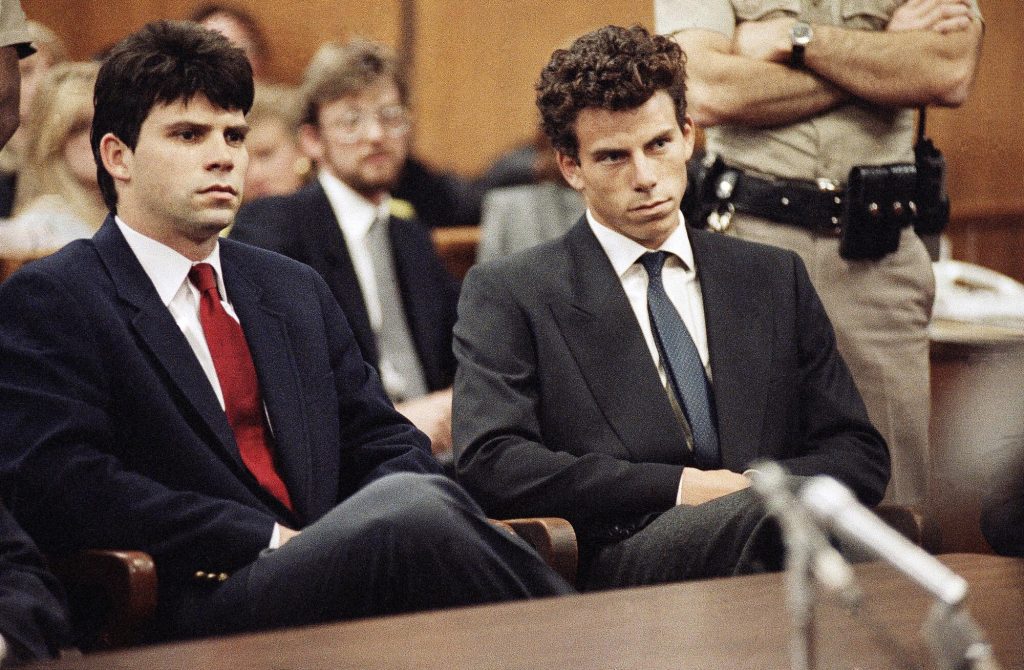
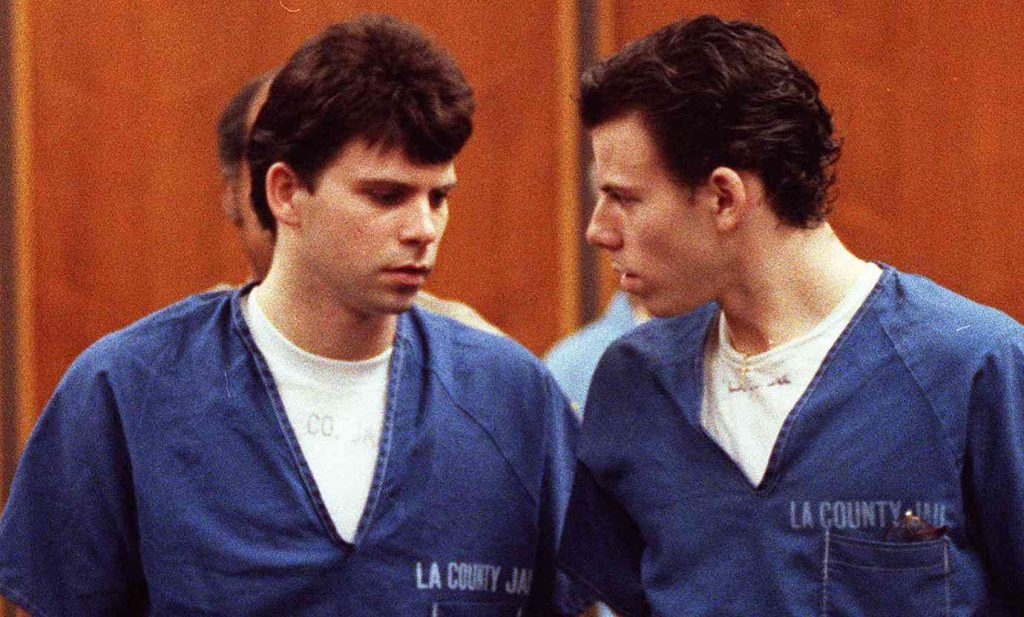
Erik and Lyle Menendez in Court
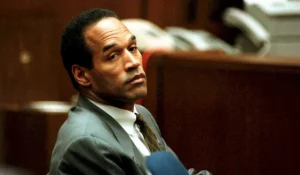
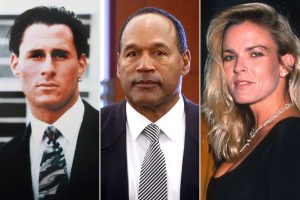
Defense Lawyer Robert Shapiro worked with the Menendez brothers very briefly before the brothers switched to Jill Lansing (Lyle's attorney) and Leslie Abramson (Erik;s attorney). Robert Shapiro was a top L.A. defense lawyer and represented former NFL star O.J Simpson in his 1995 murder trial of which Simpson was found Not guilty of the murders of former partner, Nicole Brown Simpson and Ronald Lyle Goldman.
They were put on trial together, but each had their own jury since some evidence could only be used against one brother and not the other, as reported by the Washington Post. Both brothers shared their experiences of the sexual abuse they faced. Interestingly, the trial was shown on CourtTV. According to John D. Rogers law office, the Menendez brothers' trial stood out for a few reasons. One big factor was the extensive media attention it got.
It was broadcasted on national TV and captured the interest of the American public. Another key point was the introduction of the 'extreme emotional disturbance' defense, which was pretty new back then and hadn’t been seen in many previous cases. Plus, it was the first time the abuse defense was brought up in a murder trial.
The jury informed the judge that they were completely stuck, according to the Washington Post. The New York Times mentioned that the jurors said the main issue causing their confusion was figuring out how badly the brothers had been mistreated and whether that mistreatment was enough to justify what they did.
During their second, joint trial, the judge excluded evidences of abuse from their defence case. A jury found them guilty and the pair were convicted of first-degree murder and conspiracy to murder in 1996.
On July 2, 1996, Erik and Lyle were both sentenced to life imprisonment without the possibility of parole.
As the trial wrapped up, Judge Stanley M. Weisberg decided that the 'abuse excuse' defense was off the table. This meant the jurors had to choose between completely acquitting the brothers or finding them guilty of murder, according to the New York Times. At that time, Time noted that the jury sided with the prosecution, believing the brothers killed their parents to access the family wealth, and dismissed the defense's claim that the murders were a reaction to abuse.
In 1997, the Menendez brothers’ defence team filed an appeal, seeking to overturn their convictions for the murders of their parents. They argued that significant errors were made during the trial, particularly regarding improper jury instructions that could have influenced the verdict.
Despite these claims, the California Court of Appeal rejected the appeal, ruling that the trial had been conducted fairly and upholding the original convictions. This decision solidified their life sentences and left the brothers with limited legal avenues to challenge their conviction at the time.
In 1999, the Menendez brothers filed a motion requesting a new trial, arguing that their original defence had been inadequate and that the jury had been improperly influenced by prejudicial information.
They also claimed that key evidence had been excluded during the trial, which could have supported their case. However, the court rejected their motion, ruling that there were no grounds for a retrial and upholding the original convictions. This decision effectively closed the door on their attempts to challenge their sentences at that time.
In 2010, the Menendez brothers filed a post-conviction petition to reopen their case, citing new evidence that alleged sexual abuse by their father, Jose Menendez. This petition was based on public revelations made through media interviews and documentaries, which brought forward the brothers' claims of abuse as a key part of their defence.
However, the court ruled that the new evidence was not compelling enough to warrant a retrial, and the petition was denied. The convictions remained in place, as the court determined that the new claims did not alter the outcome of the original trial.
In 2017, the Menendez brothers’ legal team filed a motion for a new trial, presenting new evidence, including testimonies and documentation of alleged sexual abuse by their father, Jose Menendez. One key piece of evidence was a signed statement from Roy Rossello, a former Menudo member, who accused Jose Menendez of sexual abuse.
Despite this, the court ruled that the new evidence was not substantial enough to justify a retrial, and the petition was denied. The brothers’ convictions remained intact, as the court determined the new information did not significantly impact the case’s outcome.
Throughout their imprisonment, Lyle and Erik Menendez had periodic parole hearings, with their legal teams advocating for early release based on their good behaviour and rehabilitation. These hearings, a standard part of the parole process for life sentence prisoners, occurred every few years. However, in each instance, parole was denied.
The parole board emphasised the severity of the crimes and determined that the brothers should continue serving their life sentences. Despite their rehabilitation efforts, the board maintained that the nature of their crimes warranted the full length of their sentences.
Lyle and Erik Menendez have had multiple parole hearings since their conviction. Erik had three hearings, with denials in 2005, 2010, and 2017. Lyle had two hearings, with denials in 2005 and 2012. In each case, parole was denied due to the severity of the crimes and the need to serve their sentences.
On November 17, 2022, the Menendez brothers’ legal team submitted a formal clemency petition to California Governor Gavin Newsom, urging a reconsideration of their life sentences. The petition highlighted new evidence of childhood abuse, their rehabilitation efforts, and the lasting mental health impacts of their trauma. As of 2023, the clemency petition remains under review, with no decision made yet. This ongoing review reflects continued efforts to reassess their case, based on evolving understandings of trauma and rehabilitation.
Since their convictions in 1996, the Menendez brothers have continued to seek a reduction in their life sentences through periodic legal motions. Their defence teams have argued that the original sentences are disproportionate, especially given the time they have already served.
They contend that the brothers’ sentences do not adequately take into account the extensive trauma and mental health issues they endured as children, particularly the alleged abuse they suffered at the hands of their father, Jose Menendez. The brothers have both spoken extensively about their childhood trauma, which they claim played a significant role in the events leading to the murders of their parents.
Over the years, the legal teams have stressed that their rehabilitation and good behaviour in prison should be factored into any reconsideration of their sentences, as they have reportedly shown remorse and worked to improve themselves during their incarceration. However, despite these ongoing legal motions and petitions, no substantial changes have been made to their sentences.
Each motion for sentence reduction has been met with rejection, with courts citing the severity of the crime as the primary reason for upholding the life sentences. As of now, the Menendez brothers continue to serve their sentences, though their legal teams remain persistent in their efforts to secure a reconsideration of their cases based on the brothers’ personal growth and the traumatic circumstances of their youth.
In January 2025, a hearing to determine whether the Menendez brothers should be resentenced more than 30 years after murdering their parents was delayed due to the ongoing fires in the Los Angeles area. Initially set for later this month, the hearing for Erik and Lyle Menendez has been rescheduled for March, as announced by the county's top prosecutor in January.
This marks the second postponement by Nathan Hochman, the new Los Angeles County District Attorney, regarding the brothers' future behind bars. His predecessor, George Gascon, had previously recommended they be resentenced and granted parole. The brothers are currently serving life sentences for the 1989 murders.
Meanwhile, Los Angeles continues to battle the fires, which have claimed at least 27 lives and devastated numerous communities.
In April 2023, former Menudo member Roy Rosselló claimed that José Menendez sexually assaulted him as a teenager. The allegation fueled renewed public debate and added weight to the brothers’ long-standing defense that their father had subjected them to years of sexual abuse. The claim was widely covered in media outlets and used by the defense team in their push for a resentencing.
In October 2024, then–District Attorney George Gascón recommended the brothers be resentenced under California’s youth offender sentencing reforms, which allow parole consideration for those who committed serious crimes before the age of 26. A Los Angeles judge agreed in May 2025, formally resentencing Lyle and Erik to 50 years to life, making them immediately eligible for parole after serving nearly 35 years.
August 21, 2025 – Erik Denied Parole
After a nearly 10-hour hearing, Erik Menendez was denied parole by the California Board of Parole. The board cited the brutality of the murders, the possession of contraband cell phones in prison, and what they described as “unreasonable risk to public safety.”
August 22, 2025 – Lyle Denied Parole
One day later, Lyle also faced the parole board. While commissioners acknowledged his remorse and positive prison record, they pointed to “ongoing signs of anti-social behavior” and similarly denied his release.
Both brothers were issued three-year denials, though they remain eligible for administrative review in 18 months.
Following the denials, Talia Menendez, Erik’s daughter, declared on Instagram that the “fight is not over,” blasting the parole process as “mental torture.” She also criticized celebrities who previously expressed support but have stayed silent, singling out actor Cooper Koch—who portrayed Erik in Netflix’s Monsters—as the only consistent supporter.
Meanwhile, actress Rosie O’Donnell, who has long maintained contact with the brothers, publicly renewed her call to “Free the Menendez brothers,” sparking backlash and reigniting debate about whether the siblings should ever be released.
As of August 2025, Lyle (57) and Erik (54) Menendez remain incarcerated at the Richard J. Donovan Correctional Facility in San Diego, where they were reunited in 2018 after spending nearly two decades in separate prisons.
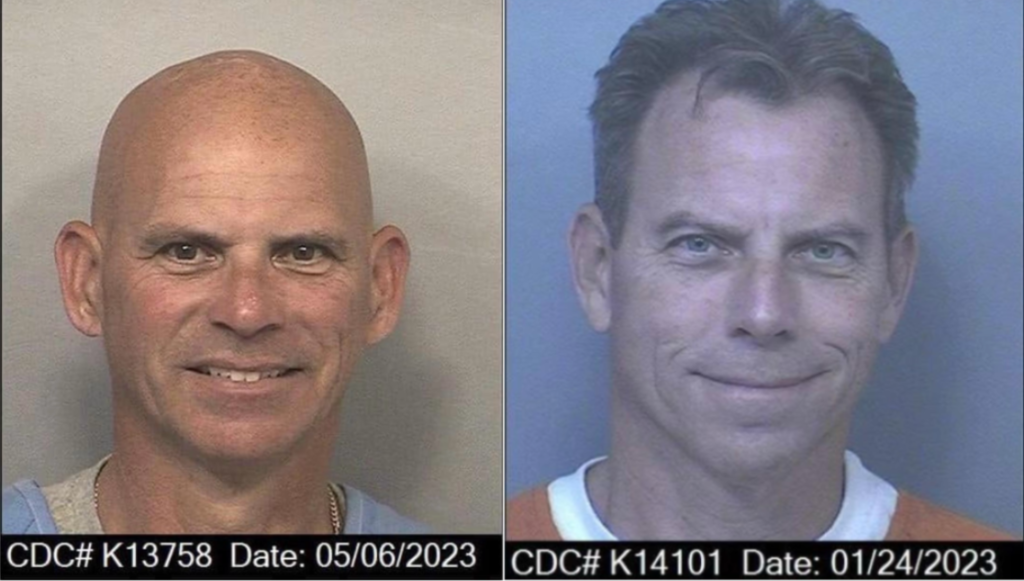
Both men have married while behind bars. Lyle wed Anna Eriksson in 1996, though the marriage ended in divorce in 2001. He later married Rebecca Sneed in 2003. Erik married Tammi Saccoman in 1999, and she has remained one of his most vocal supporters, often speaking publicly about their relationship and his rehabilitation.
Their most recent legal fight centered on California’s youth offender laws, with a judge resentencing them in 2025 to 50 years to life, making them parole-eligible after 35 years served. Yet in back-to-back hearings this August, both brothers were denied parole. The board cited public safety concerns, disciplinary violations, and what it called ongoing signs of anti-social behavior.
Despite these setbacks, their attorney Mark Geragos has vowed to appeal the denials directly to Governor Gavin Newsom, who has the authority to overturn parole board decisions in extraordinary cases.
For now, the Menendez brothers remain behind bars — symbols of one of America’s most notorious family murder cases, and central figures in a decades-long debate over trauma, accountability, and rehabilitation.
RELATED: Fact-Checking ‘Monsters: The Lyle and Erik Menendez Story’: Fact v Fiction