Understand Your Rights. Solve Your Legal Problems


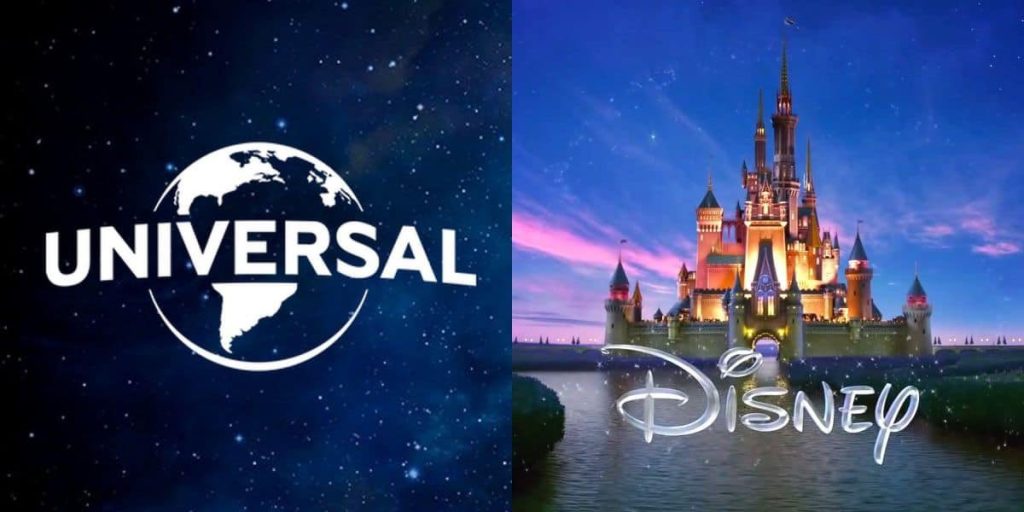
It sounds like the opening of a surreal crossover film: Yoda raises his lightsaber, Shrek smirks from the corner, and Elsa conjures an icy palace — all sharing the same scene. But these images weren’t rendered by Disney animators or Universal’s VFX teams. They were generated by a user typing a few prompts into an artificial intelligence image-making tool called Midjourney.
On June 11, 2025, Disney and Universal filed a federal lawsuit in the U.S. District Court for the Central District of California, accusing the San Francisco startup of mass copyright infringement. According to the studios, Midjourney didn’t just imitate their works — it allegedly “pirated” entire creative libraries to train its AI models, enabling users to create “endless unauthorized copies” of some of the most valuable characters in entertainment history.
In their complaint, the studios say Midjourney has been reproducing and distributing characters like Darth Vader, Iron Man, Buzz Lightyear, Elsa, the Minions, Shrek, and Toothless from How to Train Your Dragon. They argue this goes far beyond homage or parody. Instead, they claim it is clear-cut direct copyright infringement under the U.S. Copyright Act (17 U.S.C. § 101 et seq.), as the images are either near-identical reproductions or derivative works created without a license.
The studios also accuse Midjourney of secondary liability, arguing that the company knowingly encouraged subscribers to generate infringing content and profited from it through paid subscription tiers. They say they repeatedly asked Midjourney to install technical measures to block prompts referencing protected characters, but those requests were ignored. In their view, each new software update has only made the problem worse, producing even higher-quality replicas of protected works.
Disney and Universal are now asking the court for a preliminary injunction to stop Midjourney from offering unlicensed reproductions and for damages that could reach into the hundreds of millions.
Midjourney has pushed back hard against the allegations, filing its own response in August 2025. Its central argument rests on transformative fair use — the idea that the way it trains its AI models is fundamentally different from simply copying and selling another company’s content. In this view, the AI is “learning” from the data in much the same way a human artist might study existing works before creating something new.
CEO David Holz has previously likened the process to an art student browsing through countless reference images. “Can a person look at somebody else’s picture and learn from it and make a similar picture? Obviously, it’s allowed for people,” Holz said in an earlier interview. “To the extent that AIs are learning like people, it’s sort of the same thing.”
Whether courts will agree remains uncertain. The doctrine of transformative fair use has been applied in music (Campbell v. Acuff-Rose Music, Inc., 510 U.S. 569 (1994)) and visual art cases, but never at the scale of AI systems trained on hundreds of millions of images scraped from the internet. Related debates over authorship and ownership in AI works have already reached the courts, as seen in this landmark ruling on human authorship.
This is far from the only high-profile lawsuit aimed at AI companies. In the UK, Getty Images is suing Stability AI, alleging wholesale copying of its photo library to train the Stable Diffusion model. In the U.S., The New York Times is suing OpenAI and Microsoft, claiming its journalism was ingested without permission to train GPT models. And in the music industry, major record labels including Universal Music Group, Sony, and Warner Records are suing AI startups Suno and Udio for allegedly producing derivative works of copyrighted songs.
Together, these cases could establish the first real body of case law governing whether large-scale scraping of copyrighted material for AI training is legal. A victory for Disney and Universal could force AI developers to obtain licenses for copyrighted content, develop robust filtering systems, and possibly pay royalties for outputs that resemble protected works. A loss could embolden AI companies to expand unlicensed training practices, potentially disrupting multiple creative industries.
This wave of litigation has been building for years, with earlier disputes — including major lawsuits against AI image generators — setting the stage for today’s high-stakes battles.
For Disney and Universal, this isn’t just about creative pride — it’s about protecting billion-dollar brands. Characters like Darth Vader and Shrek are central to film franchises, merchandise lines, video games, theme park attractions, and streaming spin-offs. If AI tools can freely produce convincing images of these characters, the studios fear it could dilute their market value and undermine the exclusivity that drives licensing revenue.
The Motion Picture Association has voiced its support for the lawsuit, calling strong copyright protection “the backbone of our industry.” The Recording Industry Association of America has gone further, framing the case as “a critical stand for human creativity and responsible innovation.” Universal, meanwhile, has begun adding explicit warnings at the end of its films stating they may not be used to train AI — a visible sign of how seriously the industry is taking the threat.
The stakes are enormous, and there are several potential paths forward. The court could grant the injunction, forcing Midjourney to implement strict filtering while the case proceeds. The parties might reach a settlement involving a licensing deal, similar to how music streaming platforms pay rights holders. Or the court could side with Midjourney, ruling that its AI training is protected by transformative fair use — a decision that would send shockwaves through the entertainment industry.
Legal experts are divided. Some believe the studios’ evidence of near-identical reproductions will be hard to overcome. Others say a ruling in Midjourney’s favor is possible if the court is persuaded that the outputs are sufficiently transformative and that the training process itself is analogous to human learning.
The studios’ filings include vivid examples of the alleged infringement:
Yoda, lightsaber in hand, depicted in a scene that never appeared in a Star Wars film.
Bart Simpson skateboarding through a cityscape rendered in high detail.
Shrek interacting with characters from completely unrelated franchises.
For Disney and Universal, these aren’t harmless fan creations — they are unauthorized commercial reproductions generated at scale by a paid service.
In my view, both sides are taking calculated risks that could define the future of AI creativity. If Disney and Universal push too hard and lose, they could set a precedent making it easier for AI companies to train on unlicensed content without consequence. If Midjourney loses, it may face crippling licensing demands, and other AI companies will be pressured to adopt more restrictive — and expensive — business models.
Given Midjourney’s reported $300 million in 2024 revenue, a settlement with licensing terms seems like the most commercially realistic outcome. But whatever the result, this case is likely to become a landmark in the evolving relationship between intellectual property law and artificial intelligence.
1. Are fictional characters protected under U.S. copyright law?
Yes. Courts have consistently held that distinctive characters are protected, especially when they are central to a narrative or easily recognizable.
2. Can AI use public domain works without restriction?
Yes. Public domain works are free to use, though AI-generated content can still run into trademark or publicity rights issues.
3. What does “substantially similar” mean in copyright law?
It refers to works that are close enough in look, feel, or content that an ordinary observer would recognize the original source.
4. Could this case affect fan art?
Possibly. Non-commercial fan art often flies under the radar, but AI tools enabling mass production for profit could face greater scrutiny.
5. Will this change AI development practices?
Almost certainly. Expect more licensing deals and prompt-filtering measures in the near future.