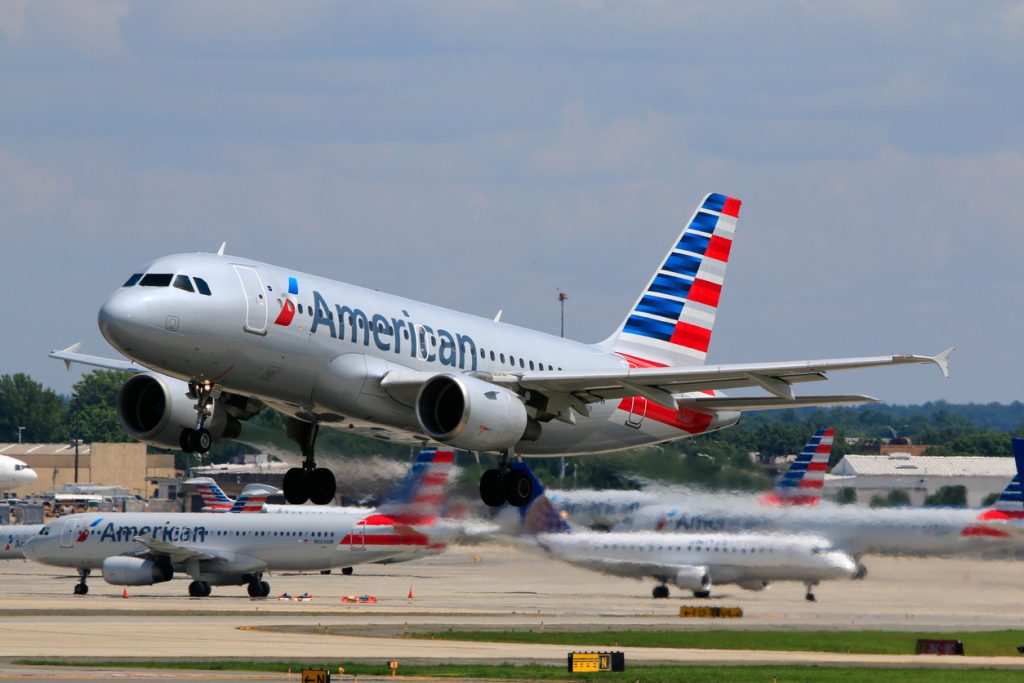
American Airlines Sued for Flight Attendant’s Hidden Bathroom Recordings: Families Demand Accountability.
Multiple families have filed lawsuits against American Airlines after a flight attendant was caught secretly recording children in airplane lavatories. The victims’ families say the airline failed to act on clear warnings — and now, they’re seeking justice.
A Vacation Turned Nightmare: Jane Doe’s Story
In August 2023, a 13-year-old girl known in court filings as Jane Doe boarded a routine American Airlines flight from Orlando to Charlotte. She had just visited Disney World — a trip meant to create joyful childhood memories. But her family says those memories were shattered when they learned, months later, that she had been secretly filmed while using the airplane bathroom.
The person responsible was not a fellow passenger or a stranger in an airport restroom — it was one of the flight attendants: Estes Carter Thompson III, a crew member employed by American Airlines. According to court filings, Thompson used tape labeled “inoperative equipment” to fix his iPhone under the toilet seat, capturing footage of the child in an extreme violation of privacy.
The Lawsuit: Airline Knew the Risks, Did Nothing
Filed on August 6, 2025, in North Carolina, the lawsuit alleges negligent hiring, supervision, and retention by American Airlines. The plaintiffs claim that federal authorities had already flagged Thompson as a danger before Jane Doe’s flight — and that the airline knew or should have known of his conduct.
According to the complaint:
-
The FBI had already recovered photos of other minors from Thompson’s iCloud account.
-
He had previously targeted children ages 6, 9, 11, and 14.
-
American Airlines failed to restrict his use of personal devices or investigate his behavior.
Thompson was later sentenced to 18 years in federal prison, with five years of supervised release, after pleading guilty to sexual exploitation of children (18 U.S. Code § 2251) and possession of child pornography involving prepubescent minors.
Despite his conviction, the airline has not issued a public apology to any of the families — a silence the plaintiffs say speaks volumes.
Legal Grounds: What the Law Says
Under both federal and state laws, common carriers like airlines owe the highest duty of care to their passengers. This includes protecting minors from foreseeable harm, even in non-traditional risk areas like lavatories.
-
18 U.S. Code § 2251 criminalizes any attempt to create or possess sexually explicit content involving minors.
-
Restatement (Second) of Agency § 213 affirms an employer’s liability for failing to control a dangerous employee when risk is foreseeable.
-
49 U.S. Code § 44701 requires that airlines operate with the “highest possible degree of safety in the public interest.”
In this case, the plaintiffs argue American Airlines violated these standards by ignoring multiple red flags, failing to intervene, and not training staff to identify unusual behaviors like taping a phone inside a lavatory.
Replacing a Fictional Quote with Real Legal Insight
“Airlines, as common carriers, owe passengers the highest duty of care under the law — a responsibility that extends far beyond piloting the aircraft,” note aviation law experts at Clifford Chance, a global firm that has advised on major transportation liability cases. “When safety protocols fail to protect minors in enclosed spaces like lavatories, those failures aren’t just regulatory gaps — they become civil liabilities and profound human failures.”
(Source: Clifford Chance aviation liability commentary and 49 U.S. Code § 44701)
A Pattern of Negligence? More Victims Emerge
Jane Doe’s case is not isolated.
Another victim, pseudonymously known as Mary Doe, was just 9 years old when she was allegedly filmed by Thompson on a flight to Los Angeles in 2023. Her family says American Airlines ignored employee complaints and prior CBP reports about Thompson. They’ve filed a separate lawsuit in Texas seeking over $1 million in damages.
Her parents claim:
-
Flight attendants saw Thompson cutting red airline tape and loitering near the lavatory.
-
He entered the bathroom immediately after Mary exited.
-
She now suffers extreme anxiety and avoids public restrooms.
In yet another case, a 14-year-old girl reportedly caught Thompson’s phone taped under the seat and immediately informed her parents, who alerted the flight crew. Still, American Airlines allegedly allowed Thompson unrestricted access to his phone for an hour, during which time he erased and factory-reset the device.
That case was settled out of court in February 2025. The terms remain confidential.
Real-Life Legal Terms, Explained
-
Negligent Supervision/Retention: When an employer fails to monitor or fire an employee despite known risks, making them legally liable for that person’s actions.
-
Intrusion Upon Seclusion: A tort that applies when someone intentionally invades another's private affairs — in this case, placing a camera in a bathroom.
-
Respondeat Superior: A doctrine holding employers responsible for employees' acts committed during work — though it may not apply if the employee's actions were clearly criminal and outside job duties.
What Victim Families Are Saying
Attorney Paul Llewellyn of Lewis & Llewellyn, representing Jane Doe’s family, issued a strong statement:
“Thompson apologized at his sentencing. American Airlines still hasn’t. When children are sexually exploited on your watch, silence speaks volumes.”
For the affected families, it’s not just about one employee — it’s about a system that failed to prevent what they call “avoidable trauma.”
FAQs
Q1: Can I sue an airline if an employee harms my child?
Yes. If the airline was negligent in hiring, training, or supervising that employee, they may be held liable in civil court — even if the act was criminal.
Q2: What should I do if my child is victimized on a flight?
Report the incident to the flight crew, airport security, and local police. Then contact the FBI and a civil attorney experienced in aviation or personal injury law.
Q3: Are airlines required to monitor employee behavior in restrooms?
While there is no federal law specifically requiring restroom surveillance, airlines are expected to train staff to recognize suspicious behavior and protect vulnerable passengers, particularly minors.
What This Case Means for Airline Safety
These lawsuits are about more than seeking financial compensation. They represent a call for systemic change in how airlines monitor employee behavior, especially when that behavior puts children at risk.
Next Steps for Concerned Parents:
-
Check airline policies before flying, especially regarding unaccompanied minors.
-
Speak to children about safety and privacy on planes.
-
Report any suspicious behavior immediately — both during the flight and after.
If you or your family were affected by misconduct on a flight, consult a legal professional and consider filing a report with the FBI’s Crimes Against Children Unit.