Understand Your Rights. Solve Your Legal Problems


Most people recognise a trademark as a logo or a catchy name, but the law treats it as something far more alive. A trademark needs care. It gains strength when used consistently in the real world, weakens when ignored, and can slip away entirely if a business holds it too loosely.
That’s why companies as different as McDonald’s, Apple, and Adidas have all faced moments where they had to defend the essence of their identity. And in each case, the question wasn’t only what is the brand?—it was what does the brand mean in the eyes of the law?
Today’s trademarks stretch across more places than ever: shopping apps, delivery platforms, AI-generated logos, automated voice assistants, and even virtual storefronts.
A symbol once printed on a sign outside a shop now follows a business through dozens of digital channels, each adding its own layer of risk and opportunity. Courts around the world have had to adapt, refining how we understand originality, ownership, and fairness.
The most influential trademark disputes aren’t just courtroom dramas. They are guiding posts for modern branding, offering practical lessons that still apply long after the verdict.
They show how far a trademark can reach, how easily it can be damaged, and why even global giants must follow the same rules as everyone else.
Below are five major disputes that continue to shape trademark law today—not because of the headlines they once made, but because of the long-lasting principles they established.
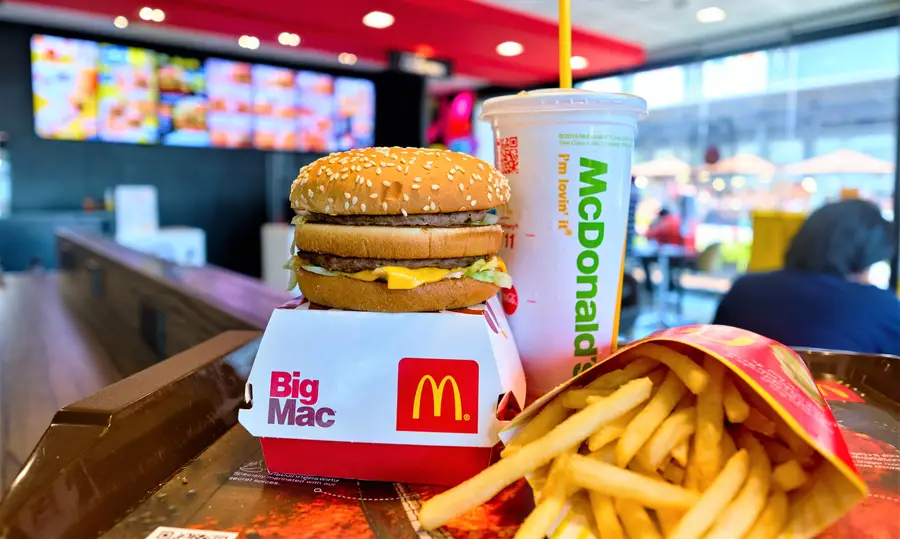
When McDonald’s defended its famous “Big Mac” name against the Irish chain Supermac’s, the legal question went well beyond burgers. It forced regulators to look closely at what it means to use a trademark. Ownership alone wasn’t enough; the company had to show genuine commercial activity for every part of the trademark it claimed.
European regulators have long required proof of real-world use within a continuous five-year period. Without evidence—advertising, packaging, sales, consumer recognition—sections of a trademark can be trimmed away. That’s exactly what happened. McDonald’s kept the core of its mark but lost coverage in areas where it wasn’t actively trading.
Why this still matters:
In a world where businesses file trademarks early—sometimes before a product even exists—this case remains a reminder that trademark protection is rooted in action, not aspiration. Searchers often ask “Can you lose a trademark if you don’t use it?” The answer is yes, and this dispute is still the go-to illustration.
European regulators have long required proof of real-world use within a continuous five-year period.
The legal battle between Apple and Samsung made one thing clear: design elements that seem minor can carry enormous legal weight. Apple argued that features like rounded corners, a grid of colourful icons, and familiar gestures weren’t merely aesthetic—they were essential parts of the user experience, ones consumers closely associated with the iPhone.
Courts in the United States examined the issue under design-patent and trade-dress principles, asking whether an ordinary buyer might mistake one phone for another based on these visual cues. The answer, at least in part, was yes. The initial verdict confirmed that a product’s “look and feel” can be as protected as its brand name.
Why this still matters:
Digital products today often look deceptively simple. But simplicity can be distinctive. Businesses frequently search for answers like “Can you protect a design that seems basic?” or “What counts as copying in tech?” This dispute shows that visual identity can be legally powerful, even when the design appears understated.
Many companies protect both design and function by combining trademark rights with U.S. patent law, which offers a separate layer of protection for inventions and technical features.
Long before smartphones, Apple Corps—the company tied to The Beatles—secured its own trademark rights connected to music. Apple Computer, at the time, occupied a separate world entirely. For years, both companies co-existed under an agreement that kept one away from the other’s territory.
Then digital music arrived. When Apple launched iTunes, the question became whether distributing music files amounted to entering the “music business.” The courts took a nuanced view: Apple’s platform transmitted content but didn’t create it. That distinction allowed both sides to continue operating, though not without tension.
Why this still matters:
Modern companies often expand horizontally, drifting into industries they never expected to enter. A retailer may become a streaming host; a gaming studio might run a digital marketplace. People routinely search “Can two companies share a similar name?” or “What happens when industries collide?” This dispute shows how technology forces old agreements to bend—and why precision in trademark contracts is essential.
The dispute between Starbucks and a small Oregon café named Sambucks highlights a side of trademark enforcement that rarely shows up in textbooks: community perception. Starbucks argued that the café’s name was too similar to its own. The café owner, however, pointed out that her name was Sam, and the branding grew out of that personal connection rather than any imitation.
Although the café eventually rebranded, the public response became part of the story. Local support made the disagreement feel less like a clash of names and more like a question of fairness.
Why this still matters:
Trademark disputes happen in public view, and companies know it. A firm can win legally yet damage its reputation if the enforcement looks too aggressive. Everyday questions like “Can a big company force a small business to change its name?” often hinge as much on public sentiment as on legal filings.
Adidas’ case against Payless showed how powerful trade dress can be. At first glance, stripes might seem too simple to serve as a protected identifier. But decades of advertising, global recognition, and consistent use turned those three stripes into a signature. When Payless began selling shoes with two or four parallel stripes, Adidas argued that the overall impression was close enough to mislead customers.
A jury agreed, awarding a substantial sum and reinforcing the idea that a pattern can function as a brand even without a traditional logo.
Why this still matters:
Minimalist branding is everywhere today. Clean lines, subtle shapes, understated packaging. The question many business owners search for—“Can simple designs be protected?”—finds its answer here.
Understanding how trademarks differ from other forms of intellectual property—such as the protections covered in The Difference Between Patents, Trademarks, and Copyrights—helps clarify where each right begins and ends.
EasyGroup’s attempts to stretch the word “easy” across multiple industries highlight another cornerstone of trademark law: no one owns a common word outright. A trademark protects a word only within the specific context of the goods or services it represents. When companies try to fence off a broad area of language without evidence of consistent commercial activity, courts tend to push back. This principle aligns with global IP standards set by organisations such as the World Intellectual Property Organization.
Why this still matters:
Short, snappy names are popular, especially online. But ordinary words usually belong to everyone unless tied to something clearly identifiable.
Stepping back from the individual disputes, several themes continue to guide trademark law today—principles that matter to anyone running a business, launching a product, or building a brand:
A trademark is strongest when used regularly and clearly.
Visual identity can be protected even when it’s minimalist.
Courts focus on consumer perception, not corporate size.
Technology can transform the meaning of an agreement.
Common words can be trademarked only in specific contexts.
These principles echo the questions people search for every day: How do courts decide whether something is too similar? Can you trademark a plain word? Do small businesses stand a chance against big companies? How does technology affect old trademark agreements?
Trademark law adapts slowly, but it adapts. And as brands move deeper into AI branding tools, immersive environments, virtual goods, and algorithm-driven marketing, these foundational lessons become even more important. They’re the guardrails that help businesses grow without losing control of what makes them recognisable.
Judges look at overall consumer impression, not side-by-side technical differences. They ask whether an ordinary buyer could reasonably believe the products come from the same source.
Yes. Trademark rights are divided by category. If a company can’t show proof of use for specific goods or services, those portions of the registration can be removed.
If consumers associate the design with a particular source, and the design isn’t purely functional, it can qualify for trade-dress protection.
They do. Courts emphasise evidence, fairness, and consumer clarity. Well-documented use can outweigh size and market power.
Because the law aims to protect competition. A common word can only be trademarked for the specific goods or services where it acts as a recognisable brand indicator—not as a universal term.