Understand Your Rights. Solve Your Legal Problems


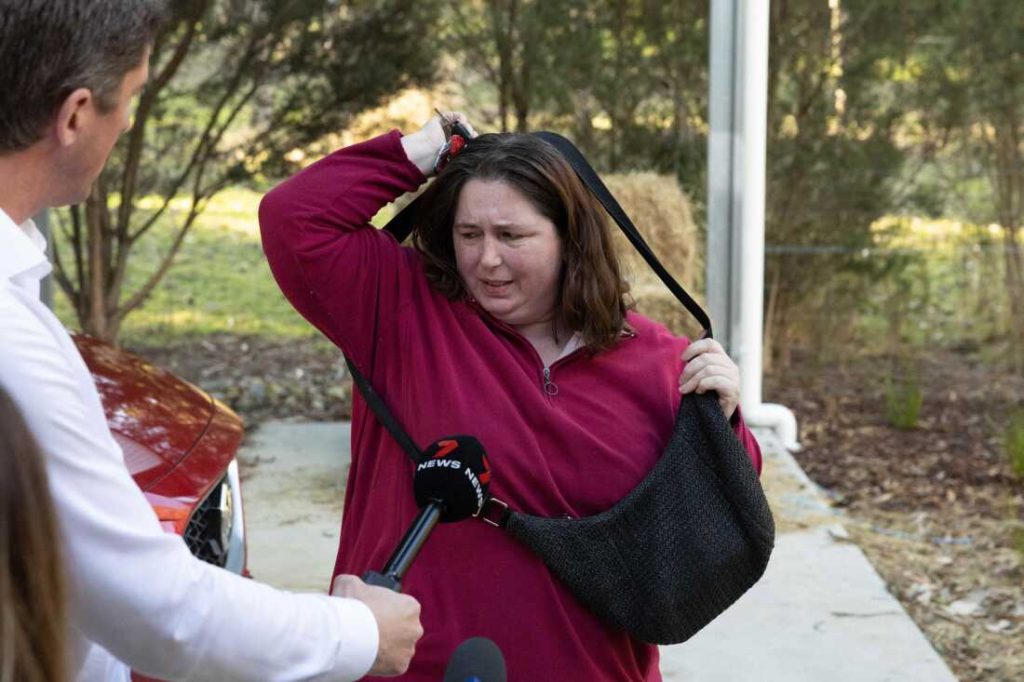
The serene rural landscape of Leongatha, Victoria, once known for its quiet charm, now holds a darker tale – a story of family, betrayal, and a seemingly innocuous lunch that ended in tragedy.
The recent conviction of Erin Patterson has captivated Australia and the world, pulling back the curtain on a crime that feels both unfathomable and eerily close to home. This isn't just a legal case; it's a profound human drama, rife with deception, sorrow, and unanswered questions that continue to haunt those who follow its every turn.
On a seemingly ordinary Sunday, July 29, 2023, Erin Patterson, then 48, invited her estranged husband's family to her modest home in Leongatha. The occasion was ostensibly a family reconciliation, a chance to reconnect over a home-cooked meal. Her guests were her former parents-in-law, Gail and Don Patterson, Gail's beloved sister Heather Wilkinson, and Heather's husband, Ian Wilkinson. The only notable absence was Erin's estranged husband, Simon Patterson, who, in a chilling premonition of sorts, had declined the invitation, citing discomfort.

The Leongatha home where a family lunch turned into a scene of unimaginable horror. Herald Sun
Lunch was a homemade beef Wellington. Yet, within hours, a sinister twist emerged. All four guests began to suffer excruciating symptoms – severe abdominal pain, relentless nausea, vomiting, and diarrhea. The rapid onset and intensity quickly escalated their condition, leading to their transfer to Austin Hospital in Melbourne as their bodies waged a losing battle against an unseen enemy.

The lives tragically cut short: Don and Gail Patterson, and Heather and Ian Wilkinson, victims of the fatal lunch. (Image: Supplied/Family Handout)
The diagnosis was stark: death cap mushroom (Amanita phalloides) poisoning. This unassuming fungus, beautiful yet deadly, contains toxins that relentlessly attack the liver and kidneys, shutting down vital organs. Despite desperate medical efforts, Gail Patterson and Heather Wilkinson succumbed on August 4, 2023, followed by Don Patterson on August 5. Their deaths sent shockwaves through the close-knit community. Miraculously, Ian Wilkinson, a resilient church pastor, survived after weeks in an induced coma, his harrowing testimony later becoming a cornerstone of the prosecution's case.
From the outset, Erin Patterson maintained her innocence, painting the deaths as a "terrible accident." She claimed she, too, had fallen ill after eating the same meal, suggesting a tragic culinary mishap involving inadvertently mixed foraged and store-bought mushrooms. However, police launched an investigation on August 3, 2023, and by November 2, Erin Patterson was arrested and charged with three counts of murder and one count of attempted murder.
The ensuing trial, which began on April 29, 2025, became a national obsession. Every detail, every witness, every nuance was dissected by media and public alike. On July 7, 2025, after weeks of intense testimony and six days of jury deliberation, Erin Patterson was found guilty on all charges, sealing her fate and leaving a nation grappling with the dark reality of what transpired over a beef Wellington.
The prosecution's case against Erin Patterson was built not just on the tragic outcome, but on a pattern of alleged behaviors before, during, and after the fateful lunch that painted a chilling picture of calculated deception.

The innocuous-looking Death Cap mushroom (Amanita phalloides), a silent killer responsible for the Leongatha tragedy. Just one can be lethal.
The prosecution’s case against Erin Patterson didn’t hinge solely on a single tragic meal—it was built on a disturbing timeline of alleged manipulation, misdirection, and calculated choices that painted a chilling portrait of intent. From strange digital patterns to discarded kitchenware, each thread told a deeper story of deception.
Beginning in February 2023, Erin allegedly started using two separate mobile phones. Prosecutors argue this wasn’t incidental—it was the first digital breadcrumb suggesting an effort to conceal her actions. By June, Erin had told her in-laws she was suffering from cancer, even referencing specific biopsies and appointments. Her legal team has since admitted this was a fabrication.
Prosecutors claim it was a manipulative pretext to justify hosting the now-infamous lunch and to garner sympathy. Hunting the Location data later placed Erin near Loch and Outtrim—areas known for deadly death cap mushrooms—shortly after sightings were reported online. What her defense painted as a harmless “mushroom foraging hobby” began to look more like a deliberate and dangerous search.
A Deadly Purchase: In April, Erin purchased a Sunbeam food dehydrator. Initially unremarkable, this became sinister when social media posts revealed she had been drying mushrooms and creating powdered mixtures in the weeks leading up to the incident. Perhaps most chilling was Simon Patterson’s refusal to attend the lunch. Erin’s estranged husband cited feeling “too uncomfortable”—an instinct prosecutors highlight as a subtle but significant warning of the tragedy to come.
Erin alone selected the menu, sourced the ingredients, and cooked the individual beef Wellington parcels. She reportedly insisted on plating each dish herself—and refused help in the kitchen. Her own plate was, according to one survivor, a different size and color. Erin claimed she, too, fell ill. But hospital staff described her as “clinically well.” Her symptoms didn’t match those of the poisoned guests. She even drove her son to a flying lesson hours after the supposed onset of symptoms—actions that raised immediate red flags.
Within days, Erin allegedly factory-reset both her phones—one of which had already been seized by police. Investigators saw this as a clear attempt to wipe potential evidence. On August 2, Erin reportedly drove the food dehydrator to a local tip. It was later recovered—still containing traces of deadly Amanita phalloides. This single act, prosecutors argue, shredded her claims of innocence. Erin eventually admitted she lied to police about owning the dehydrator, denied mushroom foraging, and told the Department of Health she’d used mushrooms from a mysterious “Asian grocery.” Her defense called it panic. Prosecutors called it obstruction.
The prosecution painstakingly built its case through a combination of scientific evidence, detailed police work, and the strategic presentation of Erin Patterson's own actions and words.
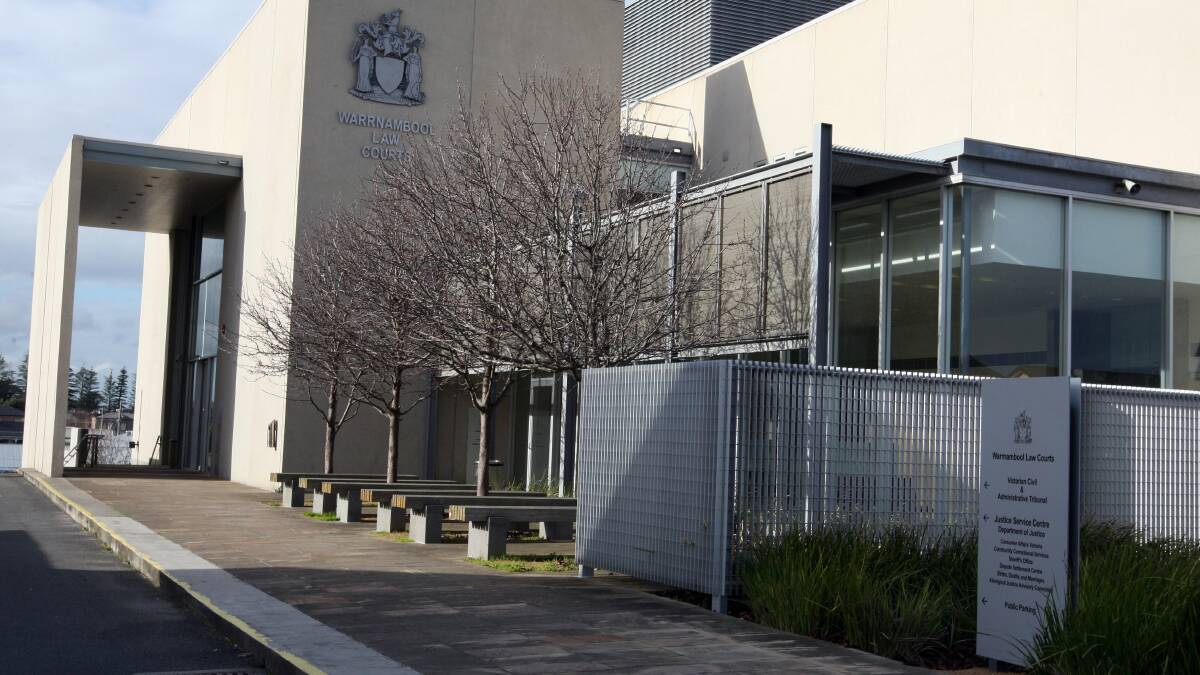
The Morwell courthouse, where the complex legal battle to uncover the truth of the mushroom murders unfolded.
The Deadly Confirmation:
The undeniable presence of Amanita phalloides toxins in the victims' systems was the bedrock of the case. Forensic mycologists confirmed that the type of mushroom was unequivocally deadly, leaving no room for accidental ingestion of harmless varieties.
While Erin Patterson described her mushroom foraging as a “hobby,” experts questioned her ability—and intent—to distinguish edible from toxic varieties.
Dr. Thomas May, a leading mycologist who testified at trial, emphasized the dangers:
“The general public had a poor ability to accurately identify wild mushrooms.”
The implication was clear: misidentification could lead to tragedy—or serve as a convenient cover for something far more sinister.
The Dehydrator's Tale:
The discovery of the discarded dehydrator was a pivotal moment. Not only did it directly link Patterson to the preparation of mushrooms, but the presence of death cap traces within it provided a direct line from her possession to the fatal ingredient. This piece of evidence significantly weakened her "accidental contamination" defense.
Digital Breadcrumbs:
Mobile phone data, including cell tower pings, placed Patterson in specific locations known for death cap mushrooms, suggesting deliberate foraging. The multiple phone resets were presented as attempts to destroy evidence, bolstering the argument of a conscious cover-up.
Expert Testimonies:
While specific expert psychological testimony wasn't widely detailed in reports, medical experts testified to the severity of the victims' conditions and the nature of death cap poisoning, reinforcing the deliberate and lethal outcome. A mushroom expert explained where death cap mushrooms typically appear in Victoria, aligning with the prosecution's allegations of Patterson's travels.
The Absence of Motive (and its Legal Strategy):
Perhaps the most debated procedural nuance was the prosecution's decision not to specify a direct motive. Prosecutor Nanette Rogers argued that demonstrating a motive wasn't legally necessary; the focus was on proving intent through Patterson's actions and deceptions. This strategy allowed them to bypass the complexities of proving a specific psychological drive and instead concentrate on the physical evidence and behavioral patterns.
The Jury's Charge:
Justice Christopher Beale, presiding over the trial, meticulously instructed the jury. He warned them against automatically inferring guilt from Patterson's admitted lies, emphasizing that such lies should be used to assess her credibility. His guidance underscored the burden of proof resting solely on the prosecution, requiring conviction "beyond reasonable doubt," free from emotion or prejudice.
As forensic toxicologist Dr. Dimitri Gerostamoulos, head of the Victorian Institute of Forensic Medicine, explained during testimony:
“The sooner a sample is taken, the better the chance of extracting evidence of a toxin.”
His expert assessment underscored a vital discrepancy in Patterson’s version of events.
Beyond the courtroom drama, the Erin Patterson case resonated deeply within Australia, highlighting complex family dynamics and the unsettling allure of true crime.
While the defense presented Erin as a loving mother with close ties to her in-laws, even after separating from Simon (with Simon himself testifying to her "loving and respectful relationships" with his parents), the prosecution introduced a darker undercurrent.
Erin's heated Facebook messages, expressing frustration and anger towards Simon and even his parents over child support, painted a picture of simmering resentment. "I'm sick of this s*** I want nothing to do with them. I thought his parents would want him to do the right thing but it seems their concern about not wanting to feel uncomfortable and not wanting to get involved in their sons personal matters are overriding that so f*** em."
These weren't just fleeting emotions; they reveal a sense of feeling unsupported and unheard, a potential seed for deeper discord, even if not a direct, fully explained motive for murder. The court heard Erin express profound regret for these messages, acknowledging the pain they caused.

Beyond the headlines, questions linger about the complex family dynamics that may have simmered beneath the surface
The case's most disquieting aspect for many Australians was its ordinary setting. A family lunch in a quiet country town, a seemingly typical mother of two – the stark contrast between this domestic normalcy and the horrific outcome fueled intense public fascination.
It shattered perceptions, proving that the most chilling crimes aren't always confined to the shadowy underworld but can fester unseen within seemingly ordinary lives. This "banality of evil" made the case incredibly relatable and terrifying, forcing a societal mirror onto the potential for darkness in unexpected places.
The unprecedented media attention, with daily podcasts attracting millions of listeners and news outlets providing minute-by-minute updates, underscores Australia's deep fascination with true crime.
Academically, this phenomenon is often linked to a morbid curiosity, a desire to understand the darker aspects of human nature, or even a form of "defensive vigilance" – vicariously learning about dangers to feel safer. The Erin Patterson case, with its bizarre elements and domestic setting, became a national conversation, a collective attempt to make sense of the senseless. It highlights how true crime narratives, while providing entertainment, also serve a societal function in exploring fear, justice, and the boundaries of human behavior.
Despite the extensive trial and public discourse, certain questions about the Erin Patterson case linger, inviting deeper reflection and unique analytical perspectives.
The most profound unanswered question remains the specific, underlying motive. While the prosecution successfully established how and that Erin Patterson committed the murders through meticulous evidence of deception, the emotional or psychological catalyst behind such a calculated act against her in-laws remains largely unstated by the court.
Was it a culmination of long-held resentments, financial pressures, a desire for control, or something far more complex? The messages about child support hint at deep-seated frustrations, but for many, it still feels insufficient to explain premeditated murder. This "why" leaves a chilling void, contributing to the case's enduring fascination.
If one accepts the jury's verdict, then Erin Patterson's elaborate "layers of deception"—from the faked cancer diagnosis to the hurried disposal of evidence and subsequent lies—point to a highly manipulative and detached individual. Her ability to maintain such a facade while three people she knew intimately suffered and died is a stark psychological puzzle.
Was this behavior born out of a desperate attempt to cover a single, panicked mistake, as the defense suggested, or was it indicative of a deeper, perhaps psychopathic, capacity for emotional detachment and calculated manipulation? The ease with which she seemingly pivoted between caring host and alleged murderer is a disturbing dichotomy.
The trial, by its nature, sought legal truth – guilt beyond a reasonable doubt. It wasn't designed to unravel every psychological nuance or delve into Erin Patterson's complete life history beyond its immediate relevance to the crime.
This leaves ample room for analysis regarding the interplay of personal grievance, alleged opportunity, and the cold reality of consequence. The disconnect between her seemingly normal domestic life and the horrific outcome forces us to confront the fact that malevolence doesn't always wear an obvious mask.
The defense's insistence on a "terrible accident" was not merely a legal strategy but a narrative attempt to humanize Erin Patterson and explain away the seemingly inexplicable. However, the numerous specific actions (dehydrator disposal, phone resets, inconsistent illness) that defied a simple "panic" explanation, ultimately led the jury to reject this narrative. This highlights how, in true crime, the "truth" is often a constructed narrative, and the strength of evidence dictates which narrative prevails.
Erin Patterson’s conviction on three counts of murder and one count of attempted murder seemed to bring closure to one of Australia’s most chilling modern crimes. But just weeks after the verdict, a new procedural wrinkle threatens to cast a shadow over the trial’s final chapter.
According to a verified report from news.com.au (July 25, 2025), the Victorian Juries Commissioner has launched an investigation after it was revealed that the jury in the Patterson trial was sequestered in the same hotel as members of the media, police, and legal counsel. This overlap occurred during the most sensitive phase of deliberation and raises legitimate concerns about the potential for perceived or inadvertent influence—even in the absence of reported contact.
Justice Christopher Beale, who presided over the case, acknowledged the issue in internal court emails, noting the “undesirable” circumstances and confirming that jurors were moved to a different hotel on the eve of the verdict. While jurors remained isolated on a separate floor with restricted access to outside communication, the proximity to other trial stakeholders—even unintentionally—could become grounds for appeals or legal challenges if exploited by defense teams.
This development does not diminish the overwhelming forensic and circumstantial evidence that led to Patterson’s conviction. Toxicology experts like Dr. Dimitri Gerostamoulos, along with mycologists and digital forensic analysts, provided robust testimony that guided the jury toward a unanimous verdict. But it underscores a vital truth: the justice system, while rigorous, is also vulnerable to logistical flaws that may complicate public trust in the process.
Forensic cases involving intentional poisoning—particularly with naturally occurring toxins like Amanita phalloides—require high standards of procedural integrity. The fact that over 250 journalists registered to cover the trial reflects the magnitude of public interest and the responsibility the courts carried in managing such a high-profile case.
As Patterson awaits sentencing, this new twist ensures that public and legal scrutiny will persist. And for many Australians, it cements this case not only as a tale of domestic tragedy and calculated murder—but as a reminder that even in the most carefully managed legal systems, perfection remains aspirational.
Who is Erin Patterson, and what was she convicted of?
Erin Patterson is an Australian woman from Leongatha, Victoria, convicted on July 7, 2025, of murdering three people and attempting to murder a fourth by serving them a meal containing lethal death cap mushrooms.
What are death cap mushrooms, and why are they so dangerous?
Death cap mushrooms (Amanita phalloides) are one of the world's most poisonous fungi. They contain potent amatoxins that cause severe liver and kidney damage, leading to organ failure and death. They are dangerous because they resemble edible mushrooms and their toxins are not destroyed by cooking.
Who were the victims of the Leongatha mushroom poisoning?
The victims who died were Erin Patterson's former parents-in-law, Gail and Don Patterson, and Gail's sister, Heather Wilkinson. Heather's husband, Ian Wilkinson, survived the poisoning but suffered critical illness.
What was Erin Patterson's alleged motive for the murders?
The prosecution did not explicitly state a singular motive during the trial. Instead, they focused on Erin Patterson's alleged "layers of deception" – including fabricating a cancer diagnosis, feigning illness, and attempting to conceal evidence – as indicators of her guilt and intent. While there were mentions of tensions over child support, this was not presented as a direct motive for murder.
Did Erin Patterson claim to have eaten the mushrooms herself?
Yes, Erin Patterson claimed she also ate the beef Wellington and experienced symptoms. Her defense argued she consumed a smaller portion and later vomited, which could explain her survival compared to the fatal outcomes for her guests. However, the prosecution challenged the authenticity and severity of her reported illness.
What key evidence led to Erin Patterson's conviction?
Key evidence included the discovery of a discarded food dehydrator containing traces of death cap mushrooms, contradicting Patterson's initial denials. Mobile phone data showing her alleged research into and travel to areas known for death cap mushrooms, along with multiple phone resets, also played a significant role.
What sentence does Erin Patterson face?
Erin Patterson faces a maximum sentence of life imprisonment for the murders. Her sentencing date had not been scheduled immediately after her conviction on July 7, 2025.
Where is Erin Patterson now?
As of July 2025, she is being held in a maximum-security women’s prison in Victoria, Australia. Specifically she is housed at the Dame Phyllis Frost Centre, a maximum-security facility for female inmates. Due to the high-profile nature of her case, she has been placed in a protected unit for her safety. During her trial in mid-2025, she was transported daily and temporarily held overnight in freezing concrete cells at the Morwell police station.
Surviving Slender Man: The Long Road to Recovery for Payton Leutner