After Al Green Vote, Here Are Members of the House to Be Censured.
Rep. Al Green Censured in the U.S. House: A Historic Reprimand
On Thursday, March 6, 2025, the U.S. House of Representatives voted to formally censure Rep. Al Green (D-Texas) for his disruptive behavior during President Donald Trump's joint address to Congress. The vote, which passed with a tally of 224-198, included 10 Democrats siding with Republicans in favor of the resolution.
This action places Green among a select group of lawmakers who have faced censure by the House of Representatives.
What Led to Al Green's Censure?
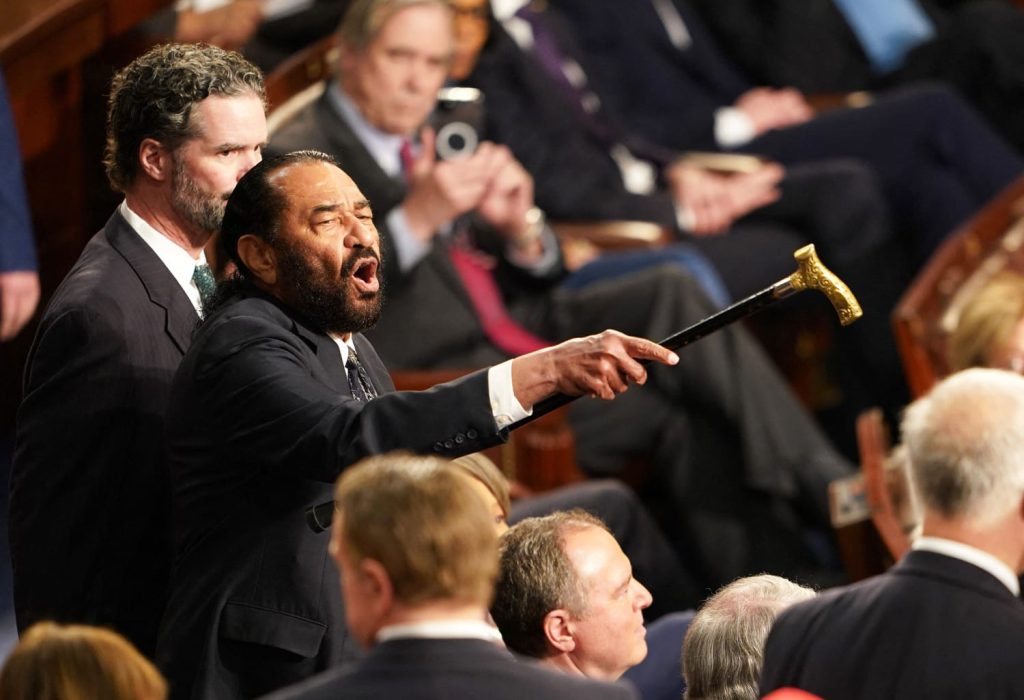
Rep. Al Green's censure stemmed from his actions during President Trump’s address to Congress on Tuesday, March 4, 2025. Green interrupted Trump’s speech, repeatedly shouting that the President had no "mandate" for his actions. Despite being warned by House Speaker Mike Johnson to stop, Green continued his protests, leading to his removal from the chamber by the sergeant-at-arms.
As part of the censure process, Green was required to stand in the well of the House while the resolution was read aloud, a customary procedure during such hearings.
Al Green Joins a Short List of Censured Lawmakers
With this vote, Rep. Al Green becomes one of only 28 members of the House of Representatives to have been censured. The censure process, while rare, serves as a formal reprimand for lawmakers who violate House rules or engage in disruptive behavior.
Notable Historical Cases of Censure
While censure is a rare occurrence, it is not unprecedented. Here are some other notable House members who have faced similar consequences:
- Rep. Charles Rangel (D-NY): In 2010, Rangel was censured after being convicted of multiple ethics violations, including misuse of congressional letterhead and failure to disclose income and assets.
- Rep. Adam Schiff (D-CA): In 2023, Schiff was censured for his role in promoting allegations that President Trump benefited from Russian interference in the 2016 election.
- Rep. Rashida Tlaib (D-MI): Also in 2023, Tlaib was censured due to her controversial remarks regarding the Israeli-Hamas conflict, which included her repeated use of the phrase "from the river to the sea."
- Rep. Jamaal Bowman (D-NY): Bowman was censured in 2023 for setting off a fire alarm in the Capitol, an incident for which he pleaded guilty and paid a fine.
Censures in the Senate: A Less Frequent Occurrence
While the House has seen a number of censures, the Senate has experienced far fewer. Only nine senators have been censured throughout history. Notably:
- Sen. Joseph McCarthy (R-WI): McCarthy, infamous for his anti-communist witch hunts, was censured in 1954 for his failure to cooperate with a Senate subcommittee investigating his conduct.
- Sen. Benjamin Tillman (D-SC) and Sen. John McLaurin (D-SC): Both senators were censured in 1902 after engaging in a physical altercation on the Senate floor.
Expulsions: A Step Beyond Censure
Censure is a serious punishment, but it is not as severe as expulsion. Expulsion is reserved for more egregious offenses. In fact, only three House members have been expelled since the Civil War:
- Rep. Michael Myers (D-PA): Myers was expelled in the 1980s after being convicted of bribery and conspiracy charges.
- Rep. James Traficant (D-OH): Traficant was expelled in 2002 after being convicted of racketeering and bribery.
- Rep. George Santos (R-NY): Santos was expelled in 2023 after being indicted on numerous charges, including wire fraud and money laundering.
A Rare and Severe Consequence for Congress Members
The censure of Rep. Al Green is a significant moment in Congress, as it marks the latest instance of a member being formally rebuked for disruptive or unethical behavior. Such actions highlight the ongoing challenges faced by lawmakers as they navigate the complexities of political discourse and public conduct.
Stay Updated
For more news and updates on this story and other political matters, subscribe to our newsletter.