Understand Your Rights. Solve Your Legal Problems


Despite compelling circumstantial and eyewitness evidence, Arthur Leigh Allen, the only publicly named suspect in the Zodiac Killer case, was officially excluded by DNA analysis. As of the early 2000s, forensic evidence collected from the killer's letters, including saliva from stamps, did not match Allen's profile. This lack of definitive physical proof is the primary reason the case, which involved five confirmed murders, remains unsolved today.
Five decades after a masked killer terrorized the San Francisco Bay Area, the notorious cold case of the Zodiac Killer has been violently ripped back into the public eye by a chilling new docuseries.
While endless armchair detectives have proposed suspects, only one man was ever publicly named by law enforcement as their primary focus: Arthur Leigh Allen, a convicted child molester and former elementary school teacher.
The newly sensationalized Netflix documentary, This Is the Zodiac Speaking, doesn't just rehash old facts; it presents shocking, never-before-heard testimony that forces us to re-examine Allen’s unsettling life and his deep connection to the victims' final resting places.
The most dramatic breakthrough comes from the Seawater family—David, Connie, and Don—who reveal that Allen played an unexpectedly pivotal role during their formative years, taking them on seemingly innocent family outings.
These outings, the siblings now agonizingly realize, included nearly every location where the Zodiac Killer claimed a victim. David Seawater chillingly revealed in the film, "We started researching things and realized that we had been to all the murder sites before the murders," confirming a haunting pattern of proximity to terror. This disturbing proximity is compounded by a memory Connie shared about a 1991 confrontation where she directly asked Allen about his potential involvement. His alleged reply was a shocking and deeply unnerving threat: "If I tell you the truth, I’ll have to kill you."
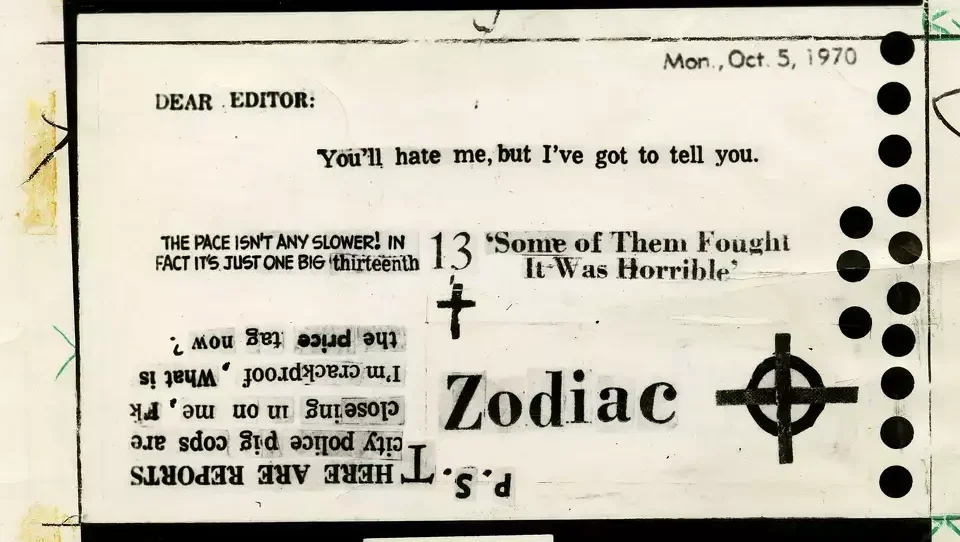
The Zodiac Killer was a master manipulator, using taunting letters and complex cryptograms, often signed with his infamous crosshair symbol, to mock police and journalists alike.
He famously boasted to the San Francisco Chronicle, claiming responsibility for multiple murders and creating an enduring enigma through his coded messages, which continue to obsess cryptographers today. The public’s decades-long fascination stems from the sheer audacity of a killer who seemed to appear and vanish into thin air, leaving behind only gruesome details known solely to the authorities and his terrifying, coded correspondence.
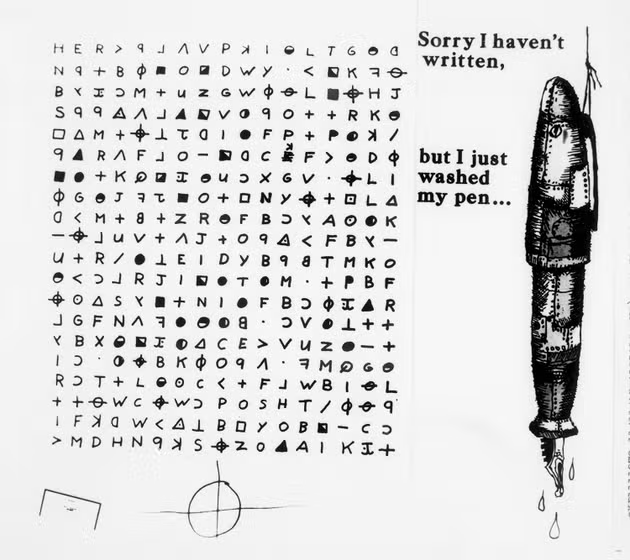
A coded message sent during the Zodiac Killer investigation, part of the complex ciphers that continue to challenge cryptographers and investigators.
Born in 1933, Arthur Leigh Allen presented a complex and deeply troubled profile, serving as the most intensely investigated individual in the Zodiac case.
He first came to the attention of police after a friend reported Allen had confessed his desire to hunt and kill couples at lovers’ lanes using a gun rigged with a flashlight—an exact detail matching the Zodiac's known method. Compelling circumstantial evidence continued to mount over the years: Allen wore a Zodiac-brand Sea Wolf wristwatch, lived mere minutes from where victim Darlene Ferrin was shot in Vallejo, and matched the shoe size of a boot print found at the Lake Berryessa crime scene.
Crucially, one survivor of a Zodiac attack, Mike Mageau, positively identified Allen from a 1991 police photo lineup, proclaiming, "That's him! It's the man who shot me!" Furthermore, Allen’s previous criminal history, which included a conviction for child molestation in 1974, meant his subsequent institutionalization coincidentally aligned with the abrupt cessation of the Zodiac’s infamous letter writing campaign.
These converging facts painted a damning portrait of the prime suspect, convincing many original investigators, like Detective Dave Toschi, that they had found their man.
Despite the powerful circumstantial web woven around Allen, law enforcement ultimately lacked the decisive forensic evidence required to bring charges before his death in 1992. The legal pursuit hit an impenetrable wall when handwriting experts insisted that Allen's writing did not match the distinctive, heavily misspelled script of the Zodiac letters, even considering that he was rumored to be ambidextrous. Fingerprints collected from the crime scenes and letters, believed to belong to the killer, also failed to match Allen’s records.
The biggest reason this cold case remains unsolved today revolves entirely around forensic science. In the early 2000s, investigators compared DNA evidence, extracted from saliva on the stamps and envelopes of the Zodiac’s letters, to Allen’s samples; according to analysis reviewed by Lawyer Monthly, this comparison reportedly excluded him as the source.
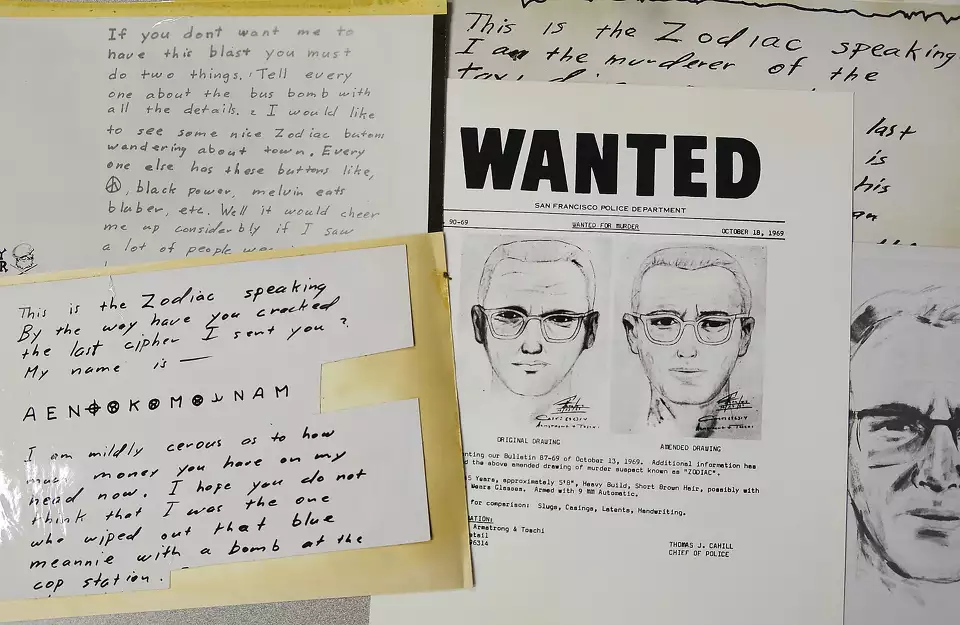
A Zodiac Killer cipher mailed to the press, one of several cryptic messages that investigators and codebreakers have worked for decades to fully decode.
This persistent lack of physical evidence remains the enduring conflict at the heart of the Zodiac mystery. "It really comes down to DNA. Without it, you have nothing," emphasized Detective Terry Poyser of the Vallejo Police Department, underscoring the legal hurdle that continues to plague the decades-old investigation.
The emotional human testimony showcased in This Is the Zodiac Speaking—the unsettling memories of the Seawater siblings and the conviction of Mageau—stands in stark contrast to the cold, hard reality of the forensic record. As the documentary forces new audiences to reckon with the only man police ever named, the question of Arthur Leigh Allen's guilt, or innocence, continues to haunt the Bay Area, leaving true crime enthusiasts desperate for the final piece of the puzzle.
1. Was Arthur Leigh Allen ever proven to be the Zodiac Killer?
No. Although he was the only publicly named primary suspect and faced intense investigation, DNA and forensic evidence did not match Allen. He was never charged before his death in 1992.
2. Why did police suspect Arthur Leigh Allen as the Zodiac Killer?
Allen matched several circumstantial elements, including witness descriptions, a confession-like statement to a friend, proximity to crime locations, similar footwear size to prints found at a scene, and a survivor identifying him in a lineup. However, none of this was considered conclusive.
3. Does new evidence suggest Arthur Leigh Allen could still be the Zodiac Killer?
New testimony and investigative media have revived public interest in Allen’s potential involvement. Law enforcement has not confirmed any new physical evidence, and the Zodiac case remains unsolved.