Understand Your Rights. Solve Your Legal Problems



Lawyer Monthly spoke with Casey Lott, Managing Partner at Langston & Lott, PLLC, about the firm’s growing specialization in burn injury litigation — one of the most complex and emotionally charged areas of personal injury law.
In this article, Casey takes us through the ins and outs of burn injury cases, drawing upon a wealth of personal experience gained by representing numerous clients in this area. From an analysis of the dangers posed by unreliable smoke detectors to reflections on the burn injury cases that shaped his career, Casey provides an incisive look into this vital field and shares where Langston & Lott plans to expand its expertise next.
We probably handle more propane explosion cases than anything. Propane explosions are much more common than people realize. We’ve also represented people who were burned by hot liquids or toxic chemicals. Defective products like e-cigarettes or portable propane cylinders can explode and cause severe injuries. Home appliances like water heaters, stoves and space heaters are responsible for many residential fires every year.
Sometimes you don’t know what caused the fire, but you know the injury or death that resulted could have been prevented. For example, sometimes the fire investigators we hire can’t tell us exactly how a fire started — maybe it was faulty wiring or a knocked-over candle — but they can usually determine where it started. What’s almost always true, though, is that I’ve never represented anyone who was burned in a residential fire where the smoke detectors functioned properly, because those people get out in time.
So, when someone is burned in a house or apartment fire, there’s a high probability the smoke detector didn’t function properly. If the condition of the smoke detectors was someone else’s responsibility — such as a landlord — then you might have a cause of action for violating safety rules. Manufacturers of smoke detectors advertise that “every second counts,” and they’re right. Research shows that delayed alarms dramatically increase the risk of serious injury or death.
“I’ve never represented anyone who was burned in a residential fire where the smoke detectors functioned properly, because those people get out in time.”
Many times, it’s because detectors aren’t hard-wired to a power source and the battery is dead, missing, or incorrectly installed. Sometimes they’re properly installed but simply too old. All smoke detectors have expiration dates — some last as little as five years, others up to ten. Over time, alarm sensors wear out, and dust buildup makes it harder to detect smoke, so it’s crucial to replace them regularly.
Even when a detector is current and installed correctly, it might not sound in time if it’s not a combination unit. There are three types: ionization, photoelectric, and combination detectors. Each type responds differently to various fires. Testing shows that ionization detectors can fail to give timely warnings for slow or smoldering fires, even with high smoke levels. The National Fire Protection Association (NFPA) recommends using both types or a combination unit, but unfortunately, landlords sometimes sacrifice safety to save money.
Early in my career, I took whatever came through the door — family law, criminal defense, you name it. But I realized that being a jack of all trades meant being a master of none. I knew I had to specialize. Personal injury quickly became the most rewarding area of practice for me.
I still have a picture on my desk of a little girl I represented in a scald burn case. She had severe facial scarring and needed laser resurfacing treatments that Medicaid wouldn’t cover because they called them “cosmetic.” We convinced the burn center to take an assignment on the proceeds of our civil case, and she got her treatment immediately. When I saw her at the settlement hearing, she looked like a different person — smiling from ear to ear. She gave me one of her school pictures, signed on the back, and I’ve kept it on my desk ever since. That case reminded me why this work matters.
Professionally, I measure success by the impact I have through my firm and in my community. I want to positively influence as many people as possible — clients, employees, and neighbors alike. Of course, to do that, you have to be both a good lawyer and a good businessman. You can’t make an impact if you don’t have clients. So, we set clear short-term and long-term goals and measure our progress against them.
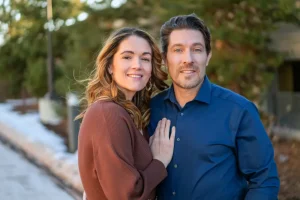
Personally, I measure success through happiness and balance. My family means everything to me. I’ve met plenty of wealthy people who are unhappy, and that’s not the kind of success I want. Nothing makes me happier than being with Amanda and our boys. If I can be a good husband and father, that’s success in my book.
“You can be the best lawyer in the world, but if you don’t have any clients, you’re not making much of an impact.”
I’ve been fortunate to litigate numerous cases that made a lasting impact, not just for clients but for public safety. For instance, we’ve handled wrongful death cases against water heater and gas can manufacturers for failing to use flame arresters — safety devices that prevent flames from spreading and causing explosions. Today, gas water heaters and gas containers are required to have them. I’m not saying that’s solely because of us, but I believe the plaintiffs’ bar played a key role in pushing for that change.
As for one specific case, I can’t pick just one. I’m proud of the entire journey. When I joined my dad in 2005, we had four people — two lawyers and two paralegals. Today, we’re a team of 17 with six attorneys. John Morgan says, “If you’re not growing, you’re dying,” and I believe that. My goal is to be better every year, and so far, we’ve achieved that.
We’re exploring other areas that could complement our practice, such as labor law. We’ve recently begun handling several WARN Act cases — the Worker Adjustment and Retraining Notification Act protects employees by requiring employers to give notice before large-scale layoffs or plant closures. Unfortunately, many employers fail to comply, leaving workers blindsided.
We believe this is an underserved niche, and Jack Simpson is leading that practice for us. Personal injury will always be our core, but I’m a big believer in adaptation. The largest fee I’ve ever earned came from an antitrust case — proof that sometimes, stepping outside your comfort zone pays off. The WARN Act cases could very well be the next big thing for us.
Casey Lott is Managing Partner at Langston & Lott, PLLC, where he specializes in personal injury, product liability, burn litigation, and automobile accident cases. He has extensive experience leading multi-district and class action litigation and holds an AV Preeminent® peer review rating from Martindale-Hubbell® — the highest possible rating for legal ability and ethical standards.
Casey and his wife, Amanda, also fund scholarships each year for students at Northeast Mississippi Community College through the Casey & Amanda Lott Scholarship and Cynthia Langston Memorial Scholarship.
Founded in 1964, Langston & Lott is a Mississippi-based personal injury law firm with a reputation for success in catastrophic injury, product liability, and vehicle accident cases. The firm’s attorneys have won multi-million-dollar judgments and settlements against some of the nation’s largest companies and insurers and continue to expand their litigation expertise both nationally and internationally.
Contact:
Langston & Lott, PLLC
100 South Main St, Booneville, MS 38829, USA
Tel: +1 662-728-9733
Email: clott@langstonlott.com