Understand Your Rights. Solve Your Legal Problems


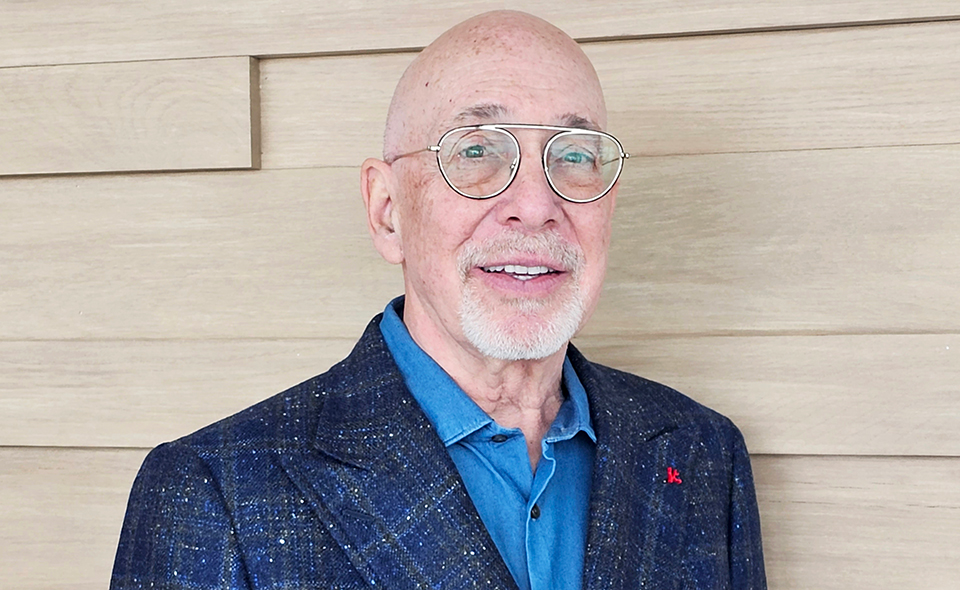
Few lawyers have fought as tirelessly for environmental justice as Marc Bern. Over the past four decades, he has taken on some of the most powerful corporations and government agencies in America — giving a voice to victims whose health and livelihoods were destroyed by pollution and toxic exposure.
From the poisoned waters of Camp Lejeune to the aftermath of 9/11 at Ground Zero, Bern has stood at the front lines of cases that shaped how the U.S. confronts environmental harm. As founder of Marc J. Bern & Partners LLP, he has recovered billions in compensation for workers, families, and communities suffering from contamination and negligence.
In this exclusive interview, Bern reflects on the hidden dangers that still threaten public health, the evolution of environmental law, and why — even after nearly 50 years in practice — he believes the fight for accountability is only just beginning.
What kinds of environmental hazards most often give rise to litigation in the U.S.?
At the top of the list, says Bern, are toxins that cause various forms of cancer — including lung and kidney cancers — as well as long-term pulmonary conditions such as asthma and COPD. These illnesses frequently stem from exposure to harmful chemicals in air, soil, and water, and they form the backbone of many toxic tort and environmental injury cases across the country.
What laws and legal principles do these cases typically rely on?
The foundation of environmental injury cases depends heavily on the source of contamination — whether air, water, or soil. Bern points to examples ranging from negligent incinerator emissions to the notorious Camp Lejeune water contamination, where toxic dumping by the U.S. government poisoned the base’s drinking water for decades. He also recalls the MTBE gasoline additive cases, where a federally approved chemical seeped into groundwater nationwide, triggering some of the largest environmental remediation costs in U.S. history.
How is liability demonstrated in these complex lawsuits?
“These cases are won on the strength of the science,” Bern explains. Expert testimony is critical — from air and water quality specialists to oncologists and pulmonary experts who can link exposure to disease. Establishing a clear causal connection between a toxin and an injury requires meticulous documentation and collaboration between scientists, physicians, and attorneys.
What major changes have you witnessed during your career?
Practicing since 1975, Bern has seen environmental law transform from a niche discipline into a central pillar of public health protection. He cites the recent surge in litigation surrounding PFAS “forever chemicals”, as public awareness grows about the dangers of substances once considered safe. “People now understand that toxic releases and industrial chemicals can cause lifelong harm,” he says.
Are similar large-scale legislative responses likely in the future?
Bern believes so. Drawing on his experience with the World Trade Center litigation and the creation of the Zadroga Act, he foresees similar congressional action for Camp Lejeune victims. “Hundreds of thousands of people were exposed over many decades,” he says. “We hope compensation will come swiftly — even for those exposed half a century ago.”
What recent cases highlight the continued need for environmental vigilance?
Bern references the train derailment in East Palestine, Ohio, where toxic chemicals may have contaminated soil and water, as a reminder of how fragile environmental safety remains. He also points to incinerator mismanagement and toxic burn pits in Iraq and Afghanistan, where harmful emissions have caused lasting damage to both people and ecosystems.
Could you share a bit about your journey into law and the milestones of your career?
Bern began practicing law in 1975 in Wisconsin before relocating to New York, where he built a national reputation for handling complex environmental and mass tort cases. Since founding Marc J. Bern & Partners LLP in 2015, he has led major litigations spanning environmental contamination, railroad worker cancers, opioid-related claims, and large-scale personal injury cases.
Which achievements stand out most to you?
Bern’s proudest work includes representing Ground Zero responders after 9/11, helping secure compensation and pushing for the passage of the Zadroga Act. He also represented victims of the Costa Concordia disaster, the Aurora Theater shooting, and the national opioid litigation — each case reflecting his commitment to holding institutions accountable and amplifying the voices of victims.
What drives your lifelong dedication to this work?
“I want to help people,” Bern says simply. “The civil justice system allows us to right wrongs — whether from negligence, corporate misconduct, or environmental harm. The people who need a voice are the ones I’ve always wanted to stand up for.”
Marc J. Bern, Founding Partner
Marc J. Bern & Partners LLP
One Grand Central Place, 60 East 42nd Street, Suite 950, New York, NY 10165, USA
Tel: +1 212-702-5000
Email: mbern@bernllp.com