
Understand Your Rights. Solve Your Legal Problems
For over 25 years, the Professional and Amateur Sports Protection Act (PASPA), also known as the Bradley Act, has prevented wagering on sports in the majority of states across the US.
While Nevada remained a haven for gamblers and states like Delaware and Montana had their sports lotteries, those in other states had no choice except travelling.
But this has now changed. Thanks to efforts from New Jersey and former Governor Chris Christie over the course of 5 years, PASPA has been ruled unconstitutional in the Supreme Court – and states are leaping on the opportunity to launch their betting industries.
A Sporting Chance
Although, as mentioned, there were some existing sports wagering options in certain states, several more have jumped on the opportunity to institute legislation and regulations, including:
· New Jersey – it’s only fair that the state that’s been pushing the sports wagering legal battles should reap the rewards. On June 11 2018, Governor Phil Murphy signed sports betting into law – and proceeded to make the first legal bet on the 14th.
· Delaware – while Delaware’s sports lottery was exempt from PASPA, it now has the opportunity to expanded the options available into what Governor John Carney has called “a full-scale sports gaming operation”, and Delaware has moved to offer single-game betting at three casinos in the state.
· New York – lawmakers made an effort to pass legislation on sports betting in June 2018, but were unable to get it over the line in time. There is, however, a strong movement towards launching it, and limited sports betting may still be instituted thanks to a 2013 law voted in by state residents.
· Pennsylvania – along with a handful of other states, Pennsylvania legalized sports betting previously – in this case, in 2017 – but the law wasn’t activated until PASPA was overturned. With that now the case, Pennsylvania regulations are pending, and would-be bettors are unlikely to have to wait long.
· Mississippi – Like Pennsylvania, Mississippi legalised sports betting in 2017 – but regulations aren’t yet in place. A now-deleted tweet from MGM Resorts suggests that regulations for their casinos will be in place July 21, but it’s unclear if that’s still accurate.
For more details on where you can gamble in the US, broken down by sports and states, have a look at the full PlayUSA study here.
(Source: PlayUSA)
As we stand on the threshold of the Fourth Industrial Revolution, the landscape ahead includes developments in areas such as blockchain, internet of things, and nanotechnology: developments that are taking place at a faster rate than many of us are able to keep up with – or even easily comprehend. Below Roseyna Jahangir, expert at Womble Bond Dickinson, talks Lawyer Monthly through the complexities of regulating AI.
Artificial intelligence (AI) is one of these very interesting areas of development that could revolutionise our day to day lives, much as the internet did in the last century.
The term AI is often used to refer to the development of computers, computer programs or applications that can, without direct human intervention, replicate processes which are traditionally considered to require a degree of intelligence, such as strategy, reasoning, decision making, problem solving and deduction processes. For example, an AI program can use algorithms to analyse datasets, and make decisions and take actions based on the output of the analysis – an analysis that would traditional be done by a human. AI programs can also be developed to interact with people in ways that mimic natural human interaction, for example in online customer service support – sometimes in to an extent that the difference is hard to recognise (the 'uncanny valley').
Potentially AI has the potential to supplant a great number of human processes, and it can do so cheaper, faster and without human error. However, in practice the current applications and opportunities are much more limited and constrained by practical factors such as the sheer processing power that is required, especially pending a breakthrough in quantum computing, and 'design' limitations such as the inability to learn by extrapolating from limited failures, or to apply common sense to scenarios.
Is this development a good thing? AI can cut costs, eliminate human error, and potentially make products and services available to those who might not otherwise be able to access them. But what about the possible downsides?
50 years ago, in the film 2001: a Space Odyssey, an AI slowly turns from being the humans’ assistant, to pitting itself against them. HAL, the Heuristically programmed ALgorithmic computer, 'realises' the fallibility of humans stands in the way of it achieving its operational objectives, and therefore seeks to remove these obstacles. Presciently, this film encapsulated many of the present concerns about AI – what will stop the machines 'deciding' to exercise the powers they are given in a way that we don't like? For example, what is our recourse if we need a computer to evaluate a request from us, such as deciding whether or not to accept a job application, and the computer says no? We can try to appeal to other humans on an emotional level, or challenge the basis for their decision; a computer programme that is implacably based on an incomprehensible algorithm does not present that option.
Regulation is the most frequent knee-jerk response to any such question of 'what if…'. However, many regulators are cautious about imposing regulation in a vacuum, seeking to prescribe or proscribe technologies rather than focusing on particular applications of technologies. The well known risk of doing otherwise is the outcome that technology will develop so quickly that regulation will always lag behind.
In the financial services space, AI has already been making inroads on market practices, as evidenced by:
Automating these processes with AI offers the ability to manage downwards the costs of servicing a given market while potentially eliminating rogue variables caused by human fallibility. AI could thereby help to make financial services products more accessible to the public, enabling them to be offered at a price that is affordable to a greater section of the public
However we cannot forget potential risks: what if an insurance pricing algorithm becomes so keenly aligned to risk that a segment of higher risk, and potentially vulnerable, customers are effectively priced out of the market? How can an algorithm be held accountable if a customer feels that a decision about their credit card application was wrong? And what if the questions about investment intentions are too focused on what customers say they want, and miss out on the nuances of a customer's wishes and fears that an experienced human advisor may know to pick up on and pursue?
What could the regulators do to address these potential risks, and the consumer detriment that would ensue if they materialised? One option, and likely only part of any solution, is to ensure firms are mindful of the consumer and market protection outcomes and objectives at the root of the regulations with which they must comply, and they will be held accountable when their products and services fail to deliver those outcomes. For example, the UK's Financial Conduct Authority (FCA) requires firms providing services to consumers to ensure that they are treating their customers fairly, and being clear, fair and not misleading. The onus is then on firms to ensure that whatever new developments they have, these outcomes are consistently being achieved. For the insurance firm described above, this could involve paying close attention to the parameters and design of the algorithm, to ensure that, for example, a certain pricing threshold is not breached. For the credit card firm, this could be ensuring that if a customer's application is declined, they are provided with information about how that decision was reached, and what factors it was based upon. For the robo-adviser proposition, this could involve a periodic review of investments and portfolios by a human adviser.
Practically, regulators will need to work with firms to ensure that the need to comply with such outcomes does not block development. Since 2016, the FCA has made available a regulatory 'sandbox' for firms, to let them develop new ideas in a 'safe' surrounding, to contain risks of customer detriment while products are in development, and to offer support in identifying appropriate consumer protection safeguards that may be built into new products and services. The FCA is now exploring the expansion of this sandbox to a global staging: working with other regulators around the world to support firms that may offer their products in more than one regulatory jurisdiction. The FCA has also been meeting with organisations who are working to expand the current boundaries and applications, at specialist events around the UK, such as the FinTech North 2018 series of conferences, which raise the profile of FinTech capability in the North of England.
By working together to balance potentially competing factors such as technological development and consumer protection, regulators and the industry may be able to provide a stable platform to develop AI, while overcoming or at least assuaging the potential fears of the target audience for these developments. In 2001: a Space Odyssey, the conflict between AI and humans was only resolved by the 'death' of the AI. Let's hope that in real life, a way of co-existence can be found instead.
Following up on the Kit Kat trademark court ruling last week, Colin Bell, partner and head of intellectual property at law firm Brabners, provides expert commentary.
This is a significant decision by the CJEU because of the high bar it sets for non-traditional trade-marks, such as shapes. If the court is saying that for a product shape to be recognised as a distinctive shape there must be evidence of acquired distinctiveness in all of the EU’s 28 markets, it’s hard to imagine that many trademark owners would be able to fulfil this criteria.
The result is that Nestle has spent huge amounts of money in the near-impossible task of trying to persuade the CJEU that the vast majority of EU citizens would recognise the four-fingered Kit Kat shape as a unique, distinctive form.
There is a harsh lesson to be learnt here and that is don’t rely on only EU trademarks to protect non-traditional brands and intellectual property as trademarks unless you have sufficient evidence of acquired distinctiveness through use in all 28 member states. Generally, we advise clients to submit trademark applications to both national and EU courts so they have the best chance of obtaining protection for their brands, some of which, like Kit Kat, have been established over many decades. That said, Nestle has had similar difficulties in the UK courts.
The next steps for Nestle may include gathering evidence for all member states, considering national applications or seeking to convert the EU trademark into national applications in the territories where the CJEU accepted it had acquired distinctiveness.
The Washington, D.C. based whistleblower protection law firm, Kohn, Kohn & Colapinto (KKC), recently filed a 27-page letter with the Securities and Exchange Commission (SEC) commenting on the amendments proposed by the SEC to alter its Whistleblower Program. KKC filed the letter as a public comment to the SEC to highlight serious flaws in the proposed amendments that will result in major setbacks to the advancements made in the use of whistleblower incentives to uncover major corporate fraud in the past few decades.
The whistleblower advocates expressed concern stating, “the proposed amendments will undermine the rules governing a successful whistleblower program.” KKC also outlined shortcomings of the amendments, including the use of harmful caps on rewards, clarifying the definition of compliance, and explaining how further delays to current whistleblower cases would only harm those reporting the wrongdoing.
Whistleblower attorney, Stephen M. Kohn, partner at KKC and executive director of the National Whistleblower Center, described the major weaknesses of the proposed amendments: “The proposed rules will have a serious crippling effect on corporate compliance and reporting high level fraud. Without large rewards to incentivize Wall Street whistleblowers, there will be less accountability and more corruption in the workplace. Placing a cap on the percentage of an award to highly compensated executives will impair the goal of persuading key employees to step forward and report wrongdoing. Reducing whistleblower rewards will open the door for continued major corporate fraud and turn away those with valuable evidence of crime from stepping forward."
After proposing the amendments in a June 29th meeting, the SEC published the proposed changes on Friday, July 20th, 2018. The proposed rules amendments are open for public comment until September 18, 2018.
(Source: KKC)
In this video, Bird & Bird employment partner Katarina Åhlberg looks at: - The key challenges for businesses considering moving their employees from the UK.
- Can a business require key employees to move?
- Which immigration law issues need to be considered.
- What practical steps should businesses take?
- The importance of a talent pool when considering a move.
When You Move, the leading proptech disruptor, recently launched a new nationally representative report revealing the sentiments of a population of 2006 current and future homeowners, in addition to property minded consumers. The sentiments are launched amidst the fact that only 2.4% are registered property specialists, registered with CLC – the specialist association for property law specialists.
Adding altitudinal context to the disconcerting deficit of scale and capacity available to the UK’s select community of property professionals, a quarter of Brits say that lawyers – property or otherwise - offer the lowest level of customer service they’ve encountered during any of life’s major transactions.
The top line stats revealed:
Consumers pay the price
With previous When You Move research revealing that the home buying/selling process takes, on average, seven weeks longer than the projected completion date; today’s new body of data was commissioned to pinpoint where and how the process goes wrong.
Simon Bath, CEO and founder of When You Move, said: “With a clear mission to revolutionise the process of buying and selling property for agents, brokers and consumers, When You Move is the perfect example of disruptive tech creating a more, not less, humanised experience for consumers. With the results showing a clear deficit between the choice available and the trust people have in making the right decision, this report should serve as a call to action across the industry to bring about a more reliable delivery of customer service.”
(Source: When You Move)
Timothy M. Lupinacci a shareholder in Baker Donelson, one of the US’ top 100 law firms. He is chair of the firm’s Financial Services Department, a member of the firm’s Board of Directors and former office managing shareholder for Birmingham, Alabama. In his daily life Timothy lives and breathes leadership. Below Lawyer Monthly is privileged to benefit from Timothy’s extensive library of experiences as he lists the top 13 leadership books that influenced his journey and enflamed his passion as a leader.
I believe two fundamental principles about leadership. First, every person is a leader in some capacity, whether in business, family, athletic team, civic organization, church, synagogue, mosque, or book club. I think far too many people fail to see their unique leadership role played out every day and miss opportunities to influence and help others. My second foundational belief is that everyone must continue growing as a leader. It is critical for each person to be a consummate, life-long learner. Although difficult to devote regular time to leadership growth and learning, it is a discipline that is crucial for long-term success and achievement. Whether it involves attending live or simulcast seminars, systematically reading books or periodicals, leading training sessions for others or listening to podcasts and audio books while driving to work each day, you have to implement a leadership development plan become obsessive about and sticking to it in order to maximize your influence and potential.
Over the years, I have tried various approaches to leadership growth. One year I realized I had fallen out of the habit of reading and committed to read at least one book a month. This discipline continues and I try to vary the books I read. I always ensure that I read at least one leadership, teamwork, management or biography every month to consistently learn, grow and improve by considering additional principles, tips, tools and leadership approaches to adapt into my own leadership journey. I have tried to make sure and attend at least one leadership conference each year. I also have become disciplined about using time I am in the car listening to podcasts or audio books. You have to determine what works best for you, but the important thing is to develop a plan for systematic leadership growth. The great thing is that some of the best "business books" are not traditionally found in the business section at your favorite bookstore. You can gain leadership insight from a diverse array of sources. Below are a few of my favorites.
Over the years, there have been certain books that I return to in honing my leadership abilities. Often I use these books to train others. These are the resources that have provided real leadership gold to me over the arc of my career. I hope you will find some of these suggestions, which are in no particular order, useful in your own journey.
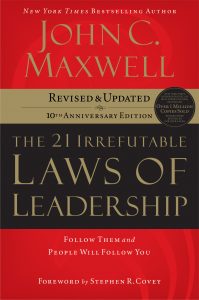
1. ‘The 21 Irrefutable Laws of Leadership’ by John Maxwell.
Maxwell has been one of my go-to resources for all things leadership and was one of the first remote leadership trainers I turned to early in my career. I debated among several of his books to include as the one to include in my personal "Baker's Dozen", including "The Five Levels of Leadership" (which is a close second), "Leadership Gold" and "The 17 Indisputable Laws of Teamwork". In the end I landed on "The 21 Irrefutable Laws of Leadership" as the one book I would include in the list. Over the years, I have read this book multiple times, lead teams through weekly discussions of each chapter in the book and taught these principles to non-profit groups. I continue to find this content fresh and relevant in my personal leadership growth and in helping others to see the value of leadership development.
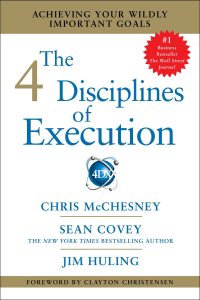
2. ‘The 4 Disciplines of Execution: Achieving Your Wildly Important Goals’ by Chris McChesney, Sean Covey and Jim Huling.
Five years after first reading this book, I think this resource has had the most profound impact in my leadership development. A lot of leadership resources focus on developing plans and goals for yourself, your teams, and your organization. The critical step, however, is actually executing on the plans when the whirlwind of daily activities consume you. The "4DX" plan outlined in this book is incredibly practical and helpful in focusing on how to best execute on a team's or individual's top strategic imperatives. I continue implementing concepts from this book daily and it pays increasing dividends in staying focused on driving results through a disciplined system of identifying your wildly important priorities, figuring out lead measures to reach those goals, building a cadence of accountability and keeping a compelling scorecard to manage progress.
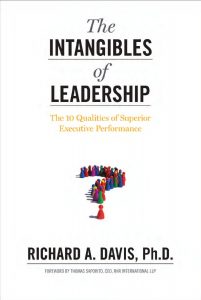 3. ‘The Intangibles of Leadership: The 10 Qualities of Superior Executive Performance’ by Richard A. Davis.
This is an succinct analysis of various intangible attributes of leadership that distinguish top performers, including fortitude, integrity, self-insight, presence and self-efficacy. The author, a management psychologist, argues that it is the intangible aspects of leadership that makes the difference between a competent leader and an extraordinary executive. Davis spent more than 10 years assessing senior leaders across various industries and found these ten behaviors fundamental to leadership success. The good news outlined in this book is that we can learn and improve upon these characteristics to grow in our leadership abilities. If you are looking for distinguishing factors in your leadership journey to move to the next level of leadership, Davis' book is an excellent resource to help you grow and stand-out among the crowd.
4. ‘Three Box Solution’ by Vijay Govindarajan.
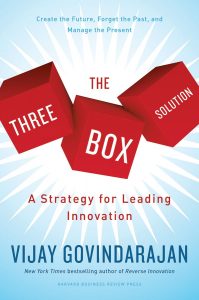
There is no dispute that business is changing more rapidly than at any prior time in our history. Informed leaders have to stay ahead of the innovation curve to successfully navigate their teams or organizations through the rapid disruption characterizing industry today. Govindarajan is a professor at Dartmouth’s Tusk School of Business who has taken various theories and practices around innovation and compressed it to a “three boxes to innovate” concept. He notes in this book that for "more than a decade, innovation has been practically synonymous with the latest cool gadget. In the new era, innovation will not be about cool. It will be about profound change…and will convey breakthrough solutions . . . [in] facing the realities of a crowded and constrained [marketplace].” I found Govindarajan's approach beneficial to ensure I was spending the necessary time implementing his structure of (i) managing the present, (ii) selectively forgetting the past, and (iii) creating the future. This book serves as a hands-on manual to implement processes and procedures to ensure you are continually evolving and staying ahead in business.
5. ‘Great by Choice’ by Jim Collins.
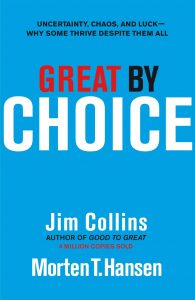
Jim Collins is one of the most important leadership writers of our time. You can pick up any of his books and find important principles to implement in your leadership journey immediately, including "Built to Last", "How the Mighty Fall" and "Good to Great." The reason I selected "Great by Choice" as my top recommendation is that Collins takes his research from earlier books and outlines specific action items that leaders can take to build truly great teams, companies and enterprises in unpredictable and rapidly-changing times. Collins states that “greatness is not primarily a matter of circumstances; greatness is first and foremost a matter of conscious choice and discipline.” I continue implementing regularly the concepts and research he describes in this book such as "10ers", "20 Mile March", "SMaC Recipes" and "Level 5 Leadership." As leaders, we must each make the choice to grow and improve to help those we lead achieve greatness. This book will definitely help you progress towards become a Level 5 leader.
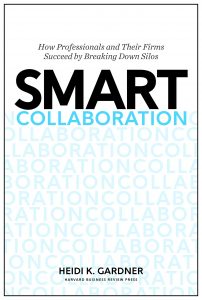
6. ‘Smart Collaboration’ by Heidi Gardner.
Gardner, a Harvard professor, has done more to influence my thinking on leadership among teams of people over the last decade than any other author or speaker. She has studied and written for years on collaboration in professional service firms. In this book, she notes that collaboration "is a means toward achieving the penultimate goal of solving complex, interesting problems-and the ultimate goal of giving firms a strategic, sustainable and profitable platform." She notes that effective collaboration enables teams and companies to be more successful in the "war" for clients and for talent. As you would expect, there are often high obstacles to getting disparate professionals to collaborate. Gardner works to provide practical approaches to overcome these barriers. This has become a critical handbook to me in understanding and shaping strategy for groups based on the vital importance of collaboration and overcoming the engrained obstacles to collaboration.
7. ‘Drive: The Surprising Truths About What Motivates Us’ by Daniel Pink.
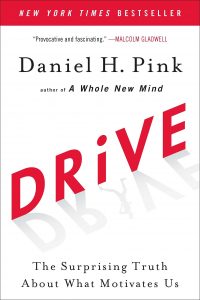
I read this book at the time I began leading our office. Pink changed my thinking on the old "carrots and sticks" approach to motivating a team towards a goal (or desired behavior). Using decades of research, Pink outlines re-defines the proven elements of true motivation in the business world. He describes that in today's environment, the secret to high performance and satisfaction is (i) autonomy—the desire to direct our own lives; (ii) mastery—the urge to get better and better at something that matters; and (iii) purpose—the yearning to do what we do in the service of something larger than ourselves. He succinctly makes the case that we have to make sure that we get individual's compensation correct, but it is these additional elements that will drive truly exceptional performance. Pink states that "the best use of money as a motivator is to pay people enough to take the issue of money off the table; pay people enough so they're are not thinking about money and they're thinking about the work." When you remove the compensation issue, Pink says that there are three factors that lead to better performance and increased personal satisfaction--autonomy, mastery, and purpose. I have seen how understanding and implementing these principles helps pay significant dividends to a group or organization.
8. ‘All For One: 10 Strategies for Building Trusted Client Partnerships’ by Andrew Sobel.
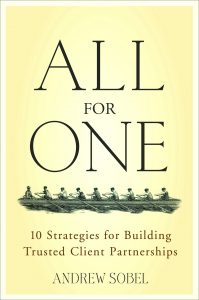
Several years ago, I heard an former executive from one of the major international accounting firms talk about client service and trusted client relationships. It was eye-opening to hear the signature efforts that accounting firms were taking to serve their clients and it convinced me that, on the whole, accounting firms were years ahead of law firms in implementing plans to become trusted advisors to clients. This insight lead me to Sobel's book on building trusted client relationships where he outlines ten strategies for transforming client relationships--five individual strategies and five institutional strategies. Focusing on professional service companies, with a strong emphasis of research and insight from accounting firms, Sobol stresses the importance of collaboration and mobilization of the right people, ideas and resources from wherever they may reside (the "all" in the title) to create a singular focus on each client relationship (the "one"). This book provides invaluable resources and ideas on developing relationship capital, institutionalizing client relationships, targeting the right clients and creating unique client experiences.
9. ‘Delivering Happiness’ by Tony Hsieh.

Although Zappos has lost some of its luster over the past couple of years, I still think Hsieh's book is the single best resource to get your juices flowing on building an award winning culture. The first part of the book focuses on the interesting rise of Zappos as a business, however, the real meat of the content I return to is in the second half describing the unique culture at the company. This content helped fuel various initiatives implemented in groups I have been involved in to build and maintain a great work-place culture. One great idea Hsieh implemented was a Zappos Culture Book built around the unique culture at his company. This included direct feedback from employees and customers. I took this idea and created my own office culture book celebrating our successful culture. Hsieh states that "if we get the culture right, most of the other stuff--like delivering great customer service, or building a long-term enduring brand and business--will happen naturally." I believe this and also believe that a business or team does not sacrifice revenue or profit while investing in an award winning culture. Another resource with some instructive ideas on building a healthy corporate culture is "Onward" by former Starbucks CEO Howard Schultz (although Starbucks is another company experiencing troublesome issues lately).
10. ‘Tipping Point’ by Malcom Gladwell.
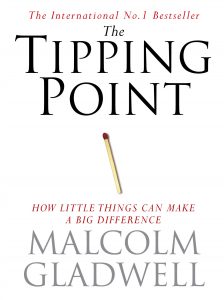
While this may not seem like a typical "leadership book", I highly recommend everything Gladwell does. The way that Gladwell deconstructs an issue to its core and then pulls profound truths always inspires my creative thinking in the business setting. He often provides very practical advice through his analysis, such as the discussion in his book "Outliers" that it takes at least 10,000 hours of practice or work in any given area to become a true expert (which is sound advice for young lawyers building their practice). In "Tipping Point", Gladwell describes "connectors", "mavens" and "salesmen" that I found useful in application to the legal setting. He also describes the "stickiness factor", which has helped guide my thinking on creating memorable business development activities for clients and potential clients. Gladwell's book "Blink" provides great insight into how intuitive judgment to make important decisions is developed by experience, training and knowledge. This has proven valuable to me in more effectively working in a profession that demands rapid-fire decisions. In addition to his writings, Gladwell's "Revisionist History" podcast likewise consistently inspires my leadership thinking.

11. ‘The Advantage: Why Organizational Health Trumps Everything Else’ by Patrick Lencioni.
Like Gladwell and Collins, I try to read everything that Lencioni publishes. You cannot go wrong reading "The Five Dysfunctions of a Team", "Death by Meeting" or "The Three Signs of a Miserable Job", all of which are excellent resources to strengthen your leadership skills. The reason I list "The Advantage" as the one to start with is that the book provides an actionable roadmap to building an operationally healthy team or organization. Lencioni makes the point that organizational health is all about building a cohesive leadership team, establishing clarity among leaders, communicating clearly to everyone within the organization and putting in place enough structure to reinforce this communication going forward. Not only are these critical in leading your group, but this resource provides an excellent actionable playbook.
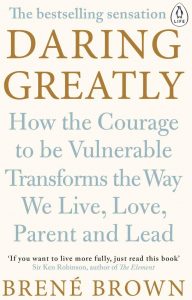
12. ‘Daring Greatly: How the Courage to Be Vulnerable Transforms the Way We Live, Love, Parent and Lead’ by Brene' Brown.
This is another resource that may not fall squarely within a "leadership book", but I think the truths discussed in this book are critical for every leader to process. Brown starts with the famous Teddy Roosevelt "In the Arena" speech from 1910, and his encouragement to dare greatly by actually getting in the arena and striving valiantly. Brown then builds on the idea that if we spend our lives "waiting until we're perfect or bulletproof before we walk into the arena, we ultimately sacrifice opportunities. She includes many practical resources in this book, including an "Engaged Feedback Checklist", "The Daring Greatly Leadership Manifesto" and even a "Wholehearted Parenting Manifesto" that are very useful. I have benefited as a leader by becoming more vulnerable and having the courage to take more informed risks based on Brown's work.
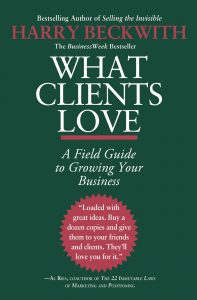
13. ‘What Clients Love’ by Harry Beckwith.
This is an interesting little book that I happened to pick up fifteen years ago when I began more fully appreciating the importance of business development. I had gotten my feet on the ground in figuring out how to be a lawyer and started realizing the need to focus with intentionality on developing business. This is a book of short, often pithy, chapters that includes great ideas and excellent examples furthering the premise that everything we do is selling ourselves. Even if we do not have a product to sell, as a professional, our skills, expertise and counsel are the "product." We need to explore how to market and brand ourselves better every day, including focusing on adding value through intangible and "non-billable" efforts and building a referral network through word of mouth. I have developed many creative ideas in business development after reading again this simple book of stories and ideas.
I remain convinced that we must continuing learning and growing from a variety of diverse resources. No matter the background or content of the resource, I try to take the topic discussed and apply it to make me a better leader, team member or encourager. These thirteen books have proved increasingly valuable over the years, and are resources that I continue to reference, use and give to others seeking leadership growth. I hope you can find a least one nugget of information from these books to help you better lead and serve those within your sphere of influence. I hope you will drop me a note and let me know additional insight you gain from any of these resources and let me know additional valuable leadership books you have read or studied.
Over a decade ago, internships/placements where simply a means for students to experience the type of work as well as responsibilities that would typically be entailed within a particular role/industry and then, self-assess how well they were suited to it.
Nowadays, with experience highly desirable in the backdrop of a very competitive and turbulent job market, internship/placement scheme(s) completion has become an essential consideration in the recruitment process for new graduates. Especially, by leading graduate employers – with many of them viewing a recently graduated candidate with internship/placement experience as being a more competent and less risky choice for their respective organisation.
Interested in the importance of gaining professional experience, Theknowledgeacademy.com analysed findings from ‘High Fliers’, to see whether the number of available paid work experience places (i.e. vacation internships/course year placements) among the UK’s 100 most established and successful employers has increased or decreased in 2018.
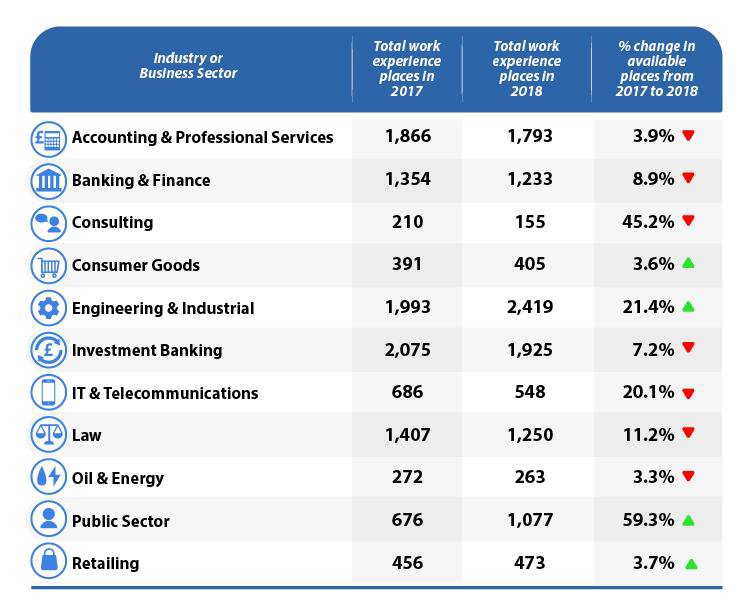
Theknowledgeacademy.com found that with 401 more places this year (2018 = 1,077) compared to last year (2017 = 676), the public sector has facilitated the highest increase (59.3%) in work experience opportunities for undergraduates.
Focusing specifically on law, work experience positions available in well-known and established firms within the sector have seen a 11.2% decrease – with 157 less spots this year (1,250) than in 2017 (1,407).
On the other end of the scale, with 55 less openings in 2018 (155) compared to 2017 (210), the lucrative field of consulting has seen the most significant decrease (45.2%) in work experience options for undergraduates. Just slightly above, information technology and telecommunications has seen the next most notable fall (20.1%) in work experience places this year (548) in contrast to 2017 (686).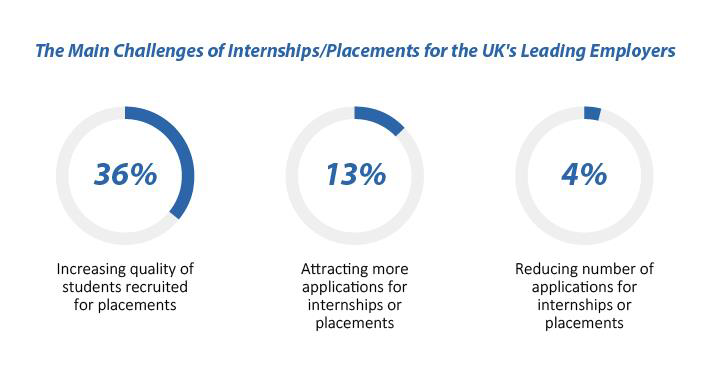
Furthermore, the research also highlighted the main challenges the 100 employers face when recruiting university students for internships and placements. 36% want to increase in the quality of students they hire for placements. Interestingly, 13% are intending to attract more applications for their future internships/placements.
Joseph Scott, a spokesperson from Theknowledgeacademy.com commented: “In the current job climate, academic achievements or reputation of attended educational institutions alone cannot propel a graduate’s prospects. Whilst students are in the early years of university, they are recommended to experience much relevant work experience as possible. Internships and placements provide students the perfect avenues to do just that. The practical knowledge and transferable skills gained from them can really boost their employability credentials upon graduation. This research provides students with an indication of how limited as well as competitive work experience opportunities can be in a range of highly desirable industries.”
(Source: Theknowledgeacademy.com)
As a law student, you need all the help you can get. This means as much in terms of contacts and opportunities as it does for learning and growing. As part of our law school & careers features, this week Lawyer Monthly hears from Francine Ryan, lecturer in law and member of the Open Justice team at The Open University, on making the most out of a mentoring programme.
It is becoming increasingly common for UK Law Schools to offer external mentoring schemes to provide students with insights into professional practice and develop links with the legal profession. This may involve discussions on areas of legal practice, CV writing, interview skills, network building and wider issues impacting on the profession. As your career progresses there may be other opportunities for you to benefit from a mentoring programme.
What is mentoring?
Mentoring involves building a supportive learning relationship where an experienced mentor offers their expertise and knowledge to guide and develop a less experienced person, the mentee. Mentoring can provide support in a number of different ways depending on where you are in your career.
A mentoring relationship is a shared responsibility between the mentor and mentee, it requires regular contact and commitment to work. Here are some top tips to help you get the best out of a mentoring programme.
Ground rules will help you work together
Discuss your expectations of each other at the outset of your relationship. Agree practical arrangements such as the frequency and location of meetings but more fundamentally define what you can expect from you mentor and what you mentor can expect from you. This should avoid misunderstandings and will help set appropriate boundaries for the relationship.
Know what you want!
The focus of the mentoring is on you, the mentee, so it is important to be clear about what you want from the relationship, but also to be open and flexible to exploring new ideas and perhaps changing direction. A good mentor will challenge you, ask probing questions and encourage you to think carefully about what is it you want to do, to help you find your own solutions. This is a great opportunity to discuss areas of practice that interest you and to consider whether they are suited to your talents, interests and aspirations.
Set goals- have a purpose!
Successful mentoring relationships need purpose and direction. You need to work with your mentor to set goals which are meaningful, these should be both short and longer term. For example, you may agree that the development of your network as a key priority, your mentor may agree to facilitate an introduction to an event. A short term goal could be going to the event. A longer term goal could involve developing connections with key people at the event. You need to be clear how you will achieve your goals and take the initiative to ensure you accomplish them.
Listen- actively
The majority of the time the relationship between you and your mentor will involve talking and listening. Listening is an active process, it is much more than just hearing what the other person is saying. Julian Treasure in his Ted Talk uses a helpful acronym, RASA, Receive, Appreciate, Summarise and Ask to facilitate active listening. Active listening takes practice and is a critical skill to develop not just for a successful mentoring relationship but in all aspects of your life.
Value what you have
If you are fortunate to have a mentor, who is willing to invest in your relationship, who is genuinely interested in you and wants to see you succeed, you are incredible lucky. You need to value that relationship, by ensuring you are responsible, respectful and ready. This means coming to meetings prepared, respecting your mentor’s time and remembering they are a volunteer. Acknowledging and appreciating their support is important, a simple thank you can go a long way in enhancing a relationship. You also need to be ready to take ownership and responsibility for you own learning- your mentor can’t do it for you!
As a law student this is a unique opportunity for you to engage with a legal practitioner on an individual basis, where you can gain from their professional expertise and experience. It should also motivate and encourage you by giving you the opportunity to think about your career path. A mentoring relationship involves hard work and commitment but can offer invaluable support in developing your career.
Lately, online gaming has been dominating the discussion across several sectors of the economy, as it has evolved from a relatively small market a couple of decades ago to a booming industry that encompasses millions of players worldwide. Online casinos have also expanded their reach by appealing not only to traditional gamblers looking to play poker or roulette online, but also to a wide range of seasoned and amateur players alike with simpler but equally exciting games like online slots. As regulators rush to get ahead of developments, will lawyers discover that it is time to tap into these rising markets like other professionals have?
The Online Gambling Industry
It certainly looks like there is a lot of potential into these sectors still. Brick and mortar casinos have been around for ages, but their online counterparts are a relatively more recent addition to the game. They have quickly drawn people in thanks to the convenience they offer: it is simply easier to gamble from the comfort of your home, any time you want, while the variety of games available is extremely wide. Anything from keno and baccarat to classics like blackjack, craps or dice are available to online gamblers.

There are many online casinos operating in the UK and there is a regulatory framework that they need to comply with. Its complexity, along with the many online providers active in the field, offers a prime opportunity for lawyers who want to specialise in gambling law. When it comes to how the authorities regulate the field, the UK might have a thing or two to learn from other jurisdictions around the globe that also share some elements of our legal culture. For example, according to the legal status of online gambling in Canada, the provincial governments are authorised to operate computer-based gambling – which has led to many of them launching their own online casinos and poker websites. This is an interesting approach that could be discussed in the UK context, too – and would also lead to an increased need for legal expertise.
eSports as a Rising Market for Lawyers
eSports is also a growing market that is in dire need of specialised legal counsels. US firms have begun setting up dedicated eSports practices, responding to the need for lawyers in the industry. Legal issues within eSports gaming, where players compete with each other in specific video games to claim hefty prizes, range from labour law issues to intellectual property and contracts. In 2018 alone, the eSports market is set to reach more than $900 million in profit, while 77% of this revenue will come from advertising, media rights, sponsorships and similar fields, where having a lawyer by your side is fundamental.

Since eSports are followed by millions of people across the globe – just look at the numbers behind Twitch, the most popular online gaming streaming service – the market is certainly not going anywhere any time soon. In fact, gambling issues might arise within eSports, too. While competitive gaming is primarily skill-based, there is a growing market for eSports betting that is doing amazingly well lately. This means that combining the two fields might not be so far into the future as we might think.
In a world where the internet and new technologies dominate, so must lawyers adapt and find new, challenging markets that need their legal expertise.
